Monthly Archives: January 2007

Bach and transcriptions

1:32 PM at GVSU 

I haven’t blogged for a couple of days. I have been spending a lot of time reading up on China and practicing organ.

I have been playing Bach transcriptions of Vivaldi and Prinz concertos. I like these pieces. I seem to be attracted to music that has energy and is kind of obvious. I was feeling guilty yesterday a bit and added the prelude of the Bach  C major 9/8 Prelude. also nice music of course.

I am playing one of the Schubler chorales for my prelude on Sunday: Wer nur den lieben Gott BWV 647. We are singing the tune as the closing hymn: “If thou but suffer God to guide you.” (I’m going to do a postlude based on the same chorale by Walther. )

Some organists sort of look down on the Schubler chorales because Bach transcribed them from cantata movements. I actually like them quite a bit and play some other modern transcriptions of Cantata movements. But I admit that practicing the Schubler chorales and the Bach versions of Baroque concertos made me feel like I should add some “real”  music by Bach to my rehearsals.

Hence the C major 9/8 Prelude.

Whippy skippy.

Music dreams

8:00 AM

I had three music dreams last night. In each dream I was improvising and of course it was great.

In the last dream, the conductor handed me a note. It said, “Life is Good.”

“Not study the Odes, won’t be able to use words”

1:06 PM Music: You’re probably wondering why I’m here – Zappa

Got up this morning with the intention of catching up on back issues of the New York Times. I put them in order from oldest to the most recent and started reading them.

Before too long I got distracted and played through some Bach preludes and fugues.

Then I corrected quizzes from last Thursday. Recorded them and started working on reading through 50 homework papers.

Then hooked up my healed computer.

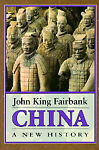
I bought John King Fairbank‘s “China: A New
History” yesterday at a local used book store.
I go over there about once a month
because the turnover is pretty slow.
This is an extremely readable update for
Westerners about China. Apparently King
died a couple days after it was published
in 1991. I’m on chapter 3 right now and
enjoying it.

It also motivated me to look up my old
copy of the Confucian Odes. At one time
in my life, I was very interested in Ezra Pound and bought his rendition of the Odes.

Pound was a cranky old modernist and very
eccentric. His “translations” of the Odes
are very much a complete re-working
in Western forms (not to say complete
new poems) and say much more about
Pound than the Odes.

Nevertheless, I have read in them
and do have a bit of a memory of them. I’m sure I will have to do more reading if I really want to know about Confusious and the time of Imperial Confucianism (which I admit does interest me).

King makes it clear that the more the Western reader can shed some of his/her ideas the better one can get a bit closer to understanding the unique history of China.

I was sorry to find out King was dead because I am enjoying his whole approach quite a bit.

I’m trying to do a bit of reading so I will have some concept of China when I visit there in a couple of months.

back up and running

12:43 PM Music: Who are the brain police? Zappa

So far so good. My old computer is healed and I have just hooked it up and am using it right now.

The young man who worked on it at first declined to charge me any labor. He put a new power pack in it and disconnected the F drive which is apparently screwing everything up (aha! just as I suspected). He quoted only the cost of the power pack to me.

When I asked him why he wasn’t charging me any labor he replied, “Because you’re a friend of my Dad’s.”

I managed to get him to charge me the regular charges. Still very economical: power pack 50 bucks, 25 bucks labor. What a bargain.

I re-organized my cords (a little bit) and vacuumed all the dust I could find before hooking the old computer back up.

I’m wondering what the absence of the F drive will mean to programs I try to run. I have been trying to avoid using it, but wouldn’t be surprised if I still was running some programs off of it. I’m sure it will become evident if this is the case.

World Wide Webbing and T.S. Eliot

I had a pretty cosmpolitan morning at the computer.

Chatted with Jeremy in China for a bit… then later with Sarah in the UK. The internet is nifty.

Way back in 1981, I wrote a little cantata called “Ash Wednesday” that I have been thinking about lately.

The text is from T.S. Eliot‘s poem of the same name.

Originally it was written for SATB, soprano, alto, and tenor soloists (I think in the performance I had my brother sing the alto as a baritone solo), oboe (doubling on recorder in one movement), guitar, harpsichord, and cello.

Anyway, I never did a finished score and performed it from a messy draft score.

I think about this poem quite a bit. Especially the part that says: “Teach us to care. And not to care. Teach us to sit still.” This is still an important thought for me.

Ash Wednesday is probably too close to consider vamping this piece up for this year. But nevertheless I spent some time today trying to piece together the original score. This involved copying parts into a score just to see what the heck I wrote.

There were several instrumental movements (that I called Death Dances) plus the choral/solo movements. I like what I can remember and see in the messy scores so far. I’m thinking I could probably salvage parts of it and make one or two anthems and some instrumental pieces out of it.

The first step is to reconstruct the original intent. Then evaluate.

politics and other musings

Got up and read through the State of the Union from last night. I tried to listen to it but quickly fell asleep.

Looking through some of the coverage in the NYT, I just don’t understand the little word tally they play: How many times Bush uses the word, Iraq or oil. It’s like the WAY he uses the words is not important or at least not as quantifiable. What nonsense. This is not reporting in my book.

It helps to think about the words used in conversation and in a speech. But I think it helps more to think about the meaning in the conversation or the speech.

Ultimately, language is about ideas. Political language often is a language of misdirection or making an idea less clear so that it is ostensibly more palatable to more of the electorate. This is frustrating when you are trying to understand what people are truly saying.

I heard a funny thing on the radio this morning. A commentator was saying he has a little litany of quotes he repeats that show why people distrust government and specifically presidents:

“I am not going to send American boys to do what Asian boys are supposed to do,”

“I am not a crook,”

“I did not know anything about Iran-Contra,”

“Read my lips: No new taxes,”

“I did not have sexual relations with that woman,”

or, to paraphrase, “we are in imminent danger of weapons of mass destruction.”

I googled this and found the quotes in this article.

In the middle of the last paragraph, Elizabeth the daughter called from China and Eileen called from work.

After reading the State of the Union, I sat down at the piano and played through the first two fugues from WTC by Bach.

Read the introduction and a portion of Letters to Felice by Kafka.

nothing

I have been listening to Mahler’s first symphony for some reason.

Finished the Trial yesterday. Now I’m reading all the unfinished chapters in the back of the book. Thinking seriously of starting this one again.

Class went okay today. I couldn’t read them. Much less talk today. hard to have class participation (which many of them professed to like on their student infos) if no one talks.

I mentioned the Arabic culture in my prep for our Koranic chant piece.  People didn’t know that our numbers and especially zero come from this culture.  I might be wrong, but the class seemed a tad hostile around this issue.

yadda yadda

10:13 AM

Eileen is off swimming without me. I’m still not quite up to speed with this cold/flu thing. Apparently this stuff hangs on for weeks. Great.

I’m working from my backup computer and just discovered that its clock is an hour behind. When I tried to automatically update it via the web, it didn’t fix it. Screw it, I just set it myself.

I’m on the last chapter of The Trial and am seriously beginning to think of immediately re-reading it.  Kafka reminds me so much of Lewis Carroll. Everything is a dream like Carroll’s Wonderland and Looking-Glass. However, it’s a bit of a  low-grade anxiety nightmare at all times.

Am gradually loading up this computer with what I need to do my stuff. This morning I put the software on it that allows me to manage my Zen Creative MP3 player. I need this to do my playlist for tomorrow’s lecture.

Also hooked up my huge exterior drive to it. This back-up drive is where I keep everything important. So when the computer goes down it’s not near as nerve wracking. I haven’t figured out what to do when this drive fails. Start over I guess.

I was listening to an essay on Kafka last night and it pointed out that Kafka never writes the word Jew in all his stories. The essay writer thought this was interesting because Kafka was Jewish but was seeking a wider audience than German Jews. Who knows? Not sure what this means to his writings.

I just finished Chapter 9 of The Trial which takes place in a huge empty cathedral. Joseph K. (the main character) runs into a priest who tells him a parable about the Law and ends up admitting that he is the prison chaplain and is part of the Court. This is a chilling chapter and is about much more than church or even the Court.

Also, the first story on my Kafka audio CD takes place in a church (presumably Christian/Lutheran/German, eh?).  The CD calls this story something like “Conversation with a Worshipper” from “Three early stories.”

My complete Kafka short stories shows this as part of a larger story (the first in the collection) called “Description of a Struggle.” It is called “Beginning of a Conversation with a Supplicant.” These are probably edition and translation discrepancies, no doubt.

The more I look at Kafka’s and read portions of it, the more I understand why people think he’s so good. There is layer after layer in the meaning. I like that.

Sunday after church

My main computer died this afternoon. Eileen was blithely playing away at a game and suddenly: BAM. Nothing. I messed with it for a while but I think it’s really dead. I will take it to the computer doctor tomorrow.

In the meantime, I am using my quasi-son-in-law’s computer which is sitting in my living room. I have hooked up my printer and back up exterior drive to it and all is pretty much okay at this point.

Church went well today. Afterwards a couple of the basses were trying to gently tell me I was a bit stressed. I admitted it. I was actually a bit ill which made me kind of hyper. I changed the interp on the anthem and choir was doing its best to follow me. It ended up going very well.

I also rewrote both the descants after Thursdays rehearsal. This church has a file of descants they have used in the past. I have lazily just grabbed them in the past and used them. I tried to do that with one Thursday and it was awful. I spent Friday morning writing a new one and then sent it to all my sopranos. The descants went well.

I have to go read the paper.

Sunday before church

9:06 AM

Read the scene in The Trial by Kafka this morning where K. wanders around a big empty cathedral and is eventually accosted by a preacher high up in a pulpit. Surreal stuff really.

The preacher tells him this odd story about a doorkeeper and a man seeking to enter the Law through the door. The man spends his entire life just outside the door waiting to be called in. At the end of his life, the doorkeeper tells him that this door was only for him and now it will be closed.

The Trial is not quite what I pictured it to be. It is much more day to day humdrum sprinkled with very odd little stuff. I guess that’s Kafka.

Rambling on sat afternoon

1:09 PM

I finished correcting
tests and homework.
Sheesh. It is a lot of
work. That’s not really
me in the picture. I
just thought it was
kind of a funny pic.

At the beginning of each
term, I seem to obsess
about one composer in
in my private thoughts.
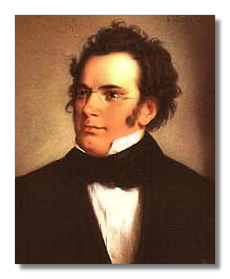
This term, it’s Schubert
for some reason.

I know that many students
relate to Schubert. (Alright
many is a relative term but
I do see that some students remark
on their homework how much
they like Schubert’s unfinished
Symphony on the listening).

For some reason I have been playing through his Impromptus and Moments Musical. This AM I treated myself to his Sonata in Bb. First I listened to the recording while I corrected papers. Then for positive reinforcement for getting that done, I let myself sit and play through it at the piano.

Schubert’s melodies continue to have a specific charm. And I always like it when he jumps to an odd chord, usually at a surprising third relationship.
I watched some more
of Bernstein’s Young
People’s Concerts last
night. I watched the
one on “American Music.”
I found it embaressing
how he dismissed the
influence of
Native Americans
and “Negroes” on
American music.

Granted it was 1958,
but I expected more
of a composer of
his abilities.

He discussed jazz
but left African Americans
entirely out of the
discussion.

I found an essay of
his from 1959 where
he did a bit better and mentioned Scott Joplin (academics
seem to love Joplin because he doesn’t involve improv?) and also (gasp) the blues. Eileen thinks I’m being too hard on him and sort of reading back into the pre Civil Rights era. She’s probably right, but I reserve the right to be unreasonable.

I teach about racism and American music. After listening to Bernstein’s televised comments from 1958, I am more convinced than ever that people benefit from understanding the impact of racism on the history of music (and even the present).

I’m putting all these pictures
on the right because
I’m still trying to figure
out WordPress (how
it wraps around pics
for instance, ahem).

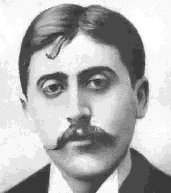
I burned an audio
CD of proust’s beginning
chapter for Eileen to fall
asleep to when
she can’t find anything else.
This is a great chapter. He talks
about falling asleep and waking up and not being sure exactly where you were in time and space. I love this chapter. It’s called “overture.”

Pickwickian post

9:11 AM

I finally finished Pickwick Papers last night. It was fun but long. I do admire Dickens’ use of language. And his powers of observation are keen. Pickwick was serialized initially. Dickens is clever how he keeps your attention. He does primarily through subplots. The whole story is basically two years in the life of Mr. Pickwick. In that two years, many things happen to him. He is sued and thrown in jail. He assists in many trysts for younger people. And you get to know the marvelous Sam Weller, his manservant and Sam’s father. The Wellers are the most attractive characters in the book to me.

I have another Dickens picked out: Nicholas Nickleby. It is sitting next to my chair. But I plan on finishing “The Trial” by Kafka before starting it.

I am reading the Dickens novels that I have not read in chronological order. Also slowly simultaneously reading Peter Ackroyd’s bio of Dickens. Right now I am past the part of Dickens life where he wrote Pickwick and Nicholas Nickleby. My plan is to pick the bio back up after finishing Nicholas Nickleby and sort of get a background of what was happening to Dickens as he was writing.

word waltz

8:24 AM

Read Orwell’s “Politics and the English Language” last night.

I was reading in Luntz’s “Words that Matter,” and he prefaced a chapter with an interesting quote from Orwell’s essay.

God bless the net. I googled it and came up with above link. It looks like someone has hurriedly typed it in (lots of typos) but I got the idea (There are quotes in the previous post).

I continue to enjoy Luntz’s observations, though I read it with my guard up. I know the power of language and it’s ability to fool the reader or listener. But I prefer to do a lot my own reading and thinking and testing my brains against the person who I am reading.

Luntz’s political stands are practically the opposite of my own. But he insists that he is not a polemicist. Instead he is trying to contribute to clarity in language.

I think this is a good goal. I know that I watch my own language and try to make it more clear.

Luntz’s has this notion that it’s not what you say or what you mean to say that ultimately matters it’s what people hear or perceive. I think that this is true a lot of the time.

But it is just a step away from saying that perception trumps reality. Or that perception is reality.

This step discards content in favor of manipulation of the reader or listener.

I don’t think Luntz is doing this.

But I think he is close to other people who advocate the idea of “framing” (which I think means choosing language to shape your audience’s response and staying “on message” avoiding any exchange of ideas that does not serve your ends). His arguments are right at the edge of the terrible word waltz where words do the leading and listeners slip helplessly into their dance without thinking.

4 questions

7:50 AM

“Words end up meaning nothing when they are used improperly.”

“The whole tendency of modern prose is away from concreteness.”

“In our time, political speech and writing are largely the defense of the indefensible.”

“Defenseless villages are bombarded from the air, the inhabitants driven out into the countryside, the cattle machine-gunned, the huts set on fire with incendiary bullets, this is called pacification.”

“Let the meaning choose the word, not the other way around.”

“A scrupulous writer, in every sentence he writes, will ask himself at least four questions, thus:

1. What am I trying to say?
2. What words will express it?
3. What image or idiom will make it clearer?
4. Is this image fresh enough to have an effect?

And he will probably ask himself two more:
1. Could I put it more shortly?
2. Have I said anything that is avoidably ugly?”

from “Politics and the English Language” (1946) by George Orwell

Diminishing our humanity

9:09 PM

Speaking of what happens to our humanity when we are constantly being exposed to brutalities like executions and genocide, Patricial Williams quotes Cynthia Cannady:

“What has happened to us is a violation of our being. And we do not even seem to know it. Yes, there are numberless victims in Iraq. But we are victims, too. What is being killed is our ability to care about what happens to other people. We think we can just on with our private lives, but we [actually] can’t take back what we have purchased.”

The whole article is worth reading.

College life

They told me that I wouldn’t have a computer in my office at GVSU, but I do. Taught class today even though I’m still in a fog from my flu. This class asked a lot of good questions today. Somehow there’s more participation and interest than I remember. People seem in good spirits. Very helpful today. I only got through about 2/3rds of my lecture, but whotthehell.

I’m doing this entry from school. I like the ability to do remote blogs. This means I can blog easily when I’m traveling (assuming I can get access to the Web).

Explorer shows a big gap at the top of my web site, but Mozilla doesn’t. I’ll have to fix that when I get my brains back.

Aha!

11:49 AM

I have been thinking about the new theme (template appearance from WordPress) I am using.

I think it is a good one for me, because after just a little coaching from my kids and a bit of thought on my part, I figured out how to link in my myspace site and put up a gas mask pic.

I did this despite having a sort of flu/body cold which makes my head more foggy than usual.

After doing this, I begin to see just how flexible this particular set up is. It is more basic than the set-up that comes with WordPress. You have to edit the xhtml language with very few point and click features. I like that actually. It helps me understand what the heck I am doing.

I corrected about a third of my papers I want to have done by tomorrow.

I’m sick

8:53 AM

Great. I’m sick. Church went well yesterday but my throat was hurting.

Last night I slept badly.

I need to correct papers for tomorrow but I think I will just lay in bed.

Apple wants to be your (only) mp3 phone service

12:45 PM

“The iTunes/iPhone/iPod combo is a roach-motel: customers check in, but they can’t check out.” Cory Doctorow on Boingboing.net (You have to scroll down a bit.)

“Even if you are ready to pledge a lifetime commitment to the iPod as your only brand of portable music player or to the iPhone as your only cellphone once it is released, you may find that FairPlay copy protection will, sooner or later, cause you grief. You are always going to have to buy Apple stuff. Forever and ever. Because your iTunes will not play on anyone else’s hardware.”

Music & Words

7:30 AM

Received 3 puchased DVDs in the mail yesterday: Freiburg Orch playing Bach Brandenburgs, Herbert Von Karajan conducting Beethoven’s 4 & 5th symphony and Touch the Sound.

Also received the first of 10 Netflix disks of the 50s TV series: “Young Person’s People’s Concerts with the New York Philharmonic” Leonard Bernstein (pictured above). I put Bernstein on first. I purchased a book that selectively transcribes these shows this summer. I like Bernstein’s aesthetic a lot and I’m always looking for ways to talk about music to listeners.

What I like most about the Bernstein recordings is that they are so obviously early live TV (1958). Instead of a teleprompter he is working from two scripts, one at the podium and one at the piano. He grunts and hums along as he demonstrates and conducts. Some engineer has obviously been instructed not to turn down his mic because he occasionally talks over the music to the audience.

The show was too long for me. The pace was slow and even the young audience from an era of longer attention spans gets tired about halfway through the whole thing.

Read about 25 pages into Luntz’s “Words that Work” last night. So far I have been caught up in his ability to move back and forth in opposed political interest groups even though he is a declared conservative. (And reading this book, you can tell he really is brain dead conservative on many issues.) Secondly, his insight that “it’s not what you say, it’s what is being heard” is a very important thing to think about in terms of teaching and communication.

I am reminded of an article I wrote several years ago. The editor sent it back and told me I was writing for too educated a reader. Instead of college level vocab he wanted me to consciously take it down to 7th grade. For some reason I saw this as an interesting challenge and did several rewrites to achieve this.

Clarity (for me) is always a high value. If the vocab is not familar to the listener or reader, the speaker or writer has failed to communicate. Unless of course he expects the reader to pick up a dictionary.

Luntz is clear that it is not just style that helps communication it is also content. Some ideas are wrongheaded no matter how well they are “framed.” I agree with him on this, but I suspect that our ideas differ radically.

He lists off the ten basic rules of communication in his first chapter: simplicity, brevity, credibility, consistency, novelty, sound, aspiration, visualization, questioning and context.

It’s a good list. He suggests an 11th that would address the need for visual symbols.

When I am teaching, I write a daily “word for the day” on the board before each class. I tell the class that I find I use words that people sometimes do not recognize. A “word for the day” might help with this. Unless I warn them, I don’t put these words on tests and quizzes.
Not sure this is effective beyond demonstrating my own obvious conviction that words are important. No wonder I picked up a book called, “Words that Work,” eh?