I spent several hours working with choral music for the upcoming season at my church yesterday. I decided to re-write an old setting of mine of Psalm 121. This is the psalm for one of the upcoming Sundays in Lent. It begins “I lift up my eyes to the mountains, from where shall come my help?” It always makes me think of my maternal grandmother, Thelma.
Thelma lived in South Charleston, West Virginia.
I have many childhood memories of traveling from Greeneville, Tennessee and later Flint, Michigan to West Virginia to visit my Mom’s family. I see in retrospect that Thelma was a bit of a character. She actually had life pretty good in some ways. Her son and his family lived a few doors down. One of her two daughters lived across the street with her family. Thelma doted on them and their children.
My Mom left West Virginia as a young woman to attend the bible college of her denomination in Anderson, Indiana.
She recently told me she cried every night for months with homesickness. But refused to give in to it and stuck it out in the new setting. She must have been the first of her family to attend college. She never returned to live in West Virginia where her sister and brother lived.
I never noticed the inevitable tensions between my Mom and her Mom until I was an adult. As a child I always felt welcome in all three homes on Central Avenue in South Charleston.
And of course everybody was pretty religious. They worried about each other’s souls. Were you truly “saved”? Would they get to see you in heaven? That sort of thing. Needless to say, they worried about my Mom’s preacher husband and his new fangled ideas from time to time.
I have a memory of my grandmother, Thelma, saying the words of Psalm 121. As a kid, I thought she meant that she was actually getting strength from her beloved mountains of West Virginia. I later discovered that this is not what the psalm means. The speaker is looking at the hills feeling daunted. The strength is coming “from the Lord.”
When Thelma’s buy valium manila husband, my gentle grandfather, Jim, died, I seem to recall the use of this psalm in the funeral. My most vivid memory was of my brother and I carrying our grandmother (and her wheelchair?) from the car to the Jim’s open grave site. This was necessary because that part of W. Virginia is all hills and mountains so that even the graveyards are on pretty steep inclines.
This was also truly also of Central Avenue where the Midkiff (My Mom’s fam) lived.
Anyway, I wrote this psalm setting a while back and intended to try to get it published with a dedication for my grandparents, Jim and Thelma. It was never published. I don’t think I ever did more than perform it with my choir at the time and think about submitting it to a publisher.
It’s been so long since I wrote it that I am having to completely rewrite it to make it acceptable. It’s fun, but time consuming. I want to have some anthems ready to rehearse with my choir this coming Sunday. This anthem won’t be one of them. But I think I’ll get it revised in time to rehearse and perform.
Another anthem that I want to use that won’t be ready this Sunday is Chanticleer’s gospel setting of “The Woman at the Well.”
This another project from past years. It’s a great setting. Chanticleer is a marvelous choral group whose recordings range from pop to classic and everything in between.
I have always admired their a cappella rendition of this old gospel tune. I transcribed the melody and the bass line back when I was working for the Catholics and used it as an anthem. It tells the story of the gospel reading of one the upcoming Sundays of Lent.
My old transcription doesn’t have the alto and tenor part in it, so again this is going to require a bit of work. I have been listening to the recording and think it would be pretty easy to add the missing parts so that my present choir could perform it.
I have to break off here and get ready to drive to Muskegon….
Before beginning ballet class yesterday, the teacher asked me if I would talk to the dancers about how musical meter works. She would be reviewing with them for their first written exam next week in class. In one portion of this exam, she was planning on having me play triple/duple meter excerpts for the dancers to identify as such. She thought it would be helpful if I explained and demonstrated the concepts. Which I did.
What a pleasure to be asked to do something like this. The ballet department has consistently noticed and utilized my abilities as a musician and improviser. The music department at Hope has kept me at arm’s length since I arrived here in 1987. Now. the teachers are younger, more competent, and less intolerant than when I arrived. But for the most part, they have seemed disinterested in me as a fellow musician.
I don’t mean to bitch about this at length. But a couple of examples come readily to mind. About five or six years ago, I took a choral composition of mine to the choir director at this college. I thought he might be interested in either actually performing it or discussing it. I tried to open a conversation with him. I thought he was going to get back with me. I never saw him again until he was sitting on a hiring committee at the church I now work. I see him regularly. He has never once mentioned the work to me.
I think it’s a pretty good composition but would welcome a critical discussion of it or even a quick critical comment. I’m not even sure he remembers that I approached him.
In another instance, about seven years ago or so , I decided it would be fun to tutor music theory at the college level.
Being a composer, music theory is a strong suit of mine. I almost took a teaching assistantship at Southern Methodist to pursue upper degrees in it. (Glad I didn’t because things have worked out so well for Eileen and me in Holland) I thought it would be polite to at least let the head of the music theory department at Hope know that I would be posting signs around offering to help music students with their theory. He was polite but cool. Again when I got my job at my present church, he was a member. But even though I asked his jazz trio to perform at service and even read his book on jazz theory, he remained distant and cool. Eventually he and his wife stopped coming to this church, so who knows?
There are many stories I can tell like this.
"I could tell you some stories." one of many great lines from the movie Barton Fink
It’s not that big a deal to me. I am thinking of it now mostly because a couple of things have happened (like the ballet teacher asking me to briefly co-teach with her), that are in contrast to most of my experience in Western Michigan with connecting with college types.
I received a phone call from Jim Piersma, the husband of the violinist in my piano trio. He wondered if I was interested in performing with her at an upcoming volunteer appreciation dinner for his organization (Community Action House – a local charity that helps people with food and housing).
He offered me $100. I hate to be so plebeian as to instantly mention money, but his phone call was in such stark contrast to the way the Grand Haven Choral Department contracted (negotiated) with me for fees. I instantly said yes. Amy, the violinist I work with and Jim’s wife, and I were already scheduled for an afternoon rehearsal yesterday, so we rehearsed a few things and talked about some other tunes to put on the performance list for this gig.
I’ve also been booked to do a couple of upcoming jazz gigs.
Many of the music profs at Hope right now are into jazz. I have attempted to have conversations with them about jazz and asked them questions, but again, they are polite but keep me at arm’s length. I feel like the ragged old hippie local yokel guy. Worse things to be, I think. Heh.
The upcoming jazz gigs were booked by the Zeeland High School music teacher, Keith Walker. I have known him for years as a pretty good trumpet player and even hired him once in a while. Last year, I hired his talented high school aged son to play bass for me. Since then I am sort of in their orbit and Keith has booked me to play with his son’s group when their keyboard player can’t make the gig. Very flattering.
Since I’m being all upbeat and shit, another cool thing happened to me yesterday. I contacted my friend and colleague, Peter Kurdziel. (I do have colleagues just not so much at Hope or other local colleges, heh) Peter lives in Muskegon which is where my Solo and Ensemble festival is being held Saturday. I have a huge gap of time with nothing to do (from 10 AM to 3 PM) and thought maybe we could have lunch.
It turns out that Peter will actually be in the building doing what I’m doing (accompanying singers) and that there are some nice restaurants near the school where we can sneak off for food and conversation. Woo hoo!
I have been writing a practice fugue just to sharpen my fugue chops. I put it down for about a week. Returned to it yesterday for a bit.
My file organization of my Finale (music notation) files paid off this week. Preparing for Tuesday evening’s rehearsal, I thought it would nice to have my instrumental ensemble play a different version of our Communion Hymn Sunday to serve as the prelude. I went poking through the files looking to see if I had transcribed the melody. Not only had I done so, it was already in the version I needed. Cool beans.
I also discovered the switch in the Finale software that will add capo chords to all of the guitar chords in document at once. This was the first time I didn’t have to go through all of the chords and add the capo chord. Sweet. I wonder how long this has been a possibility in this software which the church recently paid to update.
I accompanied 16 songs last night in a mini-recital. I like working with young musicians. I arrived a little after 6 looking for a singer whom the vocal teacher said would meet with me for a last minute rehearsal. Neither the singer or the teacher was anywhere to be seen. I later learned they were sitting in the audience of the first recital of the evening.
According to the email from the choral director who contracted with me for this gig, the recital would start at 7 PM. It actually started at 6:30 so there was not much time for working with any singers beforehand. But I did manage to go through a few with some of them.
It was interesting to see how young performers respond to the pressures of the solo concert situation. Almost all of them had potential for good performances. Some of the most frightened did the best. Some of the performances were strongly affected (singing sharp for most of the song, skipping around in the song). Some were very ill-prepared to the point where I had to play the melody for them. Some were confident and performed well.
I have to wonder how I am going to get paid. Two more students gave me checks last night which brings the total to three so far. I suspect the students and their parents think that the $25 they pay me is my fee. But the choral director contracted for an additional $25 per student to be provided by the Choral Boosters. I find it discouraging to think that these young people (and their parents) think what I am doing is worth $25. All of these people treat me with more respect than I usual seem engender in Holland people. But I wish this translated into raising the standards of remuneration for artistic endeavors. But toujour gai, archie, toujours gai!
This brings me to today’s poem on the Writer’s Almanac website:
Art Sanctuary by Niki Giovanni
I would always choose to be the person running
rather than the mob chasing
I would prefer to be the person laughed at
rather than the teenagers laughing
I always admired the men and women who sat down
for their rights
And held in disdain the men and women who spat
on them
Everyone deserves Sanctuary a place to go where you are
safe
Art offers Sanctuary to everyone willing
to open their hearts as well as their eyes
Music offers this as well. One of my achieved goals last night was to lead the singers and the listeners into the experience of music. When one singer destroyed the song with lapses, I persisted musically even in the little solo piano section that ended the piece and left the listeners with the possibility of a refreshing ending moment even as they witnessed the painful spectacle of a ill-prepared and humiliated young musician.
I listened to the President’s news conference on my MP3 player this morning.
Here are links mostly but not all on my to be read list.
by Katha Pollitt whom I have been reading for years. Her basic point is that the education problem is not a policy problem but a poverty problem.
telling quote:
“The biggest barrier to educational achievement today is not any of the things the media talk endlessly about: poorly prepared teachers, badly run schools, too many tests, low standards. It’s child poverty—which, like poverty in general, has just dropped out of the discourse.
Here’s a couple of links from totally different points of view.
The first one (by Scott Turow) I totally disagree with. Nowhere in this article on the supposed consequences of cavalier treatment of intellectual property does he mention the dramatic lengthening of the period of copyright that benefits not living creators but mostly corporations like Disney.
Spent several hours yesterday working on stuff for this Sunday. We are singing Donna Peña’s big Roman Catholic hit, “Digo, ‘Si,’ Señor (I say yes, my Lord) as the hymn before the gospel (the Episcopalians refer to this as the sequence hymn).
It’s a catchy Sergio Mendez type melody. I rehearsed it last night with my volunteers that I call my Grace Episcopal Liturgical Orchestra. (Last night we consisted of 5 people including me. Sunday we’ll be playing guitars, bass, viola, congas, maracas, tambourine, and piano.)
St. Louis Jesuits circa the 70s
Like the St. Louis Jesuits in their popular church tune, “Be not afraid,” Peña begins the verses (sung by the choir or the cantor) with very quick notes. And she has chosen not to write a strictly recurring number of syllables per verse. For years, I have listened to congregations mellow out the jerkiness of “Be not afraid,” and sing the rhythms differently than written. I have concluded that the congregations are wise in this and have followed these ideas in my adaptation of the song for Sunday.
I also broke down and wrote a bulletin article for this Sunday. This took up a good portion of the morning. I have been having conversations with my boss for the last few years about the way my job is getting bigger and bigger with no commiserate change in pay. Since beginning my work, she and I have added task after task to my job. Last year I asked how my job would look different if it was full time. Neither of us could come up with more than that she would feel more comfortable to ask me to take on a little bit more work like forming a young adults’s choir or handbell choir (both of which in moments of frustration and weakness I have offered to do for no increase in pay, but she, godblessher, helped me resist).
I also have brought to her attention that by professional standards I am being paid about half of what is fair for my education, background and abilities.
I began writing the silly bulletin article (I’ll put the one I wrote for this Sunday below so you can read it if you’re interested) when I realized that I sort of automatically check out the history of the hymns and music I use at work. Often this elucidates the reason they are used. I thought I might as well put some background information in the weekly bulletin occasionally.
When I started doing this, I learned from listening to parishioners that even astute worshipers were surprised by how connected and coherent the changing parts of the service (the readings, the hymns, the choral anthems) usually are. Pointing this connection out via the bulletin article seemed to be a no brainer.
But it turned into an absorbing task that I don’t always pull off every week.
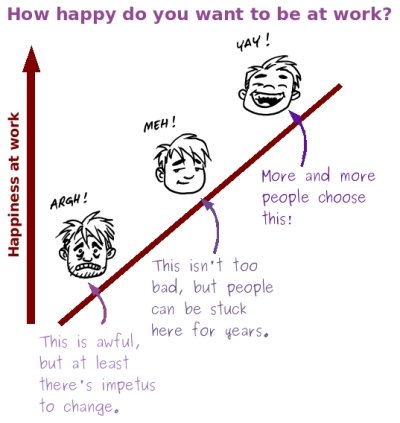
Found this on the internets. It's not exactly what my boss and I have been talking about, but it is interesting to me.
So since my boss and I aren’t finding ways to help me fix my dilemma, we started discussing the “energy pie” of staffs (including her as priest) when a church community is changing from a small pastoral size to a larger program size but doesn’t adjust it’s staff accordingly.
We are both troubled by this stuff. But I am improving so slowly in this that it seems they are not going to change.
Part of my solution is initiating the frank discussions we have been having about where I am most effective in my work and to consider trimming or changing my approaches in the other areas.
My little orchestra is an area where I feel like I’m not all that effective. I was able initially to get a pretty enthusiastic response last year. But this year, the enthusiasts were probably all in attendance last evening.
Since I anticipated this, I intentionally put a lot less preparation into the organization. I’m not sure if all of these few people will continue to be interested not because of this, but because it is a challenge for them. But I think I pulled last night off okay.
My challenge today begins at 3 PM with 2 & 1/2 hours of ballet class followed by a 6 PM last minute rehearsal with a young singer before a two hour recital of accompanying him and 7 other singers. Whew! I hope my energy holds up.
One quote caught my eye in this article: ““People are so enamored of the technology,” said Michael H. Posner, the assistant secretary of state for democracy, human rights and labor. “People have a view that technology will make us free. No, people will make us free.”
Hmmm. I thought that it was the “truth” that did that. I AM getting religioius.
Chevron makes me crazy because their PR is so disconnected from their actions. I yell at their ads every time I watch the PBS news hour which they sponsor. They are of course contesting the suit brought against them by the Ecuadorian forest tribes and villagers. Sure looks like David and Goliath to me. Make that GREEDY David.
little quote: “Almost lost in the various disputes related to the lawsuit is the fact that Chevron and plaintiffs have agreed that oil exploration contaminated what had been largely undeveloped swaths of Ecuadorean rainforest.”
I was struck by this sentence and the idea it drives home in this editorial:
” Republicans, who now dominate the House, are obsessed with making indiscriminate short-term cuts in programs they never liked anyway. The Republican cuts would eviscerate vital government functions while not having any lasting impact on the deficit.”
Arts and Letters Daily http://www.aldaily.com/ (where I found this link) described it this way: “Montaigne’s self-absorption feels contemporary, but he was no proto-blogger. He aimed for self-discovery, not self-display…”
I’m a big Montaigne fan, but also wondered about the self-display aspect of blogging. I know that people who blog and tweet and facebook are often stereotyped as revealing stuff no one needs to know like what they had for lunch. But still I like the connections online both personal and reference library stuff.
Finally for the diehards, here’s my bulletin article:
Music notes: “Love your enemies,” Jesus says in today’s gospel, “pray for those who persecute you.” We begin today’s service with Charles Wesley’s great hymn of love and compassion, “Love, divine, all loves excelling” (No. 657 in The Hymnal 1982). Our sequence hymn comes from the pen of the Minnesota liturgical composer, Dona Pe?a. We blend Spanish and English today as we digo, “si,” (say yes) to the God of the oppressed (verse 1) and to loving enemies and to peace in the world (verse 2). This hymn is taken from My Heart Sings Out, the 2004 Episcopalian Hymnal “designed for all-age worship, with the aim of the full inclusion of children in weekly worship” (from Church Publishing’s website). “Jesu, Jesu, fill us with your love” (No. 602 in The Hymnal 1982) reminds us that Jesus, himself, models for us the love we are called to. We repeat Carl Daw’s excellent Eucharist hymn, “As we gather at your table, this week to continue to make it part of our repertoire of familiar hymns. It is taken from Wonder, Love and Praise. Voices Found, the Episcopal hymnal of hymns “for, by, or about women,” provides us with another new hymn, “God of Freedom.” This hymn was written for Amnesty International’s Campaign Against Torture in 1980 (see the mention of “torture’s terror” in the second verse). The closing verse begins, “Make in us a captive conscious quick to hear, to act, to speak” and ends asking to be taught “to be fully human, open to each other’s needs.” Thus we conclude our prayer remembering in our song Christ’s challenges to live out the love of God in the way we treat each other. submitted by Steve Jenkins, Music Director.
When I was a teenager, my parents had this picture on the wall.
For many years (in my 30s & 40s), I used to pray everyday. I used to get up in the morning and pray morning prayer with a healthy dose of psalms. I usually managed to get evening prayer in some time in the evening as well.
I can’t remember exactly but I think I read about 20 psalms a day in the course of these prayers.
I used the Episcopalian book to do this. In retrospect it feels like a quietly desperate attempt to stay in contact with a part of myself that had to be hidden in my work with the Roman Catholics.
The Catholics have strict rules about who can and cannot receive communion. Being a professional church person working for the Catholics, I was well versed in those rules as well as many other things about Catholicism.
I violated the rules of the club reluctantly. So I only received Communion a few times in Catholic situations even though other Catholics often found this puzzling.
That was then. Now the Roman Catholics (especially the bishops and the pope) seem much more comfortable with limiting who takes communion with them.
So this means all the years I worked in the Roman Catholic church, I and my family chose not to convert and did not participate in the central rite of this church. I mean I did everything except actually receive communion. It was part of my professional understanding of public prayer that leaders of prayer “adopt the entire posture of the prayer.”
This means lead and encourage participation.
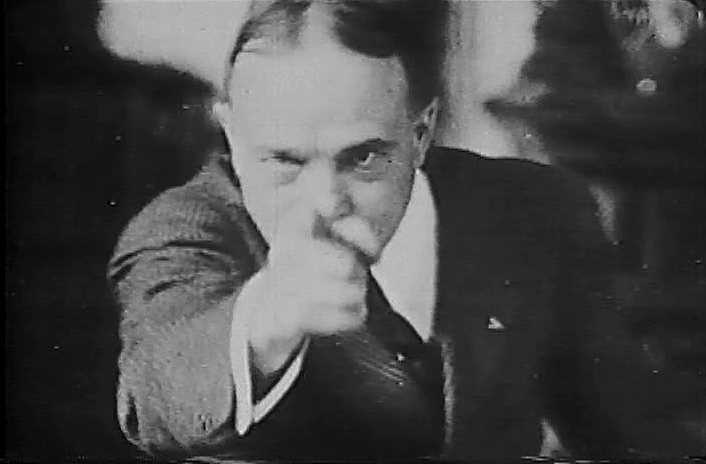
Billy Sunday (1862-1935) click on the pic for his wikipedia article
The daily prayer of the Christian Church is sometimes referred to as the “Office.” This comes from officium which means duty. I saw prayer as an extension of my own musical discipline.
Praying so many psalms over the years, I came to really love them. I still do. I had a conversation recently with a professor who insisted that he primarily sees the psalms as Christian. I was saying to him that when I prayed them daily I tried to see them more the way they were intended. Scholars have phrase for this: sitz im leben.
Unsurprisingly this had little effect on my listener.
But now I’m likely to get up in the morning and reach for a book of poetry.
That’s what I did this morning. I keep all of my poetry books together in several bookcases. So I can run my eyes over books of poetry that have been with me all my life and ones that I have acquired more recently.
This morning as I reached for a book, I saw several by an author who was a favorite of an old acquaintance with whom I have not had a conversation for many, many years. It reminded that I had dreamed of him last night. The sudden remembering of this and the memory itself felt like a poem.
I spent most of yesterday waiting to see if the teacher organizing the vocal recital Wednesday was going to call and schedule rehearsal times with me and his students. I emailed him a couple of times. Called his cell and left a message. His responses did not make it clear what was going to happen that schedule-wise.
The little city where these rehearsals is about 20 minutes away. Finally he called my land line and we agreed that I would only meet with one student an hour before the performance tomorrow evening. This student is the one who is the least prepared and is, of course, doing the most challenging music.
This did not make for a very relaxing day. Mondays are usually hard for me anyway. I find that performing at church takes a great deal of energy especially the way I do it, immersing myself in the execution of the music whether improvised or prepared.
Interestingly, my ballet classes are just the opposite. I find it therapeutic to be a musical fly on the wall. Sort of an mildly artistic metronome, making up melodies and tunes that are most always in symmetrical phrases.
My little Christian college is on break and I think I almost missed dragging myself over to the studio and improvising for two and half hours yesterday.
No ballet today either, but I have to prep for a rehearsal with instrumentalists from church this evening. I put out a call for another gathering instrumentalists and received a discouragingly low number of responses. My boss and I agreed that I would put less energy into this ensemble this year. So I’m trying to do that. No fancy composition for these guys tonight. Nosirree.
A couple books I ordered came in the mail yesterday:
I like this cookbook because at this time I’m keeping an informal eye on my caloric intake and slowly losing a bit of weight. I bought it used through Amazon.
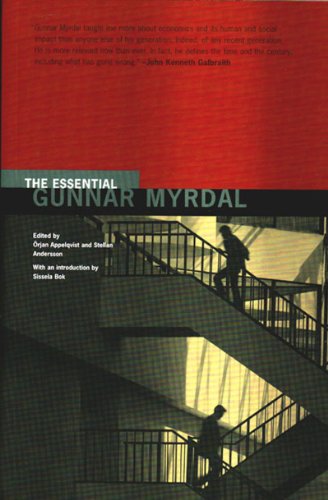
My copy of this looks like one of the two above. It’s an old paperback in good shape but is both volumes in one. Myrdal was a Swedish social economist who examined the United States racism and other social problems in the 50s. Since I am already a bit of a fan of De Tocqueville, this attracted me. It looks very interesting. I got this book using my earned credits at paperbackswap.com.
I saw William Cobb on a C-Span presentation recently. He really impressed me with his historical perspective on the present moment in the United States. I interlibrary-loaned this book to see what it was like. Read a bit in it last night and his prose is a bit stiff but I am interested to see what he says about Obama and Jeremiah Wright.
This op-ed piece by Roger Cohen poses the idea that what is happening in Egypt, Tunisia and other countries could be a positive opportunity for the U.S.
The use of the word, “commission,” in this headline/link is a bit confusing. I haven’t read the whole article yet, but commission is used I believe in the sense of “committing” journalism. See quote:
From the update at the end of the article: ” [W]hat matters is that factually false statements are clearly designated and documented as such, not treated as merely “one side of the story” deserving neutral and respectful airing on equal footing with the truth.”
The Haydn went very well yesterday. I was rehearsing it before service and a woman asked me about it, saying it was very beautiful. I talked to her for a bit about Haydn. He is often underrated. If you bothered to click on the recording in yesterday’s post, I guess you can make your own mind up about the piece. I think it’s lovely and also defies a bit of stereotype about this composer.
For the postlude I played this Chaconne by Louis Couperin. I couldn’t find a Youtube video of it as fast as I played it. (There are however several different ones available). This performer at least seems to understand French music a bit more like I do, but wow is this a heavy interp to my ears.
The soundtrack to the movie, “The End of Violence,” is one of my favorites. Yesterday after a typical morning at church I was a bit frazzled as usual. Eileen and I hadn’t gone out to eat for a week. Eileen skipped church but we went out for lunch at the pub. I had two martinis and started feeling a bit more human.
When we came home I was delighted to discover the movie, “The End of Violence,” was playing on the Independent Channel.
It’s kind of a goofy movie, I guess. Not that great, but there are some scenes burned into my memory and it was great fun to see them again. Also, since originally seeing the movie, I have played the soundtrack a lot. So I know the music much better and was interested to see how much of it was actually used in the film.
I especially like Ry Cooder’s work on it.
This is one of many on it that I like.
Also this one, although this video is admittedly dumb.
Of course the Tom Waits video at the top of this post is also one of the tunes.
I was discouraged to get up this morning and find an email in my inbox asking me if I could rehearse today in Grand Haven with the high school singers. I was hoping for a day off since the ballet class is on break along with the rest of the little Christian college in this town. Shit.
Good quote from this one: “Does anyone seriously think Justice Thomas would become more constitutionally conservative (if that were somehow logically possible) as a result of his wife’s political activism?”
I always read this column if I remember to. The New York Times hires respected journalists and gives them a platform to critique their journalistic performance. This column shows how an error slipped into the paper.
“An initial glance at the WikiLeaks war logs doesn’t reveal evidence of some massive WMD program by the Saddam Hussein regime — the Bush administration’s most (in)famous rationale for invading Iraq. But chemical weapons, especially, did not vanish from the Iraqi battlefield. Remnants of Saddam’s toxic arsenal, largely destroyed after the Gulf War, remained. Jihadists, insurgents and foreign (possibly Iranian) agitators turned to these stockpiles during the Iraq conflict — and may have brewed up their own deadly agents.”
“The WMD diehards will likely find some comfort in these newly-WikiLeaked documents. Skeptics will note that these relatively small WMD stockpiles were hardly the kind of grave danger that the Bush administration presented in the run-up to the war.”
I can remember following the progress of our troops up the road to Baghdad being terrified that Hussein was going to unleash nerve gas or something at any point and kill many of our soldiers.
This link was passed on to me by my son. Jones is a physicist who has valid questions about the science of the Twin Towers- 9/11 attack. There are links in his CV:
I have been noticing that a mild change has been coming over me in the last week or so. I am feeling more confident in my own judgments and ideas. Not that I don’t still question them. But I realize that I have been living in an environment since the late 80s in which I am very often underestimated and misunderstood. I attribute this to a myriad of causes and not just my anachronistic appearance. Like my appearance some but not all of these factors are self-inflicted. Others are the result of people not seeing me accurately or even noticing me (hence my fondness for “invisible” metaphors). I am trying to reduce the self-inflicted ones and see myself more clearly and act more like who I really am.
This is ironic because when I think of my young adulthood, I think I was overestimated and misunderstood by many people in my environment and that I also often more easily fell into the trap of overestimating and misunderstanding myself.
Now I feel a bit better self assessed. In addition I sense that my judgments and perspective have a bit more validity than maybe I have been giving them personally.
I know this probably sounds strange if you know me at all. I am sometimes perceived as over confident if not overbearing and suspect that I intimidate people.
I think discovering Andre Schiffrin the publisher contributed to my ongoing realization about the wider cosmopolitan perspective and continual learning I have pursued in my life.
This has definitely been impacted by my use of the Internet.
Yesterday I was sitting in the coffee shop with Eileen. She was relieved to get out and do some normal things I think after a week of convalescence and discomfort. So we lingered at the Internet table that the coffee shop provides for laptop users.
During this time, I perused the back catalog of Schiffrin’s publishing house, The New Press.
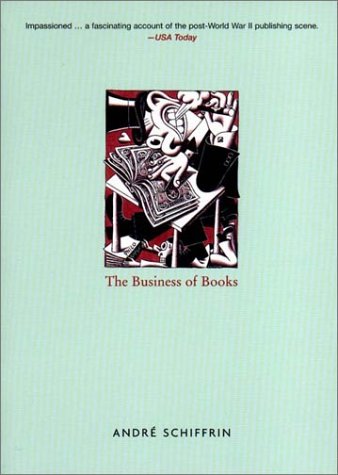
Schiffrin has said that he set out to remedy the bad current situation, one in which conglomerates are buying up book publishers and insisting on more and more profit and less and less beneficial exposure of ideas. He said his idea of creating The New Press was to create a publishing equivalent of NPR or PBS. I learned this from listening to his comments on C-Span. I am now about a third of the way through his book, The Business of Books: How International Conglomerates Took Over Publishing and Changed the Way We Read.
Anyway, I was able to look at his press’s catalog online. After I saw a book that looked interesting, I would then go to the local library’s online catalog and see if it was available.
This online use of catalogs is one that I have done since before the World Wide Web. I used to do it via Telnet which was an early Internet connection mode.
For me, the internet is not so much an immediate source of primary information but much more often a way to research how to obtain more primary information. It can act like a cosmic catalog in which I can make some preliminary evaluation of materials to obtain to learn more.
Admittedly I have begun to use the Internet more and more as a source for primary information, especially news.
But yesterday while sitting in a coffee house I checked on the following books:
I have been aware of Studs Terkel for years and dipped into his books and heard him speak. I did not know how Schiffrin had approached him after he had been blacklisted and encouraged him to begin to make the books he made which are oral histories. Schiffrin tells the story in The Business of Books.
I thought Will the Circle be Unbroken: Reflections on Death, Rebirth and Hunger for a Faith sounded interesting. Also Hope Dies Last: Keeping the Faith in Difficult times.
Last night I read the introduction, personal notes and the first interview in Hope Dies Last. Schiffrin’s and Terkel’s populism attracts me. They are literate but still interested in popular culture and history. Here are couple quotes from Hope Dies Last:
Quoting Thomas Paine, Terkel says that what Paine said in 1791 is on the button in the 21st century and particularly and ironically in America where these ideas were once espoused.
“Freedom has been hunted round the globe; reason was considered as rebellion; and the slavery of fear has made men afraid to think. But such is the irresistible nature of truth that all it asks, and all it wants, is the liberty of appearing… In such a situation, man becomes what he ought. He sees his species not with the inhuman ideas of a natural enemy, but as a kindred.”
That is from the introduction of Hope Dies Last. In his Personal Notes, Terkel quotes a radio broadcast made on V-E day, May 8, 1945. The broadcaster, Norman Corwin, “had written a one-hour program” to celebrate the end of the war. Terkel quotes his works and they make me think of what happened in Cairo this week.
“Let the singing fade, the celebrants go home. The bowl is drained and empty, and the toasts are drunk. The guns are still, the tanks garaged, the planes rest in the hangar. Only the night remains. Outside the dew of morning glistens like a hope.”
This book has gone on my list of books to finish reading. Several Terkel books were sitting on the shelves of my library. There were other books and authors that caught my eye. Like Gunnar Myrdal.
Myrdal seems to be a modern Swedish Tocqueville providing some fascinating looks at the problems of American life in the 20th Century. In The Business of Books, Schiffrin writes
“… Myrdal was the most perceptive critic of the trap into which American society had fallen, a combination of racism and economic inequality…”
I was so interested in these last two books I ordered them with my credits at PaperBack Swap. They will be coming free in the mail soon.
I can see I’m going on a bit at length. My point is to expose some of these titles and at the same time demonstrate how the Internet can work like a card catalog to a cosmic bookstore/library/free book swap “dealy.”
Here are few more The New Press books that interested me and were at the local library.
I read the first chapter in this book last night as well. Published in 2004, it describes Marcus’s ringside seat in the early days of Amazon.
This one was for Eileen. I interlibrary loaned it at her request while we were still sitting in the coffee shop.
Read the introduction to this book last night. It is a bit more polemic than the others but it connects to and updates the Robert McChesney’s historical analysis of media in our country which I read several years ago, Rich Media, Poor Democracy.
I tried not to look too much at other books at the library since I knew I was already going to take home a stack. Books on either side of the ones I was looking for beckoned. I didn’t recognize this title by Capote and have read a great deal of his work and admire it. Oh well, I added it to the stack and checked it out. It is published by Random House. I RANDOMLY ran across it while I was pulling the other books from the shelves at the library. Which just shows to go you that there’s nothing like browsing in the meat world. Heh.
I decided I would perform a Haydn piano sonata movement this Sunday as the prelude. I’m going through a bit of a rough patch at work. Probably not totally appropriate to talk about it here, but suffice it to say it’s not that serious or anything. But I chose the Haydn because it is a beautiful work and I will enjoy performing it and it will soothe me in a trying situation. It’s kind of an indulgence I guess, but it will make a lovely moment in the service.
Here’s a Youtube video that begins with this lovely movement well played.
At 3:30 (3 minutes, 30 seconds) into the video the movement ends and the player begins the finale. This player (who doesn’t seem to be identified anywhere) doesn’t repeat the two sections in the piece as per Haydn’s instructions. This probably gently violates the nature of the form this piece is written in (sonata allegro). I am planning on doing the repeats but I am taking it just a tad faster. My edition suggests a pulse of 108 per minute which is quicker than this player is playing. It’s also a bit quicker than I am planning on performing it as well.
I am managing to get back to exercising.
Started using our new WIIfit plus a couple days ago. It has some handy new features like being able to build a routine that moves immediately from exercise to exercise and some new exercise games.
And I started treadmilling again.
Eileen went to work yesterday and seem tired but satisfied when she got home. I spent some time on Skype with my lovely daughter, Sarah for a bit yesterday, catching up with her. She and her partner, Matthew, spent her birthday in Disneyland in Paris. It sounds as though it’s a replication of the U.S. Disneylands with Tea Cup rides and roller coasters.
I got up this morning (actually was laying in bed) and checked out world reaction to Mubarek’s resignation yesterday.
I haven’t finished reading this last article, but thought it had an interesting title and the first few paragraphs convinced me it wasn’t just a diatribe against the US.
Did you know you can change the setting to different countries on Google News? Pretty interesting to see what Switzerland or Brazil papers are saying. And of course you can use the translate button that pops automatically if you are using Chrome.
on the Canadian Edmunton Journal web site. I put this here in case readers miss the comments to the previous post (link). I think I was a bit glib in describing some of my ideas and when prodded by my son’s thoughtful comment tried to fill in a few of the blanks. This article is one of several I looked at about Bush’s recent decision not to go to Switzerland. I put it in my comment and am also putting here as a link.
This is silly, I know. But my Mom has a bunch of magazine subscriptions that keep coming to my house. At first I took each issue to her, but she didn’t really look at them and told me she didn’t want them. I haven’t gotten around to canceling them so they just keep coming.
Now I look at the covers and decide whether to recycle them or put them in the bathroom to read.
The March issue of Woman’s Day has an article called “The Caregiver’s Survival Kit” by Gail Sheehy. I was skimming it. It’s kind of what you would expect, easy reading. But I have done some caregiving in the last few years and realize it has affected me deeply.
Click on the title to read an online synopsis of the article. But the main reason I’m putting this up is that in the magazine (not on the web for some reason!) Sheehy mentions this web site:
I do find myself trying to find good medical information online and hadn’t run across this government web site…..
Eileen and I ordered this book and it came in the mail yesterday. I read a bit in it and discovered that the entire book was published simultaneously on line [link to site].
I find this extremely encouraging.
I was also surprised to learn that Twain actually left a coherent implication of how he wanted his autobiography published. I always thought it was just a huge collection of preparatory manuscripts.
This makes me even more excited to read this book.
I listened to a hilarious satirical song yesterday on the Capital Steps website called Lirty Dies [link to site, link to mp3]
I love the Capital Steps. They even have an entire web site dedicated to “Whipping Flurds” as they say [link]. I especially like: “Licky Weaks, the poo tarty system & the pee tarty…”
Yesterday’s report includes information on the recent cancellation of George Bush’s trip to Switzerland due to possibly being confronted as an international war crimincal:
“…on Monday, the Center for Constitutional Rights and the Berlin-based European Center for Constitutional and Human Rights issued a 42-page document they call a preliminary indictment against Bush. Human rights lawyers say Bush could now face a lawsuit wherever he travels outside the United States. (from the report)
I have to say I support this and have been saying for years that Bush and Cheney should be held responsible for their reckless behavior in office that resulted in the deaths and torture of so many people, not to mention lying to the American public about Weapons for Mass Destruction in Iraq.
It’s been very interesting sorting through the hundreds of files of my compositions and arrangements. It contradicts my self image of a composer who is not doing much composing. In fact, it seems that I do quite a bit of it when I look at all the pieces that I have written even in the past ten years or so.
I’ve also been thinking about Schiffrin’s contention that the intellectual environment in the US is one of provincialism and general ignorance that actively censors new ideas and thinking.
Eileen and I watched a bit of TV news last night and I continue to be appalled at what passes for public information. As reactionaries attempt to dismantle government at national and state levels, the local and national reports we watched last night did not mention it. There seems to be a dearth of TV reporting on ideas or public interest in local and national news with the exception of PBS and C-Span.
So they must be reporting it somewhere on FOX TV news as well.
I still prefer Democracy Now.
The 70 services that government provides that Republicans feel should get less money include
Flood control
Nuclear Energy
Office of Science
Collection of taxes via the IRS
International Trade
Economic assistance
Standards and Technology Institute
Drug Intelligence
Law Enforcement Wireless Communications
US Marshalls
FBI
Juvenile Justice
NASA
EPA
Food Safety and Inspection
Rural Development
Smithsonian
Fish and Wildlife
National Park Service
Job Training
Community Health Centers
Poison Control
Amtrak [Link to entire list]
A. B. Stoddard on The Hill Website suggests that the strategy is to get congress on board with these relatively small cuts (to what look like to me as mostly essential societal services) “to decrease defections for the coming fights, which will matter far more.”
I heard a congressman on the radio explaining that by cutting the governmental spending Republicans hope to stimulate the economy and create jobs.
I can’t help but wonder about that. It seems more likely to me that reduction of government in general is the goal. Grover Norquist‘s 2001 remark still sums this view up nicely: “I don’t want to abolish government. I simply want to reduce it to the size where I can drag it into the bathroom and drown it in the bathtub.”
Public welfare is not clearly addressed by this ideology.
In my lifetime over and over I have seen when public welfare is left to the mercy of the free market, it is diminished.
The hole in the free market argument is that the purpose of business is not public welfare but profit margin.
When combined with the prevalent fear and ignorance in the US, the present hysterical environment ensues and the entire culture is suffering.
I also see it happening in the U.K. right now.
Prime Minister David Cameron just issued a broadside that blames racism and terrorism on minority communities there. Here’s a couple of links about that:
Last evening my rehearsals with high school singers for an upcoming recital and Solo and Ensemble Festival turned into a marathon. I arrived at 3 PM and rehearsed solidly until 7 PM, 8 rehearsals about 30 minutes each.
This is my second rehearsal with all but one of these kids. After some initial haggling, the choir director contracted me at a flat fee of $50 per student. Each time I schedule a rehearsal I am doing more for to earn this amount.
The voice teacher asked me for one more rehearsal with each kid. If this happens, it will mean for fifty dollars I will have commuted 5 times for 5 different services in each case.
I enjoy working with the kids. They seem to appreciate my presence and contribution. It is a hard pill for me to swallow, however, that of the adult musicians involved I am pretty sure I am paid the worst. I am no less skilled than them. But once again I have positioned myself outside of more conventional working situations and commiserate compensation. Sigh. It’s my own doing.
I have had an intense few days. Watching Eileen go through her recent fall and convalescence has been an exercise in helplessness. Going back and forth from caring for her and other activities like church meetings and the rehearsal last night requires both physical and psychological stamina.
I have another church meeting today. This will be our first staff meeting for this year. In many ways we are running in place as a staff. I was thinking this morning of what I could contribute constructively toward this meeting.
I found myself thinking of trying to help make the calendars more accurate.
This is exactly the topic I brought up in our first staff meeting a few years ago. Ay yi yi.
It’s a good thing that I enjoy this work and working with my boss. The organizational end seems to flounder as much as function.
But I’m probably just tired this morning. Heh.
I burned a CD of this Democracy Now report from 2007 to listen to on the drive back and forth to rehearsals last night.
A Political Education is a memoir by Andre Schiffrin, the book publisher I mentioned in yesterday’s blog. He contends that the conglomeration of book publishers has limited the proliferation of ideas via the publication of new books with ideas that challenge and critique the government and the people who fund and benefit from it (the corporations and conglomerates). Schiffrin is a mild mannered highly educated radical and I am quite attracted to his analysis.
The Democracy Now report begins with some interesting reporting about how congress was legislating about the war that year (2007). I was surprised at how the reporting seemed to me in retrospect to be so accurate and insightful, not two words that occur to me about much of the reporting I read and hear and see.
I have subscribed to its podcast. Part of my motivation is that I am beginning to suspect that dialog, analysis and coherent public conversation is almost non-existent in the public arena in the USA.
On a NPR report this morning about the pending legislation tightening up the government restrictions on abortion, the reporter pointed out how the Republicans had responded not to a coherent discussion of their bill, but to the savaging they received on Stewart’s Daily Show.
I admire satire and I admire and find Stewart’s show funny. But it’s a sad substitute for accurate information, adult analysis and discussion.
Neil Postman years ago observed that Entertainment standards were changing all public institutions in the US. The chapter titles in his 1985 book, Amusing Ourselves to Death: Public Discourse in the Age of Show Business neatly synopsize the idea. “Now This” was about the disconnect in sound bytes in TV and Radio. “Shuffling of to Bethlehem” was about organized religion’s conversion to Entertainment language and theology. “Reach Out and Elect Someone” for politics.
Unfortunately now Entertainment has replaced public coherent intelligent discussion and reporting. We are distracted by the entertaining way public speakers unfairly “frame” issues and vilify each other. It is our ‘bread and circuses.”(Follow this Link to Fallacious Arguments for a veritable guide to 99.9% of what passes for public conversation in the US right now)
Anyway, I took my sorry ass over to the library yesterday and checked out Schiffrin’s The Business of Books: How International Conglomerates Took Over Publishing and Changed the Way We Read. I look forward to browsing through it, if not reading it cover to cover.
Schiffrin was director of the publisher, Pantheon, which brought Pasternak and Foucault to English readers.
In the C-Span interview, he discussed how publishing has changed and how it works to the advantage of people who want to control or stop the flow new ideas.
I enjoyed his ideas on several levels. He is a book person. He is cosmopolitan. I share some of his political ideas. And last he gave the impression of someone who knows stuff but also knows that he is not relevant to people who aren’t aware of history and words.
Schiffrin's new book he was touting on C-Span.
So of course he is now on my list of thinkers to check out.
In between taking care of my wife and all the other things I have been doing, I have been organizing my composition files. I think I have figured out a way to put these hundreds of files in folders on my exterior hard drive where I will be able to access them.
It’s a good mindless-type task.
Eileen continues to mend, feeling a bit better everyday. I will be driving up to Grand Haven this afternoon for another round of rehearsals with the young singers I will be accompanying in a recital and Solo and Ensemble festival. Plus my 8:30 AM ballet class this morning.
In between I will be making sure Eileen has what she needs.
As Eileen left for church yesterday morning, she stepped onto the icy back steps and fell. She fell squarely back on the steps and hit her upper back on them.
I was right behind and also slipped but caught myself so I didn’t fall hard.
Eileen was immediately aware that she had hurt herself pretty badly. So we took a few minutes to calm down and assess how badly. After a bit we realized she would need to go to Emergency.
She didn’t seem to have any broken bones. She could move her extremities. It crossed my mind that if her neck or back was broken it would be better to call an Ambulance.
But she was not hurt so badly that she couldn’t slowly stand and make her way to the car.
Since it was Sunday morning, we stopped and I let my boss know what was going on. She urged me to do what I needed to do and that the Sunday morning service I usually play at would take care of itself.
It is clarifying when someone you love is hurt. Trivial things in life seem truly trivial, important things are suddenly clearly important.
After Eileen got checked in and settled in to a room in the ER waiting for a doctor, she told me I should leave her and go play my silly service. By this time, she was in pretty good spirits even though she was silly hurting badly. So I did go back and play the service.
I canceled my post-service rehearsal and went back quickly to be with Eileen. By this time they had given her some tylenol for the pain and ran tests on her (Cat scan, X ray).
They had discovered that her fourth and fifth thorassic vertebrae were exhibiting “mild” compression fracture.
This condition is either caused by osteoporosis or a fall. Since they were in the area that Eileen had hit her back, the doctor concluded they were the result of the fall.
There is no real treatment to speed the healing process of this kind of injury. Only the pain can be treated.
So they sent Eileen home with prescriptions for drugs for pain (Percocet and Motrin) and told her to make a follow up appointment with the neurologist who had helped the ER doctor read the xrays and determine the extent of the injury. She was not to go to her job until she saw the neurologist.
I spent the rest of the day taking care of her and running around trying to get the silly prescriptions filled. They gave her her first pills at the hospital so that she barely made it through lunch before she was groggy and needed to lie down. Apparently Percocet is not only a mild narcotic, it does not have a generic brand making it kind of rare. Meijers (where we do a lot of our shopping and all of our prescriptions) didn’t have any. The dude at Walgreens said it was my lucky day because we cleaned him out.
Eileen had a previous doctor’s appointment for this morning so she will be seeing her internist (Dr. Fuentes) then. My Mom is scheduled to spend the morning see her psychologist and psychiatrist, back to back, in Zeeland, the next little city over.
I think I will spend the morning, at least, running them back and forth to these appointments.
I installed the 2010 version of Finale, the music software I use, recently. The church paid for the update. Bless their hearts. I have already spent a couple hours this morning reorganizing the many files I have of compositions and arrangements. I figure I’m about 1/4th of the way done. What a huge job.
Instead of reading news articles online yesterday as I treadmilled, I read in The Study of Fugue by Alfred Mann.
I continue to think about fugal writing. Mann’s book is a classic in the area and I haven’t read it before. I was reading it on Google Books when I came to a page that wasn’t “part of the preview.” I turned off the computer and pulled out my copy to see if I could read it while I exercised. Sure enough, the type was big enough.
Ironic, that even though I own a copy I wasn’t able to access it online. Seems like if you own a piece of copyrighted material it would be fair to allow you to access it online for convenience. Silly me.
I also adapted the Hatch family recipe for meatloaf to a lower calorie version.
Then I made it.
Calories in Meatloaf recipe
Ground Beef 650 calories for 17 ounces
3/4 C oatmeal 225 calories
1/4 C egg beater 30 calorie
1/2 grated onion 32 calories
3/4 C non fat milk 68 calories
3 T ketchup 45 calories
2 T dried parlsey 8 calories
1 1/2 t salt 0 calories
1 1/2 t (1/2 T) of shortening to grease pan 55 calories
total calories 1113
Combine and bake in greased loaf pan for about an hour at 375 degrees
1/5 slice as a serving therefore has about 227 calories
I determined the calories by looking at the handy-dandy labels and also using this web site:
Eileen has not tried the final product yet. If she likes it, I’ll probably post it on Facebook because I am connected to so many Hatches on it.
My brother asked me to email him a copy of this recording yesterday. Our father sang in this group as a young man. My brother’s copy of this particular track seemed to be giving him trouble, so he asked me to send him a new copy.
I have been running across these little embeds and finally somebody mentioned the web site by name so I ran it down and used it. I like the way you can see the entire recording. This is the way the editing software I use shows it as well.
Both the soundcloud and the editing software are free. Click on the pics for a link.
Thanks to “David & Paul” for emailing me a link to this man’s photographs and art. The artist is Liu Bolin. The photo above is called “Hiding in the city No. 63-Gray’s Opening Ceremony 2008.” The web site is a collection of photographs and art by Bolin. In many of them he is standing ill or well disguised into a background. The mood of these shots and the one above in particular is one with which I can identify. I see them as quietly humorous but also dark in their implication of invisibility.
Hiding in the City No. 62- American National Flag, 2007
I think about invisibility from time to time.
more Bolin
I think one of the things I like about playing for ballet class is the fact that the music I improvise is a very small but real part of what is happening. I say this but yesterday I had an embarrassing moment. The “Bar Stretch” exercise requires a long slow steady piece of improvised music. It is important that this music be gentle and relaxing. Last week I did a slow country waltz. But yesterday I lost myself in a improvisation during this time. It’s hard to describe improv, but I developed a slow jazzy theme and then played that with my left hand and added quicker lines with my right hand.
When I came up for air one at the end of the young dancers remarked that what I had just done was beautiful. I thanked her but was totally embarrassed. I think that my personality is such that I am comfortable with the vulnerability of improvisation and music in general. But I can easily be shocked back into realizing how naked this makes me and how much of myself I put into such silly little things like improvisations.
Still I do like being a little visible. It seems to be part of the animal of music. That it is perceived.
I continue reading in Niebur’s Leaves from the Notebooks of a Tamed Cynic for some reason.
Speaking of his criticism of preachers at revival meetings, in his 1924 Notebook entry he says this:
“If you don’t simplify issues you can’t arouse emotional crises. It’s the melodrama that captivates the crowd. Sober history is seldom melodramatic. God and the devil may be in conflict on the scene of life and history, but a victory follows every defeat and some kind of defeat every victory. The representatives of God are seldom divine and the minions of Satan are never quite diabolical.”
Writing between the wars in America and living in Detroit as a young evangelical pastor, his words seem prophetic of and salient to today. Of course now in America we often only say “drama” to describe overreaction. And we also demonize the “other” very quickly seldom recalling that our reaction is often a mirror of our own failings and that those around us are “seldom divine” and “never quite diabolical.”
In 1924, he writes:
“…[T]he real clue to the tameness of a preacher is the difficulty one finds in telling unpleasant truths to people whom one has learned to love.
To speak the truth in love is difficult, and sometimes an almost impossible achievement. If you speak the truth unqualifiedly, that is usually because your ire has been aroused or because you have no personal attachment to the object of your strictures. Once personal contact is established you are very prone to temper your wind to the shorn sheep. It is certainly difficult to be human and honest at the same time.
I recognize myself in this quote.
Mostly how I have sometimes used the truth because I was angry. Not proud of that. I try not to do it.
I had a very good discussion with my boss at our weekly meeting yesterday. I laid out for her the motivation for my wanting to talk about my professional relationship with Grace church. Then outlined for her my priority of the value of my ability and work for this community. For her part, she described her and the vestry’s continuing efforts to address bringing the staff’s compensation more in line with acceptable standards.
I described my motivation in different ways. One clear synopsis of it was that I have three problems. Lack of awareness on the part of the community of the professional nature of my work; the disparity between my salary and a fair remuneration commiserate with my credentials, experience and abilities; and the fact that as a 20 hour a week poorly paid employee I am doing too much.
It is the combination of these three that gives me despair. If any one of them were to be addressed, I would be less motivated to continue to try to initiate a discussion.
After we discussed the situation in regards to my own morale, I outlined the value of my work for this church as I see it. Again I boiled it down to three areas. First, my work as a primary leader of worship in the weekly services themselves. This includes preparation of myself and others that I lead. Secondly, the consultative, collegiate nature of my team work with my pastor herself. Finally, my work in the area of educating the community, of helping Episcopalians be better Episcopalians.
My boss’s response throughout all of this was that she sees both my motivation and the prioritizing of my values in a very similar way. I believe her. We meet weekly and have frank delightful discussions about our work together as colleagues. My comments were ones I had made before to her in these conversations, so nothing I said would have surprised her.
What was different was I pressed her for clarification about how she as my boss saw me as an employee. She has always been extremely helpful and supportive, but I was asking how the way I see my work relates to the way she sees it.
The next step is think of ways to emphasize the areas where I am being effective in these value and de-emphasize those where I am not. My language again, but still I think Jen (my boss) agrees and finds my analysis and summations helpful in figuring out how to manage me.
We did all this is in the first half of our meeting and used the rest of our time reviewing options for the upcoming season of Lent. This was my idea. I think Jen was ready to take the entire time of our weekly meeting yesterday and address my concerns. I told her I thought we could do that but still have time to do others stuff, which we did.
The funny thing is that I was totally out of the mood to talk about church stuff.
I get all worked up and think about solutions and ways to look at an idea that is bothering me. Then by the time it gets addressed, I often am in a completely different space.
Yesterday I was thinking much more about fugues and composition. I continue analyzing Bach fugues. I worked carefully through two of his organ fugues yesterday, paying close attention to the structure.
Then later I played through two of the four canons in the Art of Fugue and discovered that the second one is not a strict canon.
BOREDOM WARNING, RELATIVELY CONFUSING EXPLANATION OF THE COMPOSITIONAL PROCEDURE FOLLOWS. CAN BE EASILY SKIPPED.
After 25 measures of the upper voice mimicking the lower voice five notes higher, it ceases to do so for 8 measures. Then it begins an idea that the lower voice mimics at a distance of 8 measures. The lower voice imitates the upper voice with exact pitches. Though this canon is labeled as a Canon alla Duodecima in Contrapunto all Quintu, Which means a canon at the 12th (an octave plus a fifth) in counterpoint at the fifth, it actually is a canon at the octave for many measures.
This was a revelation for me. I quickly googled it to see if I could find an analysis that explained why Bach did this. To no avail.
My violinist had to stay home with her kids yesterday due to school closing, so we weren’t able to meet. I took advantage of his time and did some cooking and grocery shopping and exercising.
Then out for a great meal at the locally owned Mexican-American restaurant we love, Margaritas. As we went up to pay the check, the owner (who always remembers me as Mr. Jenkins) chatted us up. He told us that the schools had already announced they were going to be closed the next day (Friday). He said he thought they were closing because the machines that usually plow the sidewalks couldn’t handle the amount of snow and were in fact breaking down. This meant a large number of students who walked to school would be forced to walk in the street and that this contributed to the closing.
Who knew?
LINKS (PRIMARILY NEWSY STORIES I BOOKMARKED YESTERDAY)
First I found this pic on Boing Boing and totally loved it:
David Kaplan took this stunning photograph of the moon and Venus over Trübbach, Switzerland.
Click on the pic to go to the Boing Boing article about it.
I think of the Economist as a conservative international financial mag. I know they have good analysts, but I find their point of view sometimes confusing or discouraging. I was surprised to read that an important idea in the health care reform bill came from a guy on a G.W. Bush commission: “He’s an economist named Mark Pauly, and he proposed the individual mandate idea to President George H.W. Bush in 1991.” Interesting.
You may have heard of the Muslim Brotherhood as the dire bogeyman in Egypt’s current troubles. Much mis-information seems to be bouncing around about this organization. Here’s a good source of info on it.
I seem to be playing my way through Bach’s “Art of Fugue.” I am using the edition above by Beethoven’s teacher, Carl Czerny. For years I have studied this work in score, which is the way that Bach wrote it out. My edition of the score has a keyboard reduction underneath but it is very very small.
By writing these 14 fugues in score it’s not clear how or if Bach intended this music to be done by any particular instruments. It is often played in arrangements for many different kinds of ensembles.
I have also played movements on the organ. I long wanted a larger clean keyboard version, but the most up to date edition was over $40.00 and I kept telling myself I could just make an edition from the scores myself.
Finally I broke down and bought the lousy edition by Czerny. I say lousy because many 19th century editors brought their musical sensibilities to any music they edited. So while Bach never wrote a crescendo sign
or a long slur,
Czerny clutters his edition with superfluous markings. If you look below at the first page you see a great deal that is not Bach but Czerny (Andante Con Moto, sempre legato and the “P” sign, none of which Bach wrote just in the first measure).
The many volume edition of Scarlatti’s Ezzercisi I bought from my teacher, Craig Cramer, is the same way. When playing these editions, one has to remind one’s self constantly to ignore the markings and just look at the notes since that’s all the composer actually wrote.
I find this most difficult to do with articulations (accents and staccato markings especially) because I automatically follow them.
Anyway, having played all the way through many different works like Bach’s Well Tempered Clavichord and Haydn’s piano sonatas, I realized that I was doing the same thing with the “Art of Fugue’ now that I have Czerny’s edition laying around. I’m all the way the fourteenth fugue.
These works are an encylopedic working out of a beautiful melody. The melody of a fugue as it is stated for the first time is called the “subject.”
On Tuesday morning, as the ballet teacher came in the room, I was playing a suite movement by Bach on the piano (the prelude from the G minor English Suite). The movement is in 3/8 and I was playing it through a bit slowly for accuracy’s sake even though I have learned and performed this piece many times.
She began dancing and talking about how the music would make a nice dance. I pointed out that I was playing it under tempo. We then had a discussion of how 17th and 18th century musicians and dancers thought about tempo and the relationship of one dance to another.
She then proceeded to give the class a short lecture on the historic origins of ballet in the French court emphasizing the baroque nature of the dance. I thought it might be nice to play a little Bach for their first exercise, so I quickly scanned the Minuet II from the F Major French Suite of Bach. By scanning I mean that I made sure that it fell evenly into four measure phrases.
I began playing by sketching out Bach’s melody and making it more simple so that it could be easily perceived by dancers. This seemed to work okay but was a little complicated in places where Bach like any good composer avoided obvious groupings of the melody and made it more subtle.
The teacher mentioned to the class that they were getting authentic baroque music for their dance today. Then she said that she loved using Sarabandes for dancing and said that she preferred the melancholy minor ones. I started flipping through trying to find one.
I did find one and used it for the next exercise. Unfortunately, she had not been asking me to do one, just telling me and the class how much she liked them. She walked over to the piano and said we were going to have to dispense with Baroque music for the day.
She was extremely gracious (as all the teachers I have worked with have been) and I told her it was no problem and immediately began improvising more appropriate music.
It is so much easier to improvise music that I can tailer and alter to the needs of the moment. But Bach is pretty wonderful even if he is complex.
I am thinking this morning I will take the music of Louie Couperin along in case this same teacher calls for a melancholy Sarabande to dance to. Uncle Louie (as I refer to him since he is the uncle of the more famous Francois Couperin) makes beautiful little dance movements that seem a bit more simple in their structure. I say it that way because they are ever bit as elegant as Bach’s suite movements and even more subtle in places in their simplicity. It’s great music I have been playing for decades. It makes me want to get back to work on the harpsichord.
Princeton educated Lorraine Adams was a staff writer for The Washington Post for 11 years and won a Pulitzer Prize for investigative reporting. She is the author of Harbor, a novel about the experience of young Arab Americans, and more recently The Room and the Chair, a book that deals with US newsrooms, cockpits over Afghanistan, intelligence headquarters and the way the truth about violence can be manipulated, glossed over and forgotten. In a democracy, she says, you can’t go to war when the public has been so unreliably informed by the media and will poll accordingly.
It is a common phenomenon that we see the bias we disagree with and are blind to the bias we agree with. I find many op-ed articles in the Wall Street Journal speak from a very different point of view than I have. This article begins by labeling progressives who don’t take challenges to the health care law seriously as “smug” thus performing a neat ad hominem one-two punch: people the authors disagree with are stupid AND also smug in their ill-conceived understanding. FWIW, I think it’s very likely the Supreme Court will rule against this law. But I guess I am smug. Heh.
These two writers are worth reading. I plan to read their article even though it starts the way it does. A quick Google reveals that Barnett is a libertarian and Foley a bio-ethics expert. They are both highly educated and articulate. What more could you want from a conservative when you are a smug progressive? Heh.
Anyway, I make it a point to read and listen to the most coherent people that I disagree with.
Deputy Chair of Cambridge’s Oriental Studies Faculty reveals her selection of books that show how Islamic scientific discoveries underpinned much of the European Rennaissance
My ten rehearsals ended up being seven rehearsals (2 dropped out, 1 ill). I was finished by 5:30 PM and drove from Grand Haven to Holland in the beginnings of the blizzard.
I was impressed by the quality of the songs these kids are preparing. Interestingly they also seem well within the grasp of the musicians. I often see teachers assigning difficult (and to me often boring) music to young musicians. Nice to play composers like Schubert, Menotti and Paul Bowles. I haven’t had much exposure to Bowles as a composer. I know him more as a writer of prose.
Several of the students were suffering with colds and respiratory stuff. I notice that singers seem to often have these problems. It makes me wonder how connected they are to over all anxiety.
There was plenty of anxiety in these singers yesterday. Almost to a person they apologized for how badly they were about to sing. Many of these kids know me from my work with the Grand Haven musical. My reputation seems to far exceed my actual abilities. So I think some of them may have been a bit intimidated. The rehearsals were in the choir room and most of them sat around watching like doomed people while I and the vocal teacher worked with each singer.
I did my best to relax each singer and get them to connect to what they were doing musically. Fortunately, the vocal teacher was okay with that. Sometimes people can get a little huffy when the dang piano player starts mentioning musical stuff.
So today is a free day for both Eileen and me.
Herrick Library actually closed due to the blizzard as did Hope College. My church staff meeting was canceled early on last night. Eileen’s library let them out an hour early. I’m sure Eileen will want to get out and use her new snow shoes today.
I emailed my boss yesterday giving her a heads up that I would like to have a conversation about my professional relationship to my church. About 18 months ago, I asked my boss to formalize the fact that I am underpaid. I realize that the church can’t really pay me more. But wanted to at least raise the awareness of what church musicians should get paid so that eventually (maybe even after I am not working there) they could address the inequity.
At this time, I gave my boss a very conservative description of how I use my time for Grace. It came out to 24 to 26 hours. I think they consider me half time (20 hrs weekly). My salary last year was 25.2 K.
The American Guild of Organist recommendations for 2010 for someone like myself with a Master’s degree in Sacred Music working 20 hours a week was a Base of 28.8 K – 39.6 k, Benefits should be an added 10.6 K to 14.6 K, totals: 39.5 K to 54.3 K. The lower range was for “musicians with fewer than five years experience.” Higher amounts were for “those with greater experience.” I surely fall in the latter category. Not to mention that I’m good at what I do. I am just wondering how valuable it is to my boss (who I am convinced appreciates me) and my community (many of whom are very complimentary and supportive).
In addition I have added duties in the last year that were not included in my last figuring like recruiting, composing for and rehearsing an instrumental ensemble.
My proposal to my boss was that we prioritize in importance how she sees my work and lop off some of it. I see my value as primarily a leader of worship, trainer of volunteers and liturgical/professional consultant. But we’ll see how she sees it, I guess.
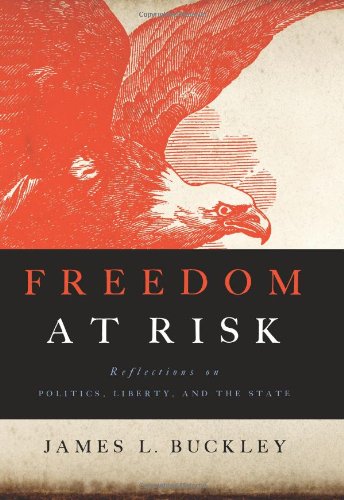
I was always loyally opposed to William F. Buckley. I admired him and have read many of his books but objected to many of his crackpot ideas and his racism. James is his brother and is still alive. He sounds more coherent than his deceased younger brother. Here’s a link to recent C-Span appearance which I found fascinating.
Here’s his book, which also looks interesting to me.
I broke my morning pattern a bit this morning and started a recipe to feed Eileen today.
The recipe is “Honey Glazed Spiced Pork Tenderloin” from Devin Alexander’s cookbook, The Most Decadent Diet Ever. I substituted Pork Shoulder Blade after a bit of research. I bought it on sale and when I froze it, I could tell it was very tender so it should work just fine.
The vegetarian cooks for his carnivore.
I threw a couple of potatoes in the oven as well. My plan is to get all this done and ready for Eileen to take to work and heat up tonight.
I think this woman has a "Laura Petrie" smile. You know, Dick Van Dyke's wife.
I am booked through her meal break and won’t be able to bring her supper like I usually do. I will be meeting with student vocalists and going through their pieces for Solo and Ensemble. They are also performing these pieces at a recital next Wed evening. I think the recital is a good idea.
Each student seems to be preparing two pieces. Which means I have twenty accompaniments to prepare. I’m not complaining. I taped the photocopies together and went through about 3/4ths of them yesterday. There is actually some pretty good music in the selection. Works by Menotti, Schubert, Strauss and Paul Bowles. I am looking forward to this.
After starting my recipe, I sat down to email the members of my piano trio. We decided to read more of the Haydn piano trios before we settle on which ones we want to learn. Once we have decided, I will research a decent edition of them. I bought Peters editions of Mozart and Mendelssohn Piano Trios and have regretted it. They are dated. I’d like not to make the same mistake with Haydn.
My violinist has also promised to listen to recordings of the Bach violin sonatas and pick one for us to learn if I would email them to her. I thought I had recordings of these but I must have been thinking of the Mozart violin sonatas. So I purchased and downloaded a set of them and am emailing her the first one. Woo hoo! An excuse to buy Bach recordings.
Even though I tried to take yesterday morning off, I found myself pretty busy all day.
Ran some errands for my Mom (got her computer working again and a trip to the Dollar store for her), and some errands for myself. Then 2 & 1/2 hours of ballet class. Home to exercise for an hour or so. The day was over. So I don’t have a ton of links even though I did read online for a while.
Obit of the influential complexity composer who wrote the article “Who Cares if You Listen?” Though influential, I’m afraid he represents an approach to composition that has never interested me all that much, namely the Schoenberg technique.
This is an interesting web site which describes itself as
“Being a Hotch-pot of gallimaufry of divers things. to which there shall be posted a variety of links, pictures, tweets, videos and other kickshaws. By H. Rutherford author of that much admir’d blog, heraclitean fire, and of the photoblog Clouded Drab. Also including such Thoughts and observations which are to found to be too short for that esteemed organ; and not short enough for twitter.”
The picture above came from it. A friend of mine emailed me a link to this website. Very cool!
I am seriously planning on purchasing Portis’s book. In the meantime I found this link to it online. I think the whole web site is suspicious. I downloaded it’s proprietary software and found AFTER I did so that there was a charge. I don’t see how they can charge for access to copyrighted material like Portis’s book and still be legal.
I woke up listening to this book being read on the radio this morning. I was impressed with the author’s grasp of Buddhism and its application to her life.
After poking on the web, I found out more about the way she is living.
She has been chronically ill for many years and has found a way to live her life with loving-kindness (metta), compassion (karuna), empathetic joy (mudita), and equanimity (upekkha).
loving-kindness: “the act of well-wishing towards yourself and others”
compassion: “reaching out to help alleviate the suffering of ourselves and others”
empathetic joy: joy in the joy of others
equanimity: mental calmness and evenness of temper, especially in a difficult situation
It seems to me that her search for “how to live a life of equanimity and joy despite my physical and energetic limitations” is related to my own search. All four of these Buddhist concepts make very good sense to me and in fact articulate much of what I have learned in my life.
It probably looks like I think I have achieved some kind of sainthood, but that’s not at all what I mean. The experience in my day to day life is one of struggling towards something. It is trying to cultivate my own responsibility for myself and my gradual changing. If you ponder this stuff, you see how badly you do it. Then you can look for ways to make small changes in how you live in these directions. That’s all.
To me, these ideas and others are antidotes for the dishonesty and lack of self awareness I see in myself and around me in my culture.
Church work went well yesterday. The choir resisted my interpretation of the anthem, but finally relented. Someone has recently described to me the high levels of anxiety and confusion one experiences at church as a “clusterfuck.”
I think this describes the activity of my group yesterday. I had late comers, people who didn’t show but didn’t let me know, people dealing with personal issues, people ducking out during service and returning, skipping the post service rehearsal. Into this confusion I try to bring a measure of good humor and calm. It takes tremendous energy.
The anthem consisted of two ideas: one was a composed melody with these words:
Christmas Joy by Mark Schweizer
When the song of the angels is stilled, When the star in the sky has withdrawn, When the kings see their prophesy rightly fulfilled, When the princes and shepherds have gone;
Then the true work of Christmas begins, To find the lost, To heal the broken hearts, To feed the hungry, To free the prisoner, To rebuild the nations, To bring peace among all people, To make music in the heart.
from a poem by Howard Thuyrman, alt.
The melody to these words was made so that in sections it could coincide with a triple treatment of the great Epiphany chorale: “How Brightly Shines the Morning Star.” My interpretive idea (not in the score) was to downplay the chorale melody by having altos and basses sing it softly while the sopranos and tenors sang the other part gently over them.
The choir eventually did this and I thought it really worked. A parishioner commented on the juxtaposition of the music in the piece and seem to agree that it had been effective in being gentle.
Whippy skippy I know, but this is the stuff of my work and I do enjoy it. I played Bach for the prelude. An ornamental chorale prelude based on the opening hymn (Liebster Jesu, BWV 731). The postlude was a clever rhythmic treatment by Charles Ore of the same melody.
Even though people wandered in and out of the post service rehearsal it went pretty well I thought. I ended up with just altos, tenors and basses and sort of had a sectional with them.
After church, Eileen and I went to see the new movie, True Grit.
I enjoyed it, but the music got on my nerves a bit since much of it was based on a drippy version of the hymn, “Leaning on the Everlasting Arms.” There was not a trace of Ives in the reworking of this, more of a quasi Americana new age thing. Anyway, it was probably just me, but I didn’t think it worked.
Also, I thought the epilogue where the actor playing the main character was shown as an adult didn’t work visually, since the actor who played her so effectively in 95% of the movie suddenly was gone. Probably works better in the book.
Speaking of, I think the main character in this movie is the lovely lumpy 19th century American style dialog. Contractions omitted and eloquence heightened. I was charmed. I should read this book as well as the one at the beginning of this post.
This morning I get some time off that I badly need.
I do have to review the accompaniments for the soloists I am meeting with tomorrow evening in Grand Haven. It looks like I will be driving through a snowstorm. Sheesh.
Toujours gai, Archie, toujours gai. There’s some life in the old gal yet.