All posts by jupiterj

pondering Saturday’s concert


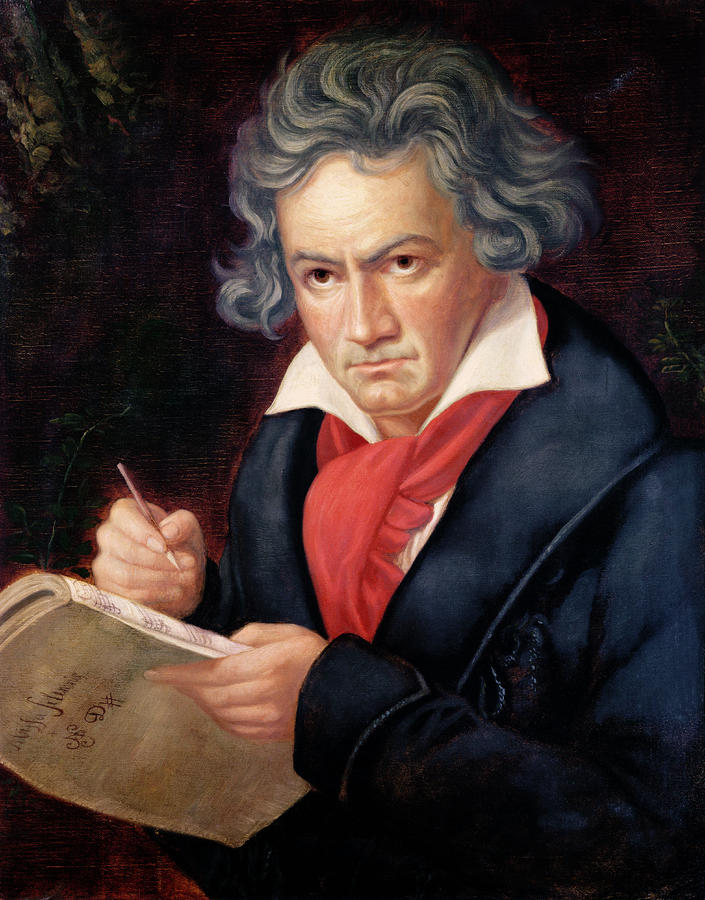
When Beethoven was composing and having his works performed, the music often struck the listeners like white hot lava. Now we hear the music in a different way, like a familiar adult bedtime story, reassuring us with it’s predictability as well as charming with its beauty. The lava is now hardened.

These are the ideas of Christopher Small in MusickingThey prompt me to ask where is the white hot lava of music today? Is there any? I think there is. Small is helpful in pointing out that Beethoven’s basic impulse of the noble individual is only one in a large array of human impulses.

I continue to think about hearing Beethoven’s Missa Solemnis on Saturday evening. It was such a striking example of the world Small is commenting on in his book. Symphony concerts are ritual events. So much of what humans do can be seen this way.

Small talks about narrative and symphony. This is easy enough to see in his two examples, Beethoven’s Fifth Symphony and Tchaikowsky’s Pathetique.

I have been wondering what it means when thinking about a concert Mass setting like the Missa Solemnis. The story may be one of Christian ritual of course. But where is the arc of the narrative in the Mass? The arc which Small describes as similar to one of any story including a bedtime one. There is first an order. “Once upon a time.” Then there is a disturbance of that order in the events that follow. Then there is a resolution. “And they lived happily ever after.”

This can describe many works written in the Western language of music.

I’m not sure it describes the Mass however. The Mass appeals to a composer as a set order of progression: Kyrie – “I’m sorry, God.” Gloria – “Praise.” Credo – “Assent to belief.” Sanctus “touching holiness.” Agnus Dei “synoptic understanding of one person (Jesus) as the sacrificial lamb which brings peace.”
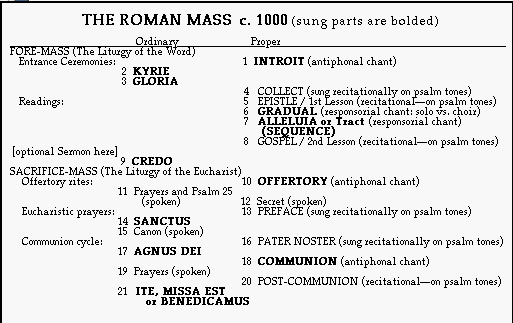
It’s kind of a story I guess. The context of the story and the story itself is lava so hardened as to not be perceived as ever having been molten and flowing. Now the words of the Mass can be seen as an extreme form of reassurance to social relationships that have so many current interpretations (in different Church and believer settings) as to be almost meaningless, unless a listener attach his/her own experience to it.

Small has difficulty with Mass settings because he sees them solely as expressions of the narrative of Western Christianity.

I don’t.

While attending Wayne State U in Detroit, I enjoyed the diversity of the students I rubbed shoulders with. In the large choral organizations, you would literally find many faiths and philosophies represented.  I remember the conductor, Dennis Tini, trying to draw a room of us into Bach’s B Minor Mass. He asked us to think of our own deep understandings of the meaning of life and then perceive that profundity in the wonderful music of Bach we were rehearsing.

I think that’s more accurate.

But I don’t know exactly where it leaves me with Beethoven’s work I heard Saturday night. Still pondering.

*****

‘Fruit Activists’ Take Urban Gardens in a New Direction – NYTimes.com

I love this. Artists making public fruit gardens in LA suburbs and other places.

*****

Mahmoud Ahmadinejad could face 74 lashes over Iran election ‘violation’ – Telegraph

Iran does Democracy weird. Jes sayin.

*****

America the Clueless – NYTimes.com

Another litany of the our startling ignorance.

*****

The Man at the Piano – NYTimes.com

Nocera is a pundit whose NYT articles I usually skip. But this one tells a stirring story of a musician who has “manned-up” and created an inspiring musical life in the face of physical debilitation. Wow.

*****

Canada Exports Mafia War to Sicily – NYTimes.com

Canadian bad guys. Finally.

*****

Trying to Be Hip and Edgy, Ads Become Offensive – NYTimes.com

Truly mad men now.

*****

Why the Inventor of Mother’s Day Would Hate Mother’s Day – Bloomberg

I found this link on Facebook. I mentioned there that this reflects the way by my brother was planning to have his church celebrate this non liturgical day. Not so at my church. At least they waited till after the Eucharist to hand out flowers.

*****

Outsmarting Smartphone Thieves – NYTimes.com

tips

*****

Egypt’s Chaos Stirs Musical Revolution – NYTimes.com

I love it when music is making a difference and challenging. Maybe this is the white hot lava mentioned above.

*****
wake up?


Last night, Eileen and I (accompanied by the violinist from my piano trio) drove to Grand Rapids for a symphony concert.

The occasion was to be present for the last concert a friend of ours would be playing with the symphony after a lifetime of playing.  After the symphony we attended a party in her honor. It was heart warming to witness.

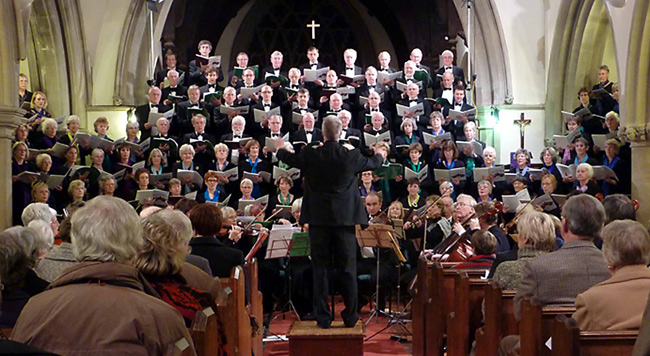
The piece the symphony played was the huge Missa Solemnis by Beethoven. It is about an hour and half long. Combined choruses filled the stage.

There are many large choral works like this. I have listened, studied and been part of performances of many of them including Bach’s B Minor Mass and Beethoven’s Mass in C. But last night I seem to have a different response to the music. I was not drawn in in the way I have been in the past by beautiful  music.

I could certainly admire and appreciate the work. And there were flashes of moments of beauty. But as most of the music unfolded I found myself wondering what exactly was happening. My thoughts could not help but drift to Christopher Small and his extended meditation on what a symphony concert means.

There certainly were social aspects of the evening. The conductor made a little speech at the beginning which included acknowledging anniversaries of service players were celebrating that evening beginning with five year anniversaries and ended with one chorister who had sung in every performance of the symphony chorus for fifty years. My friend was the person acknowledge right before the chorister with thirty-nine years of service as a cellist in the symphony.

And I have noticed that the Grand Rapids symphony is more relaxed than the stereotype of symphony musicians. I have witnessed symphonies from the inside over the years. My first organ teacher was symphony organist for the Detroit Symphony for many years. I have listened to other musicians describe their experiences as players in symphonies (not always happy ones, in fact rarely happy ones). I have performed a few times myself in the ranks including the Grand Rapids and the South Bend symphony orchestras. There is a sheen of studied relaxation in the Grand Rapids symphony that belies the stereotypes of stuffy classical musicians.

Besides this relaxation, there is an odd incongruent underlying steely core of a strong sense of worshiping at the altar of great eternal music. It is this sense I did not feel last night.

Instead I felt a bit disconnected from the over all experience. It felt “hollow.”

At the same time I thought of Beethoven’s idea about this work that he wrote it as much to inspire the performers as the listeners (this was in the concert notes more than once). I know that learning and performing a great work like the Missa Solemnis is inspiring. Ever since I sat in an orchestra  as a young person I know the thrill of making music with other people.

But now I feel like I have crossed into a different world.

My world is a world of making music and seeking out music other people are making that breaks open the moment of living now.

Being at all awake or aware right now is a frightening and fantastic experience.

I read the chapter in A  History of Knowledge this morning which talked about Heisenberg’s uncertainty principle, the idea that attempting to gain knowledge intrudes to the point that nothing is entirely certain.

As I think about the “certainty” with which so many people live their lives this seems to make sense to me. I guess we are all in denial at some level.

This morning my prelude for church is Ned Rorem’s composition “Reveille.”

When I scheduled it, I thought it made sense. You know, “Wake up!”

This morning I wonder if people will appreciate being asked to raise their awareness with a musical question written in the last thirty years.

once upon a symphony concert

I’m thinking about ritual, symphony concerts and bedtime stories this morning after reading a bit in Christopher Small’s Musicking. He uses the idea of the ritual of bedtime stories to expand the reader’s notion of what is going on in the performance of music. He uses the idea of bedtime stories to illustrate the idea of repetition, formula (order/disturbance of that order/resolution), and familiarity.

At one point he says, “Even luckier perhaps is the child whose parent is able to improvise stories on the spot, who within the safe regularity and predictability of the ritual itself is able to produce not only constant surprise and novelty but also to allow, even encourage, a certain degree of control by the child over the course of the narrative—‘And what do think happened next?’—and to develop an ear for absurdities, contradictions, non sequiturs and cheating.”

This reminded me of the fact that my father used to tell stories at the piano, providing a sort of improvised movie score behind his story.

So if bedtime stories are a bit analogous to concert etiquette, in that they have a corpus of material (the story) unfolded in a social and daily ritual context, maybe improvised stories illustrate (or even form the people involved) into retaining the notion that music can be improvised as well as represent some sort of symphonic/fairy tale canon.

My father could obviously improvise at the piano. My relationship to him musically is an odd one. He never really taught me too much. At best he might resource me with materials or little cues. Somehow I learned the basic conducting patterns probably from him. I think he actually learned them from his father. I could probably find worksheets Dad had (made?) about conducting for use with training church musicians of his denomination (Church of God).

I do remember little conversations with Dad (probably in my early teens) about music. I can picture us listening to the radio in the car together. Dad smiling and saying, “Can’t you hear the simple I-IV-V progression?” in whatever we were hearing.

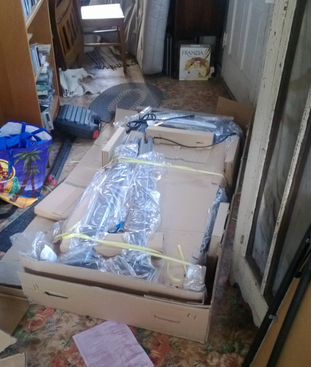
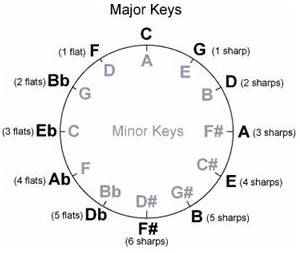
Lately I’ve been remembering a comment Dad made to me about how the more flats and sharps you have the piano the easier the music actually falls under the fingers. I have been consciously trying to replace this salient observation with my one piano teacher’s idea that the more sharps and flats the more difficult the scale.

So Christopher Small is developing the idea of the overriding importance of the social context of musicking which can take into account much more than reductive ideas about the importance of the retention of the Western Canon of great music or even academic analytic understanding of such music.

It is (if you can pardon the expression) music to my ears.

*****

A Main-Course Salad With Spinach and Chickpeas – NYTimes.com

I bought ingredients for this recipe yesterday. Looks good to me even though Eileen doesn’t care for sweet potatoes or carrots.

*****

Obama May Back F.B.I. Plan to Wiretap Web Users – NYTimes.com

The Obama administration continues to expand the powers of government handed to it by the previous administration (which was also expanding those powers).

and then there’s this

Transparency, Secrecy and Retaliation Emerge as Major Issues in Benghazi Coverage | The Public Editor – NYTimes.com

At first it sounded just like typical rabid Republican talking points, but it looks like there might be a smoking gun of at least incompetence if not political maneuvering.

*****

Robert Scheer: Obama Did It for the Money – Robert Scheer’s Columns – Truthdig

Money does seem to drive our society right now. Very little idealism or sense of citizenship.

*****

Started at the Bottom – NYTimes.com

I like the quotes from the young people interviewed in this article. I also agree with some of the critical comments in the comment section.

*****

Eileen and I had pizza with our friends the Edgingtons last night. During the course of the evening Mark recommended several things. Here are some links I made to remember his recommendations by:

Chris Jordan: Turning powerful stats into art | Video on TED.com

The Boss of It All – Wikipedia, the free encyclopedia

This is a Danish comedy Mark E. recommended.

Influence Explorer

A web site that correlates power and money with a search system.

Park Avenue: money, power and the American dream – Why Poverty? – YouTube

A documentary.

*****

Advocate: GOP-backed ‘workplace flexibility’ bill is designed to kill overtime pay | The Raw Story

Eileen mentioned that daughter Elizabeth had put up this link about the House of Representatives passing a bill. I found the Raw Story coverage inadequate to actually explain what was going on.

Tried reading the act itself (Working Families Flexibility Act of 2013 (H.R. 1406) – GovTrack.us this link is to a summary as well as the entire bill), but am still pretty confused.

Hopefully it’s moot because the Senate will not pass it.

*****

Uproar in Germany Over Nazi Scenes in Wagner’s ‘Tannhäuser’ – NYTimes.com

editing out offensive staging. Self censorship. Bah.
*****
Daily Rituals – Book Review – Truthdig

Ending blog where it began, thinking about rituals, this time a book review about creators’ daily lives.

hollow and stuffed


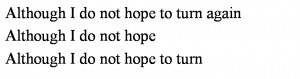
I am having a poetry morning. On Micheal Robbins website (which I have been checking regularly), he had this posted:

Any lists of poetry that begins with Robbins and continues and mentions John Ashbery  interests me.

I have read both of the books by them mentioned.  Yesterday I interlibrary loaned as many books of poetry by the other poets as possible.

This morning, I decided to try to read a poem online by some of the poets and Rachael Carson.

As I did so, a pattern emerged.

Here are the poems I randomly found:

Book of Isaiah, Part I by Anne Carson : The Poetry Foundation

Litany by Rebecca Lindenberg : Poetry Magazine

To the Angelbeast by Eduardo C. Corral : Poetry Magazine

Two Poems By Brenda Shaughnessy | The Awl

Wishing by Allen Peterson

The  pattern is one of spirituality if not faith.

Ay yi  yi. Carson imagines Isaiah tousling with God. Rebecca Lindenberg’s Litany is just that, an address to gods. Exactly who Euardo C. Corral is addressing in his poem is unclear. Is he the angelbeast? Is he speaking to  angelbeasts? Or is he talking about a third person’s reaction to beasts? At any rate, “All that glitters isn’t music,” the first line of the poem, draws me into a spiritual question. The second of Shaugnessy’s two poems uses a religious metaphor: “The Seven Deadly Sins (and Necessary Steps Toward) Making Art.” “Wishing” by Peterson includes a “theologist” who imagines that “this is the afterlife.”

screenshot 1

I am fully aware that my morning poetry reading has a sort of spiritual/religious halo around it anyway. I seek poetry in life and living much like many people thirst for an authentic faith.

But it continues to strike me in an ironic way when consistently I return to the spiritual in my thinking.

I reread Eliot’s “Five Finger Exercises” and “The Hollow Men” this morning.

In the margin of the latter I found this note I had written to myself:

“—- a good description of bad music this whole section (I) makes me think of how empty music, art, whatever can leave me when it is cheap, and in the service of the god of consuming, Servile act that both “hollows” and “stuffs” me. 12/25/98″

my crazy life


It has been a very weird couple of weeks. Previously I was feeling the stress of working two part-time jobs: church and ballet accompaniment. These created a relentless schedule in which I had little extended periods of solitude to read, study and think.

steve

Then very abruptly everything stopped when I was diagnosed with a tear in my retina. Following the laser surgery I was instructed to cease all reading for a week. I was also not to bend or lift (in the terse instructions of  my surgeon). So I went from  a very intense schedule to no schedule at all. And the center of my life, reading and practicing, was forbidden.

I responded with other solutions of course, aided by my very supportive family and friends. I listened to a good deal of David Foster Wallace’s The Pale King and learned more about passages I had read with my eyes. I availed myself of the New York Times weekday podcast which was much better than I had imagined and seemed to contain a judicious selection of complete articles. I listened to records with an emphasis on Glenn Gould’s recordings. I practiced scales and technique at the piano and memorized the C major invention of Bach using recordings are reference. I learned something about memorizing. My friend and colleague Rhonda E. invited me to listen to an entire program she is preparing to record during this period as well, something that didn’t require my eyes.

Then I was given the go ahead to return to my schedule. But now my schedule would not include ballet since my responsibilities had conveniently ended the day I was diagnosed and had laser surgery. And I missed my last Kids Choir rehearsal, but still managed to invite them to their last schedule Sunday. My daughter Elizabeth arrived for a planned visit. It was wonderful to have her around. My life seemed to plunge back into a whirlwind of activity after a week of completely inactivity.

Elizabeth is a bundle of energy as well as an intellectually vigorous person to have to talk to. She busied herself sorting, organizing and discard portions of the stuff she and her husband have stored here in our home. She also helped me begin working on clearing out areas in preparation for our home renovation.  We even found time to cook together (Jiaozi – chinese dumplings). That was sheer pleasure for me.

[photo removed here at the request of person who owns it]

During this second week a lot of other stuff happened as well. Eileen and I drove to Grand Rapids on Sunday for a two and half hour presentation of candidates for Bishop in the local Episcopal diocese (which include my present beloved boss). Eileen’s new lawnmower arrived. Our wrecked garage  was fixed. The garage door was replaced and improved with the addition of a second door and automatic garage opener. My new replacement treadmill came in the mail. Elizabeth and I spent time with my Mom.

And Tulip Time Festival commenced.

Whew. Today seems like a respite and I plan to take advantage of it.

******

Fourteen Canons on the Goldberg Ground

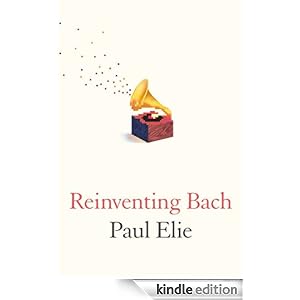
I somehow missed the fact that in 1974, 14 canons in Bach’s own handwriting were found on his personal copy of the published Goldberg variations. I ran across this in Reinventing Bach by Paul  Elie, which is funny because he is not exactly a music scholar but still I’m glad to know about these canons which continue to offer intellectual variations on the Goldberg descending bass idea.

Checking online led me to walk over to my bookcase and take out a book of essays and note a seminal reference essay by the dude who was heavily involved in this discovery.

*******

Psychiatry’s New Guide Falls Short, Experts Say – NYTimes.com

Brain science is moving along at light speed. Psychiatrists are hard pressed to keep up especially in terms of re-assessing and labeling mental illnesses. Fascinating.

*****


mostly pics


Elizabeth gets on a plane and flies away to China today. It has been excellent having her around. It’s especially nice to have her to discuss stuff with. It helps give me perspective that there are adult minds out there thinking about stuff. And of course it’s always great to have fam around.

eliz.05.08.2013

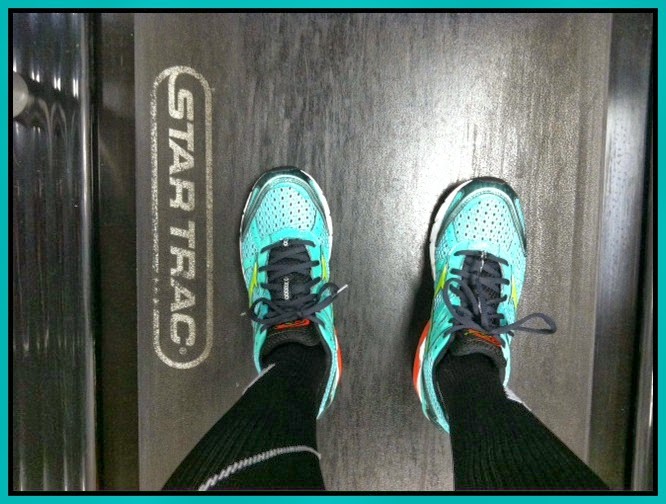
My treadmill came in the mail. It is was in a huge box and will require a lot of assembly.

treadmillnew

Eileen is looking forward to this. Not sure when we will get it together. In the meantime I have been dancing with the TV daily.

The garage is pretty much installed.

garagedoor01

I just took these pics with my phone.

garagedoor02

garagedoor03

It looks like today’s post is going to be mostly pics, so here’s a couple more.

Lunch yesterday. Ahem. I think these people are related.

Elizabeth took these last three and put them on Facebook. I put them here for the heck of it.

a little family post


piesafe


Busy day yesterday. I emptied the pie safe. This piece of furniture is one both Eileen and I like.  It was originally her grandmother’s. When the day started yesterday, it was in a different place and full of stuff, mostly empty canning jars. They are now all in the basement.

clydelunchbox

One of the fun things about organizing stuff is re-examining family treasures like Eileen’s Dad’s old lunch box complete with his name on it.

eileenfamilything

These little wooden things also belonged to Eileen’s grandmother (I think). I like them and they seem to fit our old house. Note “Nader LaDuke” button. This is  probably not from the Hatch fam. Heh.

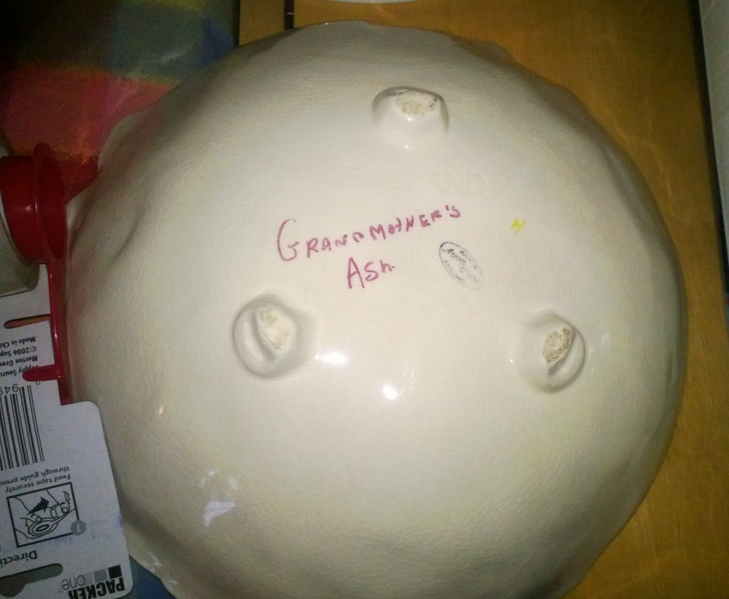
momdishes01
Jenkins heirloom dishes

We have cool Jenkins heirloom dishes as well.

momdishes02


momdishes03

This dish belonged to my mother’s grandmother, Ada Deal Ash.

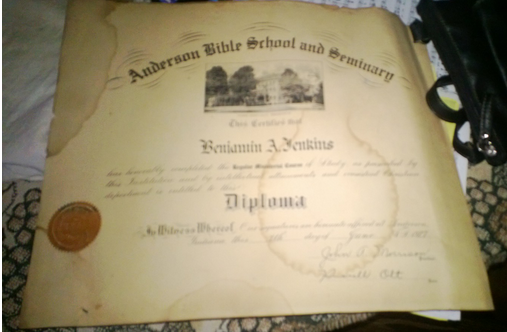
And then there’s this certificate from my father’s father.

benjenkinsdiploma

It says that he “has honorably completed the Regular Ministerial Course of Study, as prescribed by this Institution and by intellectual attainments and consistent Christian deportment is entitled to this Diploma.” I don’t think it’s actually a Bachelor’s or any other kind of degree. But still I think it is cool.

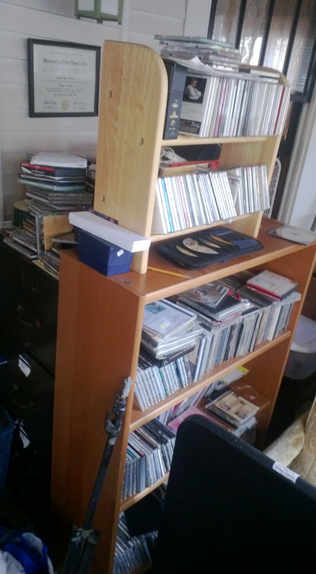
cdrack

This weekend Eileen re-assembled my CD rack which had fallen apart.

cds

Now I can fill it up with my CDs. Still figuring out where to put it.

porchwaitingfortreadmilll

This is the empty spot on my porch waiting for my new treadmill to arrive.

back in the saddle and egotistical mystics


Church went well yesterday. It was good to be back on the bench. Parishioners and choir members were very solicitous about my eye surgery. I had prepared carefully and was able to lead the choir through the anthem which of course was a bit under rehearsed but came off well. The Kids choir (two kids) joined us for Calvin Hampton’s beautiful setting of “There’s a wideness in God’s mercy.” I had the choir sing the first stanza and the congregation joined in on stanza two and three.

In the afternoon Eileen and I drove over to Grand Rapids for the last of the Bishop Candidates presentations. It went over two hours. I was feeling a bit over churchified for sure. We came home and grabbed Elizabeth and went for drinks and dinner.

Earlier in the day Elizabeth drove up to spend time with Eileen’s mother while we were at church. They went out to eat and seemed to have had some quality time. 

That’s all for the fam stuff today.

I am trying to finish reading Ann Carson’s Decreation since it’s due this week at the library. I am finishing up her essay that combines observations on Sappho, the Greek poet who lived 625-570 BC,

Marguerite Porete, the French mystic who died in 1310,

and Simone Weil, the French philosopher, mystic and activist.


Carson devotes a section to each person then a concluding section which is where I currently am in my eading.  Curiously once again my reading and study serrenditiously relates to each other.

I learned from reading Mortimer J. Adler that one effective way to think about ideas and books is that they are in conversation with each other. This is obvious when reading books in the same field, but is also fun when it happens between books in fields that are less obviously connected.

Carson comments that all three writers were dealing with eradication of self from what is essentially a Christian mystic point of view. Christian mysticism is the one area of Christianity (besides the music) where I can feel at all interested and attracted in a singular and concentrated way. I think it relates to my love of poetry.

But the interesting part this morning was when Carson takes the obvious next step and examines how these three brilliant people addressed the contradiction between loss of self and the obvious huge ego one has to have in order to create the works these people left behind.

Carson puts it this way: “To be a writer is to construct a big, loud, shiny centre of self from which the writing is given voice and any claim to be intent on annihilating this self while still continuing to write and give voice to writing must involve the writer in some important acts of subterfuge or contraction.”

Her conclusion so far is that Porete and Weil were conscious of this contradiction, embraced it in their writing and simply did not try to resolve it. Carson says one cannot resolve this particular paradox.

It reminded me of Diderot’s essay Paradox that Richard Cramer addressed in his essay, “Diderot’s Paradox and C.P.E. Bach’s Empfindungen” that I mentioned here a couple days ago.

I haven’t read the original Diderot essay but apparently he addressing a similar thing: how actors can calculatedly portray deep human emotion with authenticity. I guess the idea is that the acting is artificial, but the emotions must be real in order to be completely effective.

All of this applies to all artists, I think. The egotistical selfless mystic is like the calculated actor who is connecting authentically is like the musician who must study and study technique and then abandon all thoughts of it and immerse him/herself in a different level of reality as they perform.

Jes sayin’


no thank you helping


My visiting daughter Elizabeth got up when I got up and kept me company. This was very pleasant. So I didn’t blog. So here’s a quick “no thank you helping” of a blog.

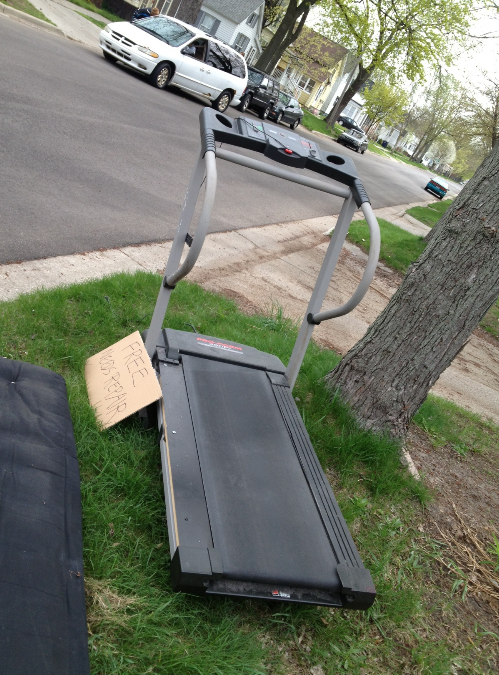
Yesterday we moved the treadmill and the futon to the curb. This was no mean feat especially where the stupid futon was concerned because it involved disassembling it some.

futon

The good news is that it was all gone within an hour. Elizabeth had put it up on Free Craiglist (with a “curb alert” along with these pics, thank  you Elizabeth).

treadmill

We don’t know who took it, but I sighed relief that they were gone. I broke down and offered my digital recorder to the rock and roll band that is now living next to us. I made them promise me that they wouldn’t ask me to problem solve when they couldn’t get it to work. Also not to laugh at my recordings. They seemed very excited to get it in a retro way (“Hey! This is the granddaddy of the digital recorders!”)

Later on my way to practice I dropped off several boxes of clothes and what not at Bibles for Mexico.

Today I am back on the organ bench, playing the service and playing and conducting two anthems.  They are not terrible hard and I have them pretty much in my fingers. I am trying to learn a couple of Ned Rorem organ works to pair with a anthem he composed which I have rescheduled for next Sunday. Choir season is almost over and I almost  regret it now that I have my eyes back.

Eileen and I are driving over to Grand Rapids for the last Diocesan Bishop Dog and Pony show prior to the election. Our friend (and in my case boss) Jen Adams is one of the candidates. Eileen is interested more than I am. But hopefully we might provide a bit of support for her in this final stage of candidacy.

*****

The search for modern China – Jonathan D. Spence – Google Books

Elizabeth mentioned this book as one she might listen to on audiobook. I made a note to check it out via library if possible.

*****

Speaking of Elizabeth she talked to me further about this group. Apparently alt-j is the Apple keystroke to create the delta greek letter. Further the delta sign means change in mathematical language as in Δx.


******

Is That God Talking? – NYTimes.com

Anthropological approach to Xtian weirdness. Cool.

*****

Rebecca MacKinnon – Consent of the Networked

Another Elizabeth book. Looks interesting.

*****


to undo the creature in us


My oldest daughter Elizabeth is visiting. It’s so pleasant to have her around to talk with and be with. She is understandably jet lagged from flying from China which is exactly 12 hours ahead of us here in Michigan. She, Mom and I had some take out in the back yard yesterday which was nice.

So life is going good as usual.

<<<<<<<warning: the rest of this post is about my morning reading  and has nothing about family in it>>>>>>>>>

I have resumed reading in Anne Carson’s Decreation: Poetry, Essays, Opera. 

Carson_b

I had left off in a section called “Decreation, How Women Like Sappho, Marguerite Porete and Simone Weil Tell God.” There are three little essays on each woman and a final concluding essay in this section. I finished the third one this morning on Simone Weil. I bring it up because it is Weil’s use of the word “decreation” that seems to have influenced Carson.

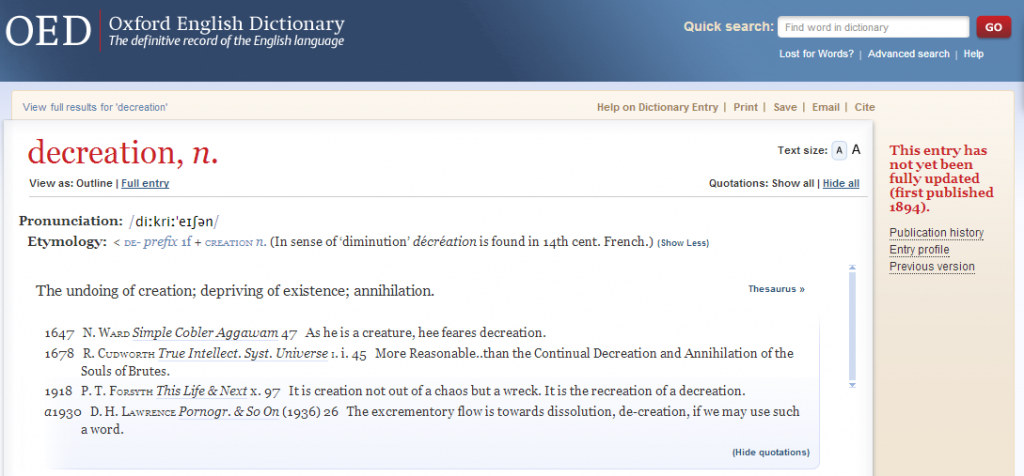
decreation

Although there is a dictionary definition of “decreation” Carson credits Weil with a neologism type use of the word.

“She [Weil] had a program for getting the self out of the way which she called ‘decreation.’ This word is a neologism to which she did not give an exact definition nor a consistent spelling. ‘To undo the creature in us’ is one of the ways she describes its aim.”

Carson is quoting from Weil’s Gravity and Grace translated by A. Wills.

In all three essays Carson is talking about ways to lose oneself, to “undo the creature in us,” in order to draw closer to life and living. Her writers are talking about mysticism. But it puts me in mind of Glenn Gould’s “zero to one” formulation regarding music. Gould was talking pragmatically about performing from his point of view. He was talking about desiring a kind of anonymity for the producer of the sounds and giving over the process to the listener.

I have taken a further step and thought of this as the struggle one has to stop “thinking too much” when one plays and to naturally let the music flow through you as you play.

This of course leads to Christopher Small’s ideas about musicking and relationships as the base understanding of what is happening in the action of musicking.

So no one “owns” music. Music is not a thing but an action and a social one at that. So we “undo the creature” that we have created in our minds, the creature of the expert performer and the passive listener. I think this is a reason I am drawn to dance and rhythm. I see music as gesture. How do you own a gesture? You can learn about it. You can do it. You can even teach others to teach themselves how to do it. But it remains movement captured only in the time it takes to do it.

I also finished the first essay in Annette Richard’s C.P.E. Bach Studies this morning.

It was entitled “Diderot’s Paradoxe and C. P. E. Bach’s Empfindungen” by Richard Kramer. Kramer attempts to shed some light on both Diderot and CPE in it. Diderot’s paradox is that in order for an artist (actor) to express a feeling he must distance himself. Diderot talks about “nature’s man” as a sort of authentic expression of feeling. He interpolates “the poet’s man” as a sort of go between authenticity and expressions calculated to relate this authenticity. And finally points to the “actor’s man” as the one who recreates the feeling with art.

He contrasts this with C.P.E’s conscious art of sensitivity usually referred to with some version of the German word Empfindungen. This word is apparently untranslatable but covers a wide range of ideas and emotions that Kramer says entails “feelings, perceptions, sensibilities, sensitivities, sentiments.”

It’s an interesting idea to compare these two contemporaries who knew each other through correspondence. I don’t think the article quite works because Kramer descends into a pedesterian consideration of some specific CPE harmonic structures as corollary to Diderot and even some of Laurence Sterne’s prose techniques. The harmonic explanation is quite convoluted and involved. I sort of enjoyed making sense of it, but began to doubt it’s application to his thesis.

It was more fun to sit down and play a movement from one of CPE’s piano sonatas.

wanting and having instead of thinking and making


So I am “resuming” my “normal activities” after my short convalescence. I found that listening to the first half of David Foster Wallace’s last book The Pale King helped me understand the book better. Wallace is a sneaky dude introducing characters with first person accounts without clearly identifying the speaker. He seems to want the reader to act as a bit of a detective. His elusive writing is in itself part of the point. But with careful scrutiny one begins to discern lines of identity and make inferences between the discrete sections of the book.

I’m taking notes now.

And I love what Wallace has to say.  Chapter  19 had previously caught my attention when I read it (the sections are called “subsections” in the audio versions, but are notated only with a paragraph symbol in the ebook:

But in the ebook these are also referred to as “chapters” in the ebook links.  I find that nomenclature easier to think about.)

Chapter 19 begins with someone speaking: “There’s something very interesting about civics and selfishness, and we get to ride the crest of it.”

There is a conversation going on with long sections on the topic of civic understanding of the current mad situation in the USA (i.e. We the people are the democratic government and at the same time we lie to ourselves and ask our politicians to act the outsider and protect us from the dire effects and danger of the monster in our heads we call the government.)

After long passages of conversation from what are obviously several speakers, we begin to formulate the impression that the speakers are trapped in an elevator and are talking about this abstruse topic to pass the time.

It’s a beautiful metaphor for living in the USA right now. We are stuck. We are reduced to observations that can elucidate the madness of our democratic experiment which has descended into full blown consumerism as basic understanding of life. But we cannot get the situation to move. Like a stuck elevator.

Wallace uses the voices of these stuck IRS examiners (for that’s who almost everyone in the book ends up being) to make some pretty eloquent statements about this topic.

These observations are startling in the way they describe the present in the USA (even though Wallace was working on his manuscript when he committed suicide way back in 2008):

“Corporations are getting better and better at seducing us into thinking the way they think—of profits as the telos and responsibility as something to be enshrined in symbol and evaded in reality. Cleverness as opposed to wisdom. Wanting and having instead of thinking and making. We cannot stop it. I suspect what’ll happen is that there will be some sort of disaster—depression, hyperinflation—and then it’ll be showtime: We’ll either wake up and retake our freedom or we’ll fall apart utterly. Like Rome—-conqueror of its own people.” loc 1980 in Kindle book


“The government is the people, leaving aside various complications, but we split it off and pretend it’s not us; we pretend it’s some threatening Other bent on taking our freedoms, taking our money and redistributing it, legislating our morality in drugs, driving, abortion, the environment—Big Brother, the Establishment—”

“The Man.”    loc 2047 in Kindle book

I also grabbed my interlibrary loan book at the library which had waiting for me for a while.

The book was C.P.E. Bach Studies edited by Annette Richards who also edited CPE’s organ. I read the intro and part of the first article which documents the correspondence between CPE and the Enlightenment philosopher Denis Diderot.

CPE was quite the cosmopolitan humanities dude. At his death his portrait gallery of famous people he was interested in included paintings of Benjamin Franklin and the wonderful French composer D’Anglebert.

I am enjoying getting back into stuff like this.

I also grabbed Irvine Welsh’s new novel I spied sitting on the shelf.

Welsh is the author of Trainspotting from which the movie was made.

He is a brutal voice.

I failed to make it through Filth by him,

but Skagboys has some characters from Trainspotting in it and looks good. Not sure if I will get to reading the library’s copy but this is definitely one of those books I want to read soon.

I find brutal writing a bit of an antidote to living both in Western Michigan (which seems to be a haven of right winger crazy puritanical Xtians) and the USA (which Le Carre has so astutely observed at the beginning of the century has basically gone “insane”).

*****

Cellphone Thefts Grow, but the Industry Looks the Other Way – NYTimes.com

Apparently cellphone companies are unmotivated to put existing tech into retrieving stolen phones. Why? You guessed it. They’d love to sell you another one.

*****

What is Stephen Harper Reading?

I love book lists.

*****
25 Vintage Photos of Librarians Being Awesome – Flavorwire

I also love pics of librarians.

*****

Still trying to catch up on my reading and internet news surfing so not too many links today. But Eileen has started blogging for Herrick Library:

http://herrickdl.blogspot.com/

*****

a little catch up


It’s been a very weird week. No books, no internet, no playing from music. I began each day listening to a record of Glenn Gould playing Bach. I made my way through the six partitas, the french suites, some preludes and fugues from the Well Tempered Clavier, and some of the English suites.

Except for the last all of them were on vinyl. I also availed myself of Washington Journal on C-Span. This is a daily morning show on which the moderator goes over headlines and stories in the day’s newspapers. There are also call ins from viewers and guest experts. I have to say that the experts I heard really impressed me.

So many public people seem clueless: politicians, people on tv news and talk shows; it was refreshing to hear several people in government who were so informed, level headed and clear thinking. I guess they’re out there after all.

I quickly settled in to doing a lot of listening on audible.com.

My oldest daughter gave me a subscription and I instantly subscribed to the New York Times daily podcast and bought The Pale King by David Foster Wallace, a book I had been reading in ebook form.

I started over at the beginning listening to this book and managed to get through about nine and a half hours which is roughly half of it. I didn’t quite get to where I left off reading it. I was surprised to get so much out of it covering the first half of the book a second time. I really think that Wallace was a helluva a writer and has a lot to say to contemporary readers and people living in this insane time. I’m planning to pick up a hard copy (then I would have this book in three formats). I find analyzing a book a bit cumbersome when it’s in ebook form.

I realized with horror that I had essentially no music memorized to play. I took the week and began memorizing the first C major invention by Bach. I did so by listening to a recording (no reading allowed, even reading music). Yesterday I found a couple of helpful videos about memorizing.

This is something I plan to continue thinking about and maybe even doing.

I also practiced a lot of scales and Hanon and technique.

On Monday my friend and colleague Rhonda Edgington took pity on me and came by and took me to Western Theological Seminary where she let me listen to a series of pieces she is planning on recording soon. Afterwards she, Eileen and I sat in the kitchen and talked. That was fun.

On Tuesday I broke down and bought an audiobook of Good Poems edited by Garrison Keilor. This is also a book I own. I did miss my poetry.

Last night after getting the heads up from my eye doctor to resume my usual activities, Eileen and I did about forty minutes of dancing with the TV.

My treadmill is broken. I did not exercise for a week. So I wanted to get back into some kind of daily exercise. Then we walked down to our favorite restaurant and had a lovely meal together.

I am back to feeling very lucky indeed.


Jupiterjenkins.com back in May?


Be careful what you wish for.

I was really looking forward to some time off.  But not this way.

I was scheduled for an eye appointment on April 24th.  The doctor found a tear in my retina.  He sent me to another specialist for later that afternoon for laser surgery.  That’s the good news.  The bad news is I am forbidden to read and that includes music – anything – until he gives me the okay.  So I had to bow out of rehearsals and even Sunday’s church service.

You may be wondering how I am doing this blog.  My lovely wife, Eileen, is taking dictation.

This actually works out good for her since one of her new duties at work will soon include blogging for the library.

library blog

Stay tuned for up-dates on that.  In the meantime, I am spending my time in a comfy chair, cat on my lap, listening to records or watching tv.  Tv watching is okay because there is no tracking of the eyes as in reading.  This figures because I’m not that fond of tv but I do like Netflix.  So I guess I’ll be catching up on movies and documentaries.  Life is still pretty good but I will miss reading and practicing.  It’s a small price to pay if my eye heals completely.

DSCF3778

PS from Eileen:  Oh, no!  Now I’ll have to do the laundry, grocery shopping, the bills….  !  Steve will have a hard time sitting still but I’ll do my best to keep him resting as much as possible.

*****

Lost in Space – NYTimes.com

Cool, eh?  I just showed Eileen how to put a link on my blog.  I read this article on my phone in the doctor’s office just before they told me I should not be reading anything.  Ironically it’s about gathering information on breaking news on-line.  It’s something I won’t be doing for quite a while.

*****


ahhhhh


The dance department is done with me for the semester. Ahhhh. Last night Eileen and I went out for drinks and dinner to celebrate. Her coworkers protested that it wasn’t Thursday and wanted to know if we were going out that night as well. Eileen told them probably. Life is rough.

My treadmill seems to have died. I was chatting with Sarah my daughter in England when it just stopped yesterday. I am planning to do different kinds of exercise until I can get it fixed or replaced.

Yesterday I spent a good amount of time at the church copy machine reproducing a Gilbert and Sullivan cantata called “Trial by Jury.” I picked up a single copy at the college library book sale. I’m pretty sure it’s out of copyright. I made fifteen copies for my choir (78 pages on 19 sheets folded). I have to assemble them today.

File:Trial by Jury - curve bend.jpg

I am planning to surprise the choir (possibly this evening) with it and suggest that we might sing through it for the bloody hell of it.

I am pretty sure very few if any choir members read this blog so the surprise is pretty safe. Anyway it’s not that big a deal if someone knows I’m planning on it.

It did take quite a bit of time. The music is pretty easy and I think with me at the keyboard doubling some parts we can sing through it a few times in the last rehearsals and possibly at the end of the year party.

Today I have church and doctors appointments. This morning I see the eye guy. Maybe I’ll find out more about my little floater friend in my left eye. This afternoon I have a dentist appointment for a regular cleaning. In between I meet with my boss and prep for tonight’s rehearsals.

At this point I have nothing scheduled for Thursday or Friday. I can’t believe it. I do have to muster some energy and get seriously started on clearing out junk from the main floor so the contractor can come and renovate. I probably have mentioned here that Eileen and I are planning to convert the main floor into a living space for our rapidly approaching old age. This means we need a full bath and laundry facilities on this floor. We are set to have this done as soon as I can get the rooms ready. I will hire a guy I know from church to help me with the heavy lifting.

But in the meantime I plan to do some more goofing off (which in my case means a lot of reading and practicing).

Life is good.

******

Steven Heller at Design Indaba 2013 | Design Indaba

This links to a video of a designer talking about his passion for graphic design. I haven’t watched the whole thing but it looks good.

*****

O’Connor’s Regrets – NYTimes.com  Barney Frank letter to the editor

I do admire gadfly extraordinaire Barney Frank.

*****
Dante’s ‘Divine Comedy,’ Translated by Clive James – NYTimes.com

A new translation. Looks interesting.

*****
John le Carré Has Not Mellowed With Age – NYTimes.com

More PR for le Carre.

And here’s an article he wrote after Sept 11 which drew fire. I like it.

John le Carre : The United States Of America Has Gone Mad

*****

Orzo With Peas and Parsley Pesto — Recipes for Health – NYTimes.com

I keep bookmarking recipes. Maybe now that ballet class is over I’ll actually do more cooking.

*****

health report and sound as music


Little health report for those interested put at the top of the blog so eyes don’t glaze over in the midst of my rambling and miss it:

I decided yesterday to make an appointment with an eye doctor to take a look inside my eye. I am resigned to the fact that something is wrong with it, but it would be good to know more about that. I am expecting the doctor to be able to either tell me that my retina is in the process of detaching or maybe the odds of how long before it does. Or maybe something more hopeful. As I mentioned a couple days ago I have a new pretty dramatic floater which is beginning to feel vaguely like a familiar (spirits that attend the magician).

Since one of the reasons I write (but not the only reason) is to update my family and interested friends I thought I would mention this here.

Glenn Gould’s radio broadcasts are available on record and on Spotify. I listened to the entire “Idea of the North” last night. Googling reveals it is also available on a CBC site. It uses disembodied voices talking about many aspects of the northern areas of Canada. Gould has mixed them like counterpoint so that the voices sometimes sound simultaneously. But through the clever and simple use of attenuating one or more at time the ear is drawn to phrases and comments much as it is in a fugue or some other piece of counterpoint. This is Gould’s technical point. But not his content. The content is about vastness and solitude, about Canadians and indigenous peoples of the place. It is truly a wonderful piece of music to my mind.

My used paperback copy of  Voices of Silence by André Malraux arrived in the mail yesterday.

Gould claimed Malraux along with McLuhan as strong influences even though his biographers say that his thinking is more original than derivative.

Glenn Gould and McLuhan

Gould and Marshall McLuhan

Malraux coined the term “Museum without Walls.” Writing in the fifties he is parsing out the effects of technology on the visual arts. The “museum without walls” instantly reminds one of the interconnectedness of the world right now. But Malraux was trying to understand the impact of dissemination of images via photography, especially images of works of art and how it changes how we see them.

From there it’s not hard to see how Gould would take this idea into the world of recording music.

Gould obviously buys into what I previously thought of as a John Cage concept: that all sound can be understood musically. Or that there are no barriers between listening to music and any other sound.

The makers of the movie “Thirty two short films about Glenn Gould” wordlessly and artfully show this. The actor playing Glenn Gould drives up to a truck stop restaurant. He is greeted by the waitress who asks if he wants his usual. He then sits and we watch him listen to the conversations around him. This is the whole scene. He smiles and is obviously enjoying the counterpoint of the voices. Very cool.

ideas anyone?


In my reading about Glenn Gould, someone referred to him as “in love with ideas” I like this and am vain enough to think that I have a small share in this quality.

Christopher Small develops the concept that music is a story, a narrative. Upon looking at the score of my work based on T. S. Eliot’s “Ash Wednesday” a composition teacher commented that he hadn’t thought of what I had done, simply state ideas and not develop them. In this multi movement work, many movements are only measures long.  It is scored for SATB, Soprano and Tenor soloists, guitar, flute, harpsichord and cello (if I recall correctly).

This morning it occurred to me that this little composition might have some relation to the fact that I see myself as an “idea” person. I seem to be able to come up with alternate scenarios and possibilities be they improvised musical ones or thoughts to present to a church committee.

As an implementer I can exhibit qualities of persistence and clarity but I think I lack an attractive personal charisma which is so important these days for leadership.

The composition teacher who looked at my manuscript seemed to be reluctant to consider me as a composition student. I never asked him to do so. He was one of my undergrad music theory teachers.

He and I never really hit it off. I was stuck in a kind of theory zip class or one that profs love to call “remedial.” Not sure how I got there but I suspect it was a mandatory class at Wayne State U where I was attending. The teacher was trying to convince us of the necessity of knowing the basic music languages of key. I agreed with him totally. I must have been smiling because I think he perceived it as  a smirk. He came to my desk as he wandered and lectured. He looked me and sarcastically said something like “You think you don’t need to know this stuff, eh?” He embarrassed me.

I boned up on the key signatures and at the next class when he asked us to identify a key, instead of waiting to be called on I just gave the answer out. I continued to do this until he asked me to stop.


I guess we hit off poorly.

Anyway, I was (and probably still am) thirty for musical understanding and collaboration.

So when he made the comment about “Ash Wednesday” I thought I would take it to heart in my next work which was a suite for five instruments (Flute, Oboe, Guitar, Cello and Harpsichord). I labored long and hard, composing and rehearsing it for one of my undergrad recitals. The movements were more typical length and I based them largely on my understanding of baroque suite movements (Allemande, Sarabande, Gigue).

The composition teacher attended. His comment was it was too long.

Oy.

*****

Danes Rethink a Welfare State Ample to a Fault – NYTimes.com

There are definitely limits to safety net thinking, although I tend to err on that side myself. Helpful insights in this article.

*****
Questioning the Mission of College – NYTimes.com

U of T and Texan leaders acts out some basic differing ideas about why one takes the trouble to learn stuff.

*****
President Obama Is No Bully in the Pulpit – NYTimes.com

Some hard insightful comments from Dowd on Obama’s failure as a pragmatist.

*****

Sweden’s Closet Racists – NYTimes.com

Personal point of view of what it’s like to be on the receiving end of prejudice. Recommended.

*****

In Memory of a Friend, Teacher and Mentor – NYTimes.com

Philip Roth writes about an extraordinary teacher in his life.

*****

BBC News – A Point of View: Science, magic, and madness

I love the way this writer is employing British idioms such as referring to the incoherent as “barking.”

*****

John le Carré: ‘I was a secret even to myself’ | Books | The Guardian

I have read most of le Carre. Not surprising that his books do not reflect much in the way of how things are done at MI5. They are after all very romanticized views of life if also a bit dark.

*****


glen gould and an eye floater


I seem to be on a Glenn Gould kick. He keeps popping up. Last night Eileen and I watched Slaughterhouse Five on Netflix. I had mentioned earlier that Gould had done the soundtrack. I think we were talking about Dresden and the war. Eileen said she didn’t remember ever watching the movie. I knew I had read the book at least once. At any rate we settled in and watched Billy Pilgrim as ably realized by the actor Michael Sacks.

Some of the scenes looked familiar to both Eileen and me so it’s likely we have watched it before. Memory is a treacherous thing and false memories do abound. But I am willing to bet we both had seen it before. It is however the first time I ever watched it thinking about Glenn Gould.

There was a scene in it that the maker of “Thirty two short films about Glenn Gould” must have had in mind (partially) when he filmed the first and last short film which show Gould emerging (and then disappearing) into a winter snow landscape. Billy Pilgrim also is shown solitary in a winter landscape at one point.

Gould also plays a role in Paul Elie’s Reinventing Bach which I keep slogging away at.

It makes sense that he would since Elie seems to be determined to leave no stone unturned regarding Bach in the 20th century. In that story, Gould would have to be mentioned as well as Casals, Schweitzer, Stokowski and numerous others.

Well it’s Sunday morning and I need to get moving.

I am attempting to get used to having a long new strand of floating protein in my left eye. Friday morning in class I noticed something in my peripheral vision. I watched with horror as over the next hour and half  it gradually extended across my sight like a thin hydra dancing with what seemed like a life of it’s own.

My reading tells me that unless accompanied by other symptoms it signifies nothing other than a nuisance (like my tinnitus I guess). Unfortunately my reading also tells me it doesn’t go away unless one undergoes surgery (which doesn’t have that great a record of success).

*****

For Leonard Cohen, What Goes Around Comes Around | culture | Torontoist

So Leonard Cohen interviewed Glenn Gould early in both of their careers. He then received the Glenn Gould Prize in his old age.

*****

Beet Greens and Rice Gratin — Recipe for Health – NYTimes.com

Mmmm. this looks good.

*****

Karl Berger’s Improvisers Orchestra at Shapeshifter Lab – NYTimes.com

Improvising groups fascinate me.

*****

Eye Floaters: Causes, Symptoms, and Treatment

My source of info.

*****

zero to one, both and


Glen Gould in his interview of himself published in High Fidelity magazine in 1974 makes the following comment (g.g. is the imaginary interviewer, G.G. is the Glen Gould persona, both were created by Glen Gould):

*****

g. g. :  Mr.  Gould, I don’t feel we should allow this dialogue to degenerate into idle banter.  It’s obvious that you’ve never savoured the joys of a one – to – one relationship with a listener.

G. G. :  I always thought that, managerially speaking, a twenty – eight – hundred – to – one relationship was the concert – hall ideal.

g. g. :  I don’t want to split statistics with you.  I’ve tried to pose the question with all candour, and –

G. G. :  Well then, I’ll try to answer likewise.  It seems to me that if we’re going to get waylaid by the numbers game, I’ll have to plump for a zero – to – one relationship as between audience and artist, and that’s where the moral objection comes in.

g. g. :  I’m afraid I don’t quite grasp that point, Mr.  Gould.  Do you want to run it through again?

G. G. :  I simply feel that the artist should be granted, both for his sake and for that of his public – and let me get on record right now the fact that I’m not at all happy with words like “public” and “artist”; I’m not happy with the hierarchical implications of that kind of terminology – that lie should be granted anonymity.  He should be permitted to operate in secret, as it were, unconcerned with – or, better still, unaware of – the presumed demands of the marketplace – which demands, given sufficient indifference on the part of a sufficient number of artists, will simply disappear.  And given their disappearance, the artist will then abandon his false sense of “public” responsibility, and his “public” will relinquish its role of servile dependency.

*****

Thus “zero – to – one” may describe the isolation one has when listening to a recording. The creator’s active role accomplished prior to the listening is thus reduced to no role at all.  Where recordings are concerned the only living actor is the listener.

This is important because we all access music via recordings. It could easily out weigh any other means of accessing music for most people and possibly most musicians.

In contrast Christopher Small maintained that music was a social transaction. Relationships in all their messiness was what music was about for him.

Music is an activity.

Small questioned the idea of repeated listenings to music when the music is understood as a story. He likened symphonies to novels.

The first hearing (and reading) is often the most engaging. In subsequent hearings and readings the bare bones of structure and form may emerge. These concepts might be important to the crafts person who might be interested in creating such stories, but they are different from experiencing the story.

But what of repeated experiences that begin to take on a comforting familiarity. This is more in the realm of ritual. Christopher Small was also very interested in ritual. He asked questions about the ritual of public performance in the classical music world of his time (late 20th century). He saw it as moving away from human meaning and experience. In that he was surely correct.

For me the idea of music encompasses all of this: isolated listening to recordings, participation in live performances and, of course, ritual.

When a poem, story or song becomes so familiar we can “sing along” and take comfort in what is coming next, it seems to me that we are experiencing that security that ritual can provide.

When we are disturbed from our complacency to new insights by such experiences whether initial or repeated again I think that ritual can still be seen as in effect. This blast of light and insight relies on the conventions of ritual expectation but also provides the wonderful experience of “aha” or deep emotional response.

It can occur in music in any of the experiences mentioned above (listening to a recording, experiencing live music for the first time or for repeated experiences).

*****

Wringing out a washcloth in space

I think the astronaut in the video is the same guy who performed on guitar from outer space with earth musicians  live remote recently.

*****

Top U.N. Rights Official Denounces Iraqi Executions – NYTimes.com

When the state kills, evil is in the room. Just my opinion.

*****

Is China Changing Its Position on Nuclear Weapons? – NYTimes.com

Yikes. China reserves first strike options at least in its rhetoric.

*****

bursts of light from a composer and two poets


I only five more days of ballet classes. Possibly less, if any are canceled last minute. I still enjoy the work, but am ready for some time off.

Caroline Shaw,this year’s winner of the Pulitzer Prize in music, earned her living after getting a masters in music “accompanying ballet and modern dance classes on piano, violin and percussion…” (Caroline Shaw, Award-Winning Composer – NYTimes.com)

I listened to the recording of this piece.

I like that Shaw doesn’t think of herself as anything but a musician.

I also like this piece quite a bit (both the live performance above and the studio recording which is on Spotify).

Her comments and descriptions in the above link are illuminating. She sounds like someone I would want to know and work with. I don’t say that too often about musicians.

I was surprised to open the pages of my new New Yorker and find two poets I have been reading in it. I rarely seem to like the poems the  New Yorker publishes. For a few years I submitted poems myself. I hope it’s not just jealousy. In fact, I was thinking as read Michael Robbins and Anne Carson’s poem in this issue, that it could be a sort of lack of poetical context. Reading entire books of poetry one gets a larger rhythm going than just one poem. The poetry is sort of in dialog with itself.

One poem on a page in a magazine has to sort of wing it alone so to speak. Just burst into your head and do its work. I usually read the first couple of lines and see if it draws me in at all. I do the same with the New Yorker ficition. Occasionally I am drawn in.

I find Robbins work to resonate with phrases from popular culture that twist into new meanings. I like that. Ann Carson I am still trying to figure out. I’m about halfway through her Decreations. It’s not one of her major works I gather. But I am finding an occasional burst of light in it.

*****

The Finding – U.S. Engaged in Torture – NYTimes.com

Letters in response to this story.

*****

‘The Dispensable Nation,’ by Vali Nasr – NYTimes.com

Review of a new book that critiques Obama’s foreign policy.

*****

Of Judges and Judging – NYTimes.com

Linda Greenhouse is supposedly retired. She has taught me a lot about the Supreme Court with her reporting. She’s always worth reading.

*****

The Art of Filippo Minelli – NYTimes.com

He paints words outside, words that resonate out of context.

*****

How the Pre-Penicillin Era Could Help Combat Antibiotic Resistance – NYTimes.com

History of meds. Probably holds future promise after exhausting antibiotics usefulness.

*****

Coelacanth DNA May Tell How Fish Learned to Walk – NYTimes.com

I love this shit.

*****

Digital Public Library of America

online as of yesterday.

*****

it’s raining


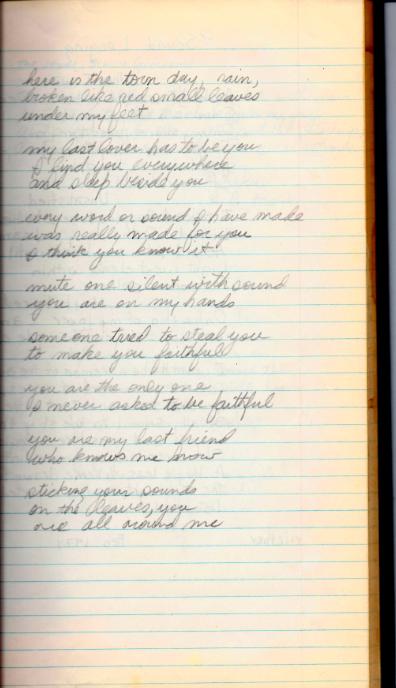
I’m listening to the rain pouring down in the early morning darkness in Western Michigan. I love the rain. I wrote a poem as a young man which basically addresses the rain as muse.

rain02

here is the torn day, rain
broken like red small leaves
under my feet

my last lover has to be you
I find you everywhere
and sleep beside you

every word or sound I have made
was really made for you
I think you know that

mute one silent with sound
you are on my hands

someone tried to steal you
to make you faithful

you are the only one
I never asked to be faithful

you are my last friend
who knows me now

sticking your sounds
on the leaves
you are all around me

*****

Thus it has been for me all my life. My body and mind relaxes when it rains. I love to walk in it.

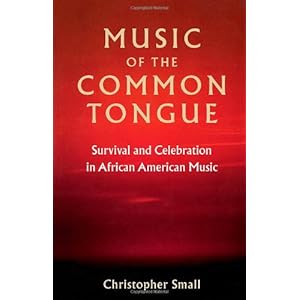
I purchased a Kindle book this morning by Christopher Small: Music of the Common Tongue: Survival and Celebration in African American Music.

He mentioned it in Musicking and I was intrigued. Apparently it’s basic idea is that the most important music of the Western tradition in the 20th century is African American. I’m not sure about what is most important, but this body of music is an extremely important and influential one for me.

Last night in my Kids Choir rehearsal, I had them sing “Go Down Moses.”

We have been talking about hymnody, words versus tunes. I have been trying to get my three kids to think about who wrote the words to a hymn and where did the tune come from.’

Last night I learned that my kids were only beginning to learn about slavery in America. But their imaginations quickly fired up and drew on their lessons and described vividly what it’s like to be someone’s property.

We talked about the relationship of the story of Moses and the Israelite slaves to the American slaves brought from Africa.

They liked singing the song I think.

Music of the Common Tongue was cheapest as a Kindle book. Usually I can pick up a cheap used edition of a book on Amazon. But in this case $12.71 (the Kindle price) was cheaper than any of the used ones available.

Yesterday was my penultimate crazy Wednesday. One more and I will be done with have both an 8:30 AM class to play for and an evening full of church and rehearsals.

I only had five singers at the adult choir rehearsal. It is discouraging how thinly people commit themselves these days. Or maybe I should say how far they spread themselves over commitments, since most every person missing was honoring a different commitment like symphony orchestras or other important things.

It takes energy to pull together a small group and have them leave feeling like their time was spent in a worthwhile fashion. I hope I accomplished that last  night. I know I tried.

I did find time to make a few videos of myself playing organ. These can be helpful if humiliating. Here’s one.

I put this up on the Grace Music Ministry Facebook page yesterday. It is my prelude for Sunday. Most of the notes are there I think. I also think that it helps to hear a piece a few times if  you’re going to hear a live performance. My hope is that some of the church Faceboookers might listen and then be more prepared to hear it more clearly Sunday. Or not.

Also I am meeting tomorrow with my friend Rhonda for her thoughts on this piece. She has played some CPE Bach, maybe even this one, so I am hoping she will  answer a couple questions and critique my playing.

I have a long but pleasurable and rather easy day ahead of me. Two ballet classes, a trio rehearsal, some organ rehearsal, then date night with my lovely wife.

Need I say it? My life is good.

*****