Monthly Archives: June 2015

if the product is free


I slept in a bit this morning which is good. However, my blogging time will be limited since Eileen will be up soon and I like having breakfast with her. Then we will probably go to the Farmers Market. Then I practice. So I have done my Greek but no other morning reading.

The wind is blowing here in Holland. I think a storm front is coming our way. I love the wind.

I have listening/sleeping to Matthew Mather’s sci fi book CyberStorm. It’s a thinly veiled diatribe about tech and climate change. It kept me awake for a few hours last night (hence the sleeping in, thank god).

But I was struck by one conversation the people in the book had about privacy.  Essentially they said that online companies sell information about us that they gather from our online activities. This has expanded of course to phones and tablets. One character says it this way:

“If the product is free, you’re the product.” Matthew Mather, CyberStorm

I haven’t quite figured out how I feel about privacy. I know that I have felt exposed for a long time. I date it to the movie, “The End of Violence.” I just looked it up and this movie came out in 1997.

The creepy plot is that surveillance allows the state to execute people just before they commit a crime. This surveillance is thorough and to me seemed convincing.

I continue to be surprised at the naivete of people. Encryption and avoidance seem futile to me. So where does that leave me?

I think I probably get a false sense of staying below the radar for several reasons.

One is my own eccentricity as a consumer. My interests do not conform to many algorithmic deductions. I believe this is true of many humans. Of course the people selling us continue to refine their ability to predict our wants, indeed to manufacture them.

Another way I think I feel falsely under the radar is that I am comforted by the books and the music that surround me on my shelves. These feel like a bit of a bomb shelter from the madness. I know this is basically illusory. But it still consoles me.

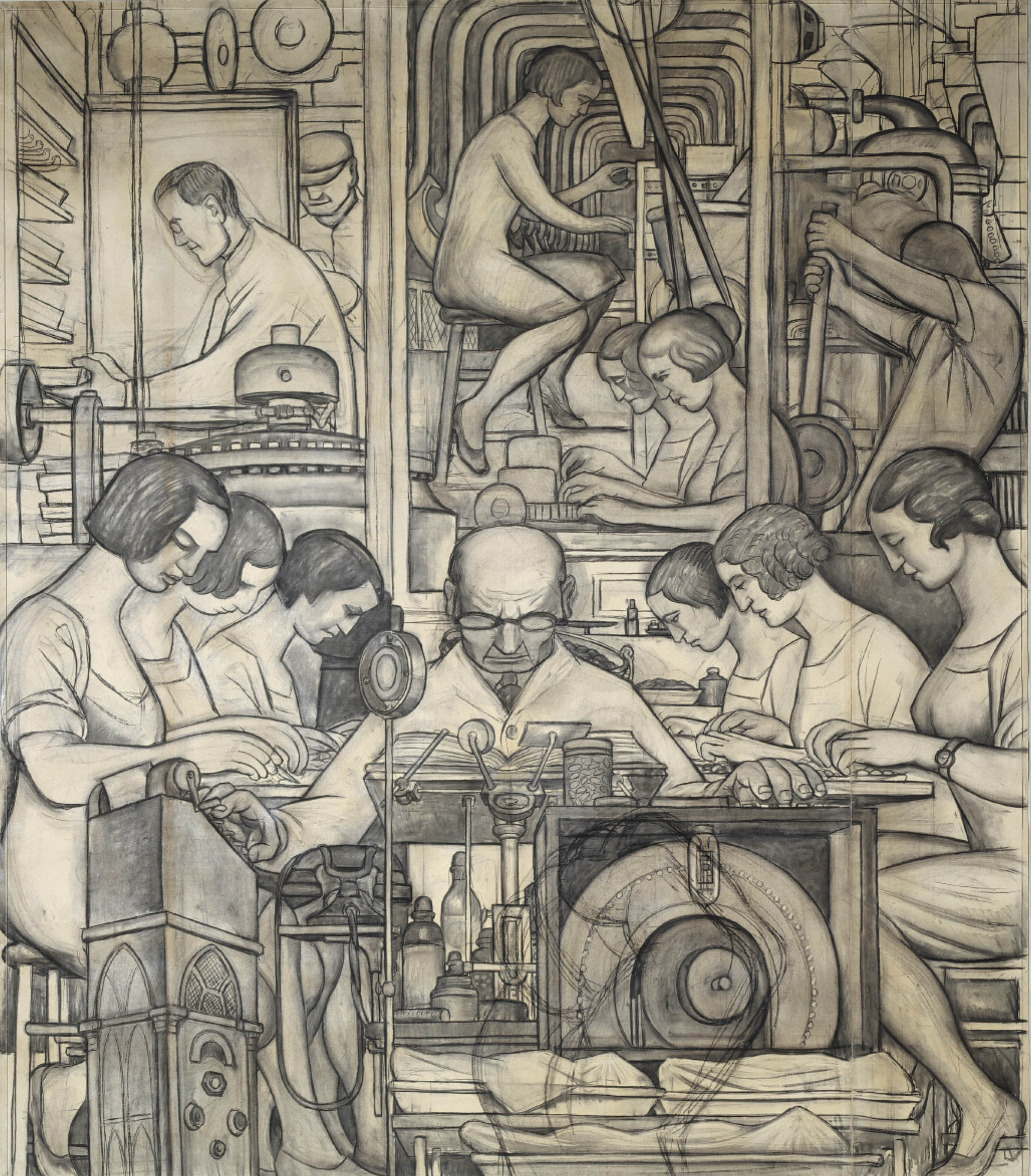
I am reminded of the weird emotion I had looking at Diego Rivera’s mural in Detroit. I felt like an archaeologist in a tomb. I felt like Bruce Willis in “12 Monkeys” when he comes up and the world is all changed.

Detroit is a bombed out city. It is stuck in the past with Rivera’s beautiful paintings of its heyday.

 

Both Detroit and I are vestigial remains of something that doesn’t connect to the mad rush of today.

Happy thoughts.

Sorry about that.


summer underway


It seems that summer is finally here. This past Sunday Eileen and I cooked out for the first time, grilling shrimp and veggies. Yesterday Eileen got up and announced that “today is weaving day” and spent the day working on her loom prepping it for weaving.

I went over to church to practice in the morning. I’m still experimenting with my energy levels which seem to fall after treadmilling. By rehearsing earlier in the day I have more energy for organ practice. I spent over an hour on the upcoming Mozart piece. It is coming together a bit. After working on it very slowly, I was able to play it several times at a bit quicker tempo. I’m not shooting for the tempo of the video the groom passed on to me, but as usual looking for a convincing tempo that I think works.

I spent another hour reading through Vierne and Bach. I’m thinking of reviving the D major prelude and fugue.

I have had a long and comical relationship to this piece. Having bombed on learning  it by myself in between my bachelors and masters degree, I went to grad school with it on my mind. Subsequently, I learned and performed it on a grad recital. Since then I periodically revive it. Now might be the time to do so again.

It was gratifying to have the energy to goof off and read a bunch of Bach yesterday.

My playing and rehearsing skills continue to incrementally improve so that this kind of reading becomes more satisfying and much more accurate.

For some reason I have been thinking about old friends who have decided for one reason or another to shun me or keep me at a distance. But I like my solitude, that’s for sure. I miss people but certainly do not want to keep up relationships if it’s not mutual. It occurs to me that one of the important things about aging well is having a social life. This may not be for me, since I am such a hermit.

I’ve also been noticing the degree to which people I care about are using very biased sources for stuff on Facebooger. I wonder how self buy valium goa reflective they are about their choices of what to “share” with others there.

By the way, this includes both people I agree with (dam liberals) and disagree with (right wingers).

But I continue to feel very lucky. Lucky to have a companion like Eileen, lucky to have my passion for music, books and Greek.

Lucky me.

Bach to the Future – Andrew Manze [Part 1/2] – YouTube

Ran across this recently. It was shared by a musician who said to be sure and listen to part 2. It looks long and most likely is a bit academically conservative. But still it’s on my list of stuff to watch at some point.

Discovery of Missing Prints Fails to Save Boston Library Leader’s Job – NYT

This news story is an interesting combination of a calm librarian and hysterical politicians. the library person loses, of course.

After Silences and Setbacks, the LightSail Spacecraft Is Revived, Deploying Its Solar sail

So many of these science news stories seem like the sci fi of my youth. Cool!

Community Remembers Reporter Shot in Washington – NYTimes.com

I didn’t see an obit for this person but this description of her memorial gives a glimpse of someone extraordinary.

The Thrill of Political Hating – NYTimes.com

Always on my mind, since this is the currency of our politics.

Obama’s Slap in Britain’s Face – NYTimes.co

British politicians of the right and left cannot convince the US to release a prisoner.

Neil Gaiman and Kazuo Ishiguro Talk Books, Storytelling, Dragons | The New Republic

I have this bookmarked to read.

McKinney, Texas, and the Racial History of American Swimming Pools – The Atlantic

Some historical perspective missing from much of the reporting on this controversy.

Young, Seeking Change Over Ideology, Power Right Wing in Poland – NYT

I wonder how this relates to how right wing thinking now dominates America with the message of anti-government. “a wave of political negation, a rejection of the whole political establishment.” … “Let’s face it,” he said. “Both parties are really right wing, one is perhaps just a bit more right wing.”

SEAL Team 6: A Secret History of Quiet Killings and Blurred Lines – NYTimes.com

This is a long read. Lots of info about black ops.

blah blah blah


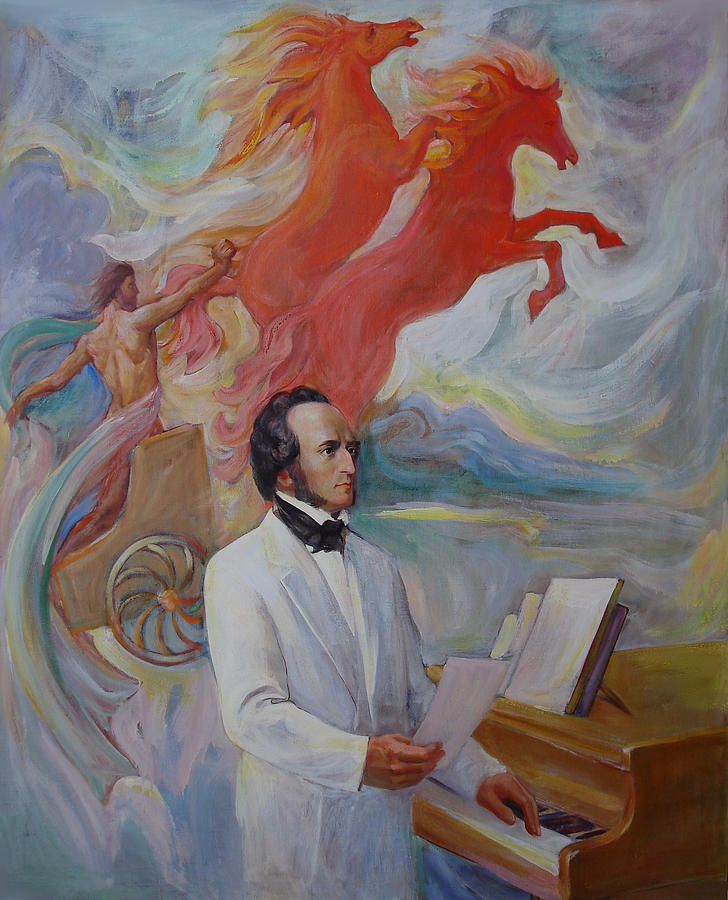
I spent time with Mendelssohn on the piano yesterday. For some reason I was drawn into his compositions. I have found that many academics look down their nose at Mendelssohn. I find him fun to play and fun to listen to.

This may be the primitive in me (admittedly a large part of my personality). But I’m more inclined to think of Mendelssohn, the classicist renaissance man.

He was multilingual, painted and had a classical mind. This clarity is obvious to me in his music. As with so many composers, he is a bit long winded, writing long pieces. But since I like them this is actually a bonus when I am playing them for my own pleasure.

Lake Lucerne, 1847, painted by Mendelssohn

Of course, programming them for others to  hear can be tricky since the contemporary listener’s attention span continues to decrease.

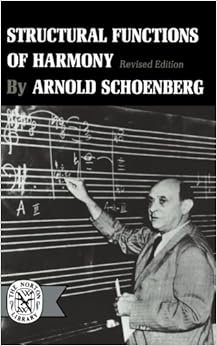
I was reading Philip Glass’s memoir, Words Without Music, this morning. He mentions learning a great deal from Schoenberg’s Structural Functions of Harmony.

I  had to smile when I read that. I can remember my music theory teacher, Dr. Parks, commenting that if I could make any sense of this book, to let him know. Apparently he could not and he had as fine an analytical mind as I ever ran across.

I’ll have to pull it out and look at it again since I do enjoy traditional music theory.

I ordered a used copy of Peter Williams’ recent bio of Bach. I realized this morning that it was something I had not read. I have read Williams over the years and have found him informative if eccentric in places.

Recently I heard the local organ prof, Huw Lewis, talking about Williams’ ideas of slower baroque tempos. I haven’t run across this in the books by him I have read and consulted in. Maybe it’s in this bio.

If I get motivated I might look through recent online journals to see if Williams has written an article on tempo.

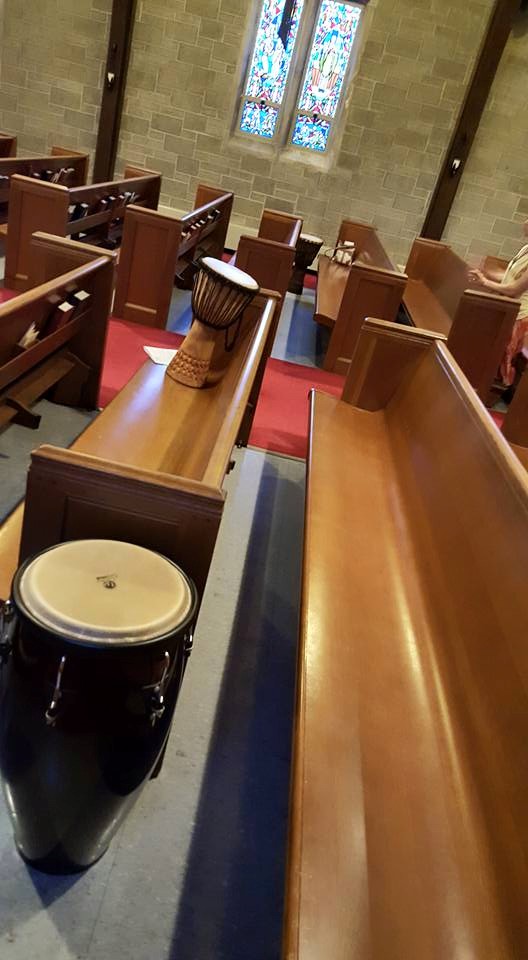
So yesterday at church we had drumming. The Hope College music prof came late. I was hoping we could team teach a bit, but this was probably too much to ask for. My drummers were all good humored about sitting out amidst the congregation for the African song. I have always wanted to use a bunch of drums on the African hymns we sing. Next goal would be to do them entirely a cappella with drums. Hey I can dream, can’t I?

djembe

thinking about checking this stuff out


I don’t seem to be getting up as early as I did during the school year. So this morning I don’t have too much time to write a blog entry. This is just as well because I’m not sure I have a lot to say (shock!).

Here are some people I have run across lately that I’m interested in checking out.

Holly Herndon

George Walker

Lennie Tristano

Also John Zorn apparently has some new music out.

Review: John Zorn’s Spirit of Restless Invention Flows Forth – NYTimes.com

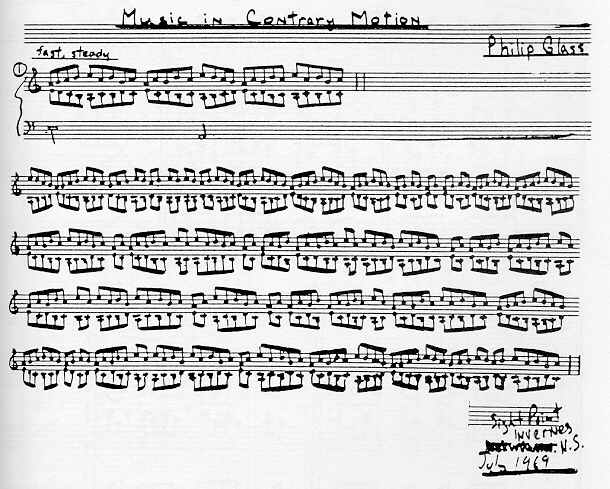
I’m reading Philip Glass’s Words Without Music and my curiosity was aroused about his early works so I’m planning on checking out “Music in Fifths,” “Music in Contrary Motion,” and others.

I have a sneaky suspicion that the whole minimalist (or whatever you prefer to call it) movement was largely influenced by popular music, especially rock and roll.

The repetitive drive of this aesthetic is something I first heard (and performed) in the  music of the Doors.

The Value of a Mindless Summer Job – NYTimes.com

I admire the writing of Jennifer Finney Boylan of which this is recent example.

When It’s a Crime to Withdraw Money From Your Bank – NYTimes.com

Confusing weird laws used to prosecute Dennis Hastert.


well that vacation seems to have helped a lot


So the vacation seems to have eased my burnout quite a bit. That’s nice. I’m home having a leisurely Saturday morning. Eileen and I have gone to the farmer’s market already (cut basil, small tomatoes, asparagus, leaf lettuce, strawberries and cucumbers). Eileen came home from vacation and discovered that a weavers festival that she has been reading and thinking about is actually being held here in Holland.

In addition the local library has brought in Eric Litwin, the author of Pete the Cat, for their summer reading kickoff party about two blocks from here at a park.

So Eileen has a busy day planned.

Eileen drove us home yesterday and I went and practiced organ. I ended up changing some pedaling in my Mozart. The edition I am playing from was done by Bonnet and is a bit dated. Initially I pedaled the furious pedal parts with toes only. This involves some pedaling that is almost awkward but is of course how one would probably have to pedal it with more baroque pedals.

Yesterday I tried some of Bonnet’s suggested pedaling and think that I will follow some of them. I admit that I keep hearing my teacher, Craig Cramer, telling me I arrived at Notre Dame with no pedal technique. In retrospect I think this is probably a tad harsh.

However, in my isolation and old age I have to work at ignoring this negativity.

So I added some heels to my Mozart pedaling. Startling, eh?

After practicing  and grocery shopping with Eileen and stopping off to say hi to my Mom, I didn’t have the energy to treadmill yesterday. But today I plan to. As well as practice.

But in the meantime I’m trying to keep myself in a vacation mood and do a lot of leisure reading.

Life is good.

A Good Stamp Is Hard to Find – NYTimes.co

Further thoughts on the weird new Flannery O’Connor stamp.


frida, diego and ben


So we went to see the Frida Kahlo and Diego Rivera exhibit at the Detroit Institute of Arts last night with my nephew, Ben, and my niece Emily.

It was unsurprisingly amazing.

They came to Detroit as husband and wife so that Rivera could paint his famous mural.

It was especially fun for me to see Kahlo paintings in real life that I have been looking at in reproductions for so long.

But it was surprising to me to come away with much more appreciation of Rivera’s work.

The exhibit had many of preliminary sketches for the mural. They are, themselves, amazing works of art. For the most part, they were full size and sketched with charcoal on brown paper.

At the end, we walked over to the courtyard and looked at the mural with renewed respect. While I lived in Detroit I saw it many times. But after looking at the exhibit, it was fun to look at it once more.

This mongoloid Jesus has always fascinated me.

Later in the evening, my nephew Ben showed Eileen and me this photography collection for which he was the graphic designer.

Ben revealed that his dream is design cook books. Here’s a design that he loves and is representative of something he would like to do.

Cardiovista has some amazing pics in it, wonderfully presented.

I asked Ben this morning where I could get a copy of his book for myself. It didn’t come up on Amazon. He gave me a copy.

When I asked him to sign it, he was charmingly flustered.

I told him to get used to it. Talented dude.

Some things I learned on vacation


First of all, Mount Athos is not just a mountain, it’s an entire semi self autonomous region of Greece that has a secluded monastic haven for men only for centuries.

It came under the protection of Adolf Hitler during WW II.

Due to his generosity, some of the high mucky mucks on Mount Athos referred to him as “High Protector of the Holy Mountain” (German: Hoher Protektor des heiligen Berges). Nice, eh?

I was learning about Mount Athos because the next essay by Merton in his Disputed Questions is about it.

I also learned a bit more about the word, “evangelical.” It comes from Greek that is now pretty recognizable to me: ev = eu  well or good; angelical – angelos messenger, angel, bearer of tidings. So the meaning of the word “gospel” that I was taught as a kid, “good news” is a bit of a literal understanding of the term

The insight for me is to apply this understanding to the Evangelical church in America as I am reading in Hindmarsh’s The Evangelical Conversion Narrative. 

I learned that there are three types of monks in the isolated self governed peninsula of Mount Athos. None of them (presumably) follows an “order” that way Cistercians or Benedictines in the Western tradition do. Instead there seem to be three groups: cenobitic (from the Greek koinos, common) who live in community,

“Greek κοινόβιον life in community, (in eccl. writers) convent, neuter of κοινόβιος living in community, < κοινός common + βίος life, way of living” OED

isorrhythmic monks (from the Greek iso, personal, private, separate; and rythmos

“ancient Greek ῥυθμός measured motion, time, measured flow of words or phrases in prose, measure, proportion, symmetry, arrangement, order < an ablaut variant of the base of ῥεῖν to flow” OED

who can own property and retain income from their labor. The third group is  hermits who basically live alone or in very small groups of two or three.

Finally I learned about a new fantasy sci fi writer from Tony Wesley (my nephew Ben’s significant other and at whose house we are staying).

I read an excerpt last night and then bought the Kindle book for $4.99. I’m always curious what people I know and family are reading. This looks like a bit of different kind of fantasy story from Tony’s description of it. Like so many of the books Tony gets hooked on, it’s one of a series. The first one is the cheapest. I figure it’s like drug addiction, starts out easy and cheap and gradually costs the addict more and more. Nice analogy, eh?


jupe’s little vacation

Eileen and I are sitting in a Panera having  breakfast. I spent the morning attempting to find a place to practice today and tomorrow. I have been in contact with several people on Facebooger. The ones that have responded have only recommended places to contact.

I have so far reached out on Facebooger to the organists at First Pres Ann Arbor and First United Methodists. Both places were recommended by an organist on Facebooger. They are nearby and the person who recommended them has had success practicing at their churches.

So far these two musicians have not responded. The rest of the people that have responded have not made specific recommendations.

It doesn’t look at this point that this is going to pan out. Oh well. I tried. My only regret is that I used up my treadmill time at the motel doing this this morning. I’m relatively sure that my Mozart will emerge in shape after missing three days on the organ.

I also managed to leave my credit card at the restaurant where we ate last night. I called them and they said they had it. Whew!

Yessterday Eileen and I visited with my sister-in-law Leigh at the new digs they have bought here in Michigan. It’s an amazing old house and I think will be excellent for both Leigh and my brother Mark. Very cool.

Then we met with my sister-in-law Leigh, nephew Ben, his significant other Tony, niece Emily and her husband, Jeremy for a nice meal at Zola Bistro. That’s where I left my credit card. Ahem.

The rest of today Eileen and I will goof off (we have checked out of our Ann Arbor motel) until Eileen’s weaving supply shop nearby opens in the afternoon.

Then we will stall until it’s late enough to show up at my nephew Ben’s house (5:30).

This time away has been very relaxing so far. Having the devices has been good. I have gotten some Greek and reading in. I think I will return in a much better place, but I look forward to figuring out more time away this summer.


r and r for jupe


I think it will be a short blog this morning. I’m lazing around in a motel room in Ann Arbor with my beautiful wife. After digesting my breakfast, I’m planning on availing myself of the exercise room here and treadmill some.

I have been doing my morning reading. So far that means Greek and Merton. I then turned to D. Bruce Hindmarsh’s The Evangelical Conversion Narrative: Spiritual Autobiography in Early Modern England.

I can see readers’ eyes glazing over, but Hindmarsh does seem to be one of the brilliant new kind of scholar who can write well and think clearly.

In his preface it becomes clear that he, himself, is a converted type Christian.

He describes the fact that these autobiographies of the converted are by a diverse range of people that more reflects the 21st century: “The very sites that are so problematic in discourse today, race, class, and gender, appeared together in this genre [conversion autobiographies] as black Nova Scotians, women servants in Scotland, and London apprentices wrote alongside university clergy.”

I find that a bit intriguing.

Hindmarsh talks about his own three children, the eldest of which actually helped him “chasing down a few stray articles and books for me. (At 13 years of age, she must be the youngest faculty assistant to hold a library card from the University of British Columbia).”

He then expresses the hope that all of his children will learn something about conversion in their life and something of the truths expressed in his chosen epigraphs.

One of these is Psalm 19: 7, quoted thus in the King James Version: “The law of the Lord is perfect, converting the soul.”

Handy that. The use of the verb, converting. Other translations give a different slant.
“The law of the Lord is perfect, reviving the soul.” Book of Common Prayer 1979 translation

“The law of the Lord is perfect, refreshing the soul.” New International Version

Fascinating to me how the different words put a bit of spin on the whole concept.

I have put up a message on Facebooger seeking to come up with a practice instrument in this area while I’m around. I have committed myself to learning that Mozart F major thing and would like to continue to practice it diligently.

My acquaintance, Stephen White, pointed me to a couple of local yokels whom I have Facebooger messaged. One of them, Michael Canates, has already responded. I think he might be out of town right now and this might not work out. But it is encouraging to get some response.

I think I could survive skipping three days on Mozart, but would prefer not to.

My lovely wife Eileen says, “You are going to do some relaxing as well, aren’t you?”

Grim History Traced in Sunken Slave Ship Found Off South Africa – NYTimes.com

It’s amazing that this history is not better documented. In the meantime, it’s fascinating how they go about it. Today they are holding a memorial service for 212 people who drowned and are putting soil from their home country, Mozambique, on the underwater site.

Ex-FIFA Official Cites Satirical Article From The Onion in His Self-Defense – NYT

I know NPR picked up on this. Hilarious stuff.


hymn talk


cong.sing

Man oh man! My congregation sang lustily yesterday. So much fun when that is the case. This was the first Sunday without a formal choir (although I did see members there). The prelude was a series of variations on Nicea (Holy, holy, holy) by Piet Post. This was the tune for the opening hymn. During the last variation of the prelude which begins with a vigorous statement that sounds very much like the hymn, the congregation stood.

cong.stand

I flopped around and grabbed the hymnal and transformed Post’s lovely last variation into a full fledged introduction. From the first, the congregation sang loudly and happily. Wow.

I was a little concerned that Rev Jen had chosen a canticle for that morning that we haven’t sung in ages. No problem. They sang it well.

The whole service went like this. Afterwards, I asked a Hope College husband and wife team who recently spent time in Africa if they would find it fun to play drums on “Alleluia, we sing your praises,” an African tune we are singing next week.

They agreed. As did several other parishioners. That will be fun. My boss’s significant other recently donated three drums (two of which are Djembes). I own several drums including my congas. So we will have plenty of drums to play.

This morning I did my usual morning reading in MacCulloch. This involves cross referring between his book on Silence and history of Christianity. I have read the latter and am reading the former for the first time.

I spend lots of time rereading sections of the history now that I own the books and can cross refer by page. The section I was working on this morning was about the Pietist movement in Germany.

My first aha moment came when I ran across this book cited in one of the footnotes.

Bruce Hindmarsh is writing about something that I sometimes wonder about. Mainly how did Christians come up with the notion of conversion that is so firmly implanted in so many Amuurican Christian churches. For my way of thinking, sudden conversion is rare in humans. I think it occurs. But in the church I was raised, it was de rigor for all members to have a conversion experience in order to be “saved.”

So I checked out Bruce Hindmarsh and found a lovely article by him on one of my favorite hymns, “Come Down, O Love Divine.” (Link to his web site and a link to download the pdf of the article).

I returned to MacCulloch and discovered that he soon began discussing the Pietist hymn,  Sei Lob und Ehr’ dem höchsten Gut.  This hymn was written about ten years before Bach was born. MacCulloch mentions that Bach although a pious Lutheran struggled with aspects of the Pietism movement.

I thought MacCulloch’s comments on the hymn were interesting enough that I should make a note in my hymn reference book of choice: The Hymnal 1982 Companion. Imagine my satisfaction in finding it already noted from my first read of this history in a Kindle Book. Now I was able to add the page reference.

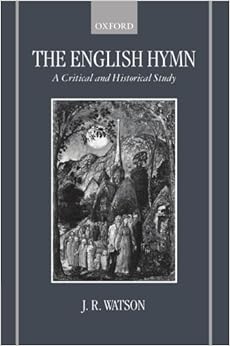
I noticed in my The Hymnal 1982 Companion that I had also cross referred this hymn to a classic study  on English hymns by J. R. Watson I have read (The English Hymn: A Critical and Historical Study). In the margin in my hymnal companion I had noted that I found Watson’s citation of a verse of the hymn confusing. By referring to MacCulloch I was able to figure out that Watson cited a verse that The Hymnal 1982 unfortunately omitted.

I say unfortunately because it has a 17th century image of God as mother:

In the English of the classic Victorian hymn translator, Francis Cox, the omitted verse reads thus:

The Lord is never far away,
but through all grief distressing,
An ever present help and stay,
our peace and joy and blessing.
As with a mother’s tender hand,
God gently leads the chosen band:
To God all praise and glory.

Too bad they left that one out, eh?