Monthly Archives: April 2013

is music a thing or an activity?


I have been visiting the college library book sale daily. In addition to many functional organ pieces and collections, I have found some fun old books and music.
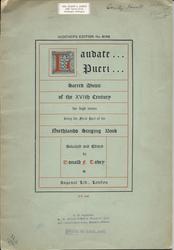
laudatepueri01small

My old desktop computer and scanner are moving so slowly that I don’t have time to scan in a few of the covers, but they are wonderful to hold and look at.

I was reminded of Christopher Small’s comment about music scores.

“A score, of course, is not a musical work. It is not even the representation of it. It is a set of coded instructions that, when properly carried out, will enable performers not only to make sounds in a specific combination, called a musical work, but also to repeat that combination as many times as they desire.”

“We hear the sounds, which means that we perceive the aural images that form in our minds as the result of certain concrete physical events, namely, vibrations of the air as they impinge on our ears, and we perceive their aural characteristics. What we do not hear is the relationships between them.

Relationships are mental, not physical, events.”

“If a musical work exists in the relationships between the sounds as performers make them and as hearers hear them (performers, of course, are hearers also), then it exists only in performance.”

Small doesn’t talk about recording in his discussion very much. He is concentrating on critiquing the current thinking at the end of the last century (He was writing in 1998). But he does specifically address the reification of music.

“Music is not a thing at all but an activity, something people do.”

I have long thought this way myself.

Anyway my writing is being cut short this morning by the speed of my computer (slooooow) so I will close here.

*****

Hendrik Hertzberg: Winning the Semantic War Over “Entitlements” : The New Yorker

There is some excellent writing in this article. Example:

“When it comes to Washington’s current (and to all appearances permanent) fiscal fracas, the semantic weeds are as high as an elephant’s eye and higher than a donkey’s. ”

*****

“Mindfulness Improves Reading Ability, Working Memory, and Task-Focus, say UC Santa Barbara Researchers ” – UC Santa Barbara News Release

Bookmarked to read.

*****
 

Ritual


In his book, Musicking: The meanings of performance and listening, Christopher Small has an “interlude” on “The Mother of All Arts.” By this he means, primarily, ritual. He puts this chapter after several chapters in which he painstakingly analyzes a symphony concert from the lens of what is actually going on.

His relentless honesty and scrutiny elicits observations that ring true to me and also remind me of my understandings of liturgy and ritual.

Writing in 1998, Small’s description of music as ritual in the modern classical world is a last look at what I think is now in flux, the world of how people listen to and make music.

I experienced this older ritual a couple of nights ago when I went to the string quartet concert. Even though I see this kind of stiff etiquette filled experience as vestigial evidence of past practices, there were to me aspects of the future present also. First of all, the event was preceded by a little speech by a man who was obviously involved with development (fund raising). By standing up and talking through a mike (I always think of them as ritual talking sticks, heh), he set the tone of patronage, reminding everyone of the underlying power of money to make things happen in their lives and the life of the arts.

The audience was much less formally dressed than it would have been even twenty years ago. The string quartet itself was arranged a bit differently. The cellist was seated on an elevated platform which he brought him closer to the playing field of the other three string players who all stood for the entire performance. It made me think of three soloists in a concerto. Indeed all four men were very expressive and played immersed in their music like soloists.

Their playing as ensemble was however seamless.

I would boil all this down to my favorite phrase: both ritual and music are something that one “does.” They are activity. As such they are complex. By doing music and/or ritual, a language of meaning is created that cannot be done in any other way.

In recent history there has been an unusual ossification of music as an artifact. Whether this is the squiggles on the page that the musicologist/theorist squints at as he or she conjures the “true” intention of the dead revered composer or as object to be purchased and consumed in one way or another, the meaning of music has drifted from action to “thing.”

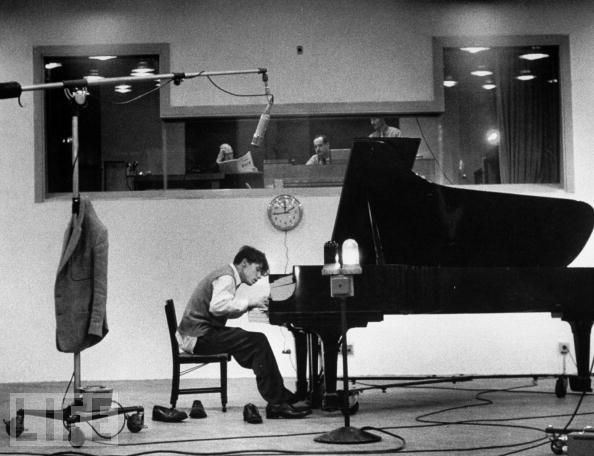
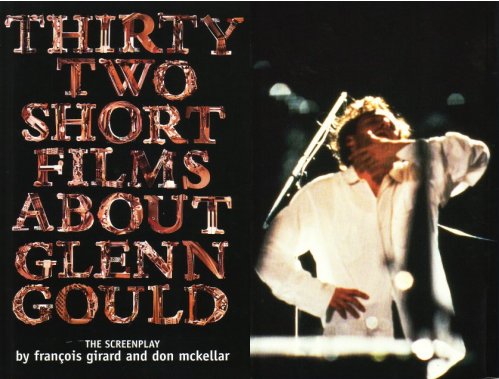
Glenn Gould seems to have seen the future coming and jumped up and embraced it. I have recently been watching the movie, “Thirty Four Short Films of Glenn Gould.” It has reawakened in my an appreciation of his work in a new way. I have always enjoyed the recordings of his playing, even the nonBach ones.

But now I find that his life was intertwined with the state music has arrived at in the early 21st century. This situation is not easy to talk about because we are in the midst of it. But it involves Gould’s romance with the “microphone.” His deliberate isolation from the performance situation at the end of his life that is combined with an intense relationship to creating recordings.

I have more to say about this but see that I’m over my usual word count.

I have ordered several books by and about Gould including a copy of the screen play of the movie.

I probably will be commenting in this space as I think more about this stuff.


still dragging but life is good


It is taking me more time to recuperate from Easter. Part of this is aging I am sure. I do find that I need more rest to come up with bursts of energy I use to do my stuff. I remember my father commenting about this when he was my age.

In spite of this life is good.

Last night Eileen and I heard the Emerson String Quartet perform three quartets, Mozart’s K. 499, Shostakovich’s Op. 133 and Beethoven’s Opus 59, no. 1.

I found the performance pretty amazing. Probably one of the best live performances I have heard in recent years. Consummate musicianship, technically excellent and complete engagement in the music they were playing, these four men gave Holland a performance like we were a world class venue. As my friend Rhonda who sat with Eileen and me said, they didn’t “phone it in.”

Mozart is always charming for me. And I love Shostakovich. Though I didn’t know this quartet it was loads of fun to listen to.

I recognized the Beethoven immediately.

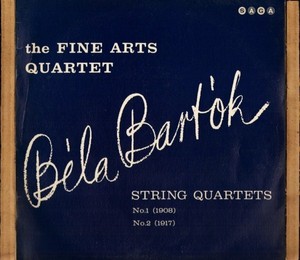
I had thought that the Emerson Quartet was the first recording I have (and still have) of Bartok’s string quartets on vinyl. I came home and checked and this recording is by the Fine Arts String Quartet.

I do own a recording of these by the Emerson Quartet. But it’s on CD.

Mystery solved.

The last movement of the Beethoven got me thinking. I got up this morning and started working on understanding just what Beethoven was up to compositionally in this piece. It’s called “Thème Russ: Allegro” which I assume means something like “Russian Theme.” It has a couple very lively themes and one lyrical one. I thought that maybe it was in a dance form and I missed it. But my first response to it on paper this morning is that it is a subtle sonata allegro form. Beethoven is always rewarding to pick apart in this way.

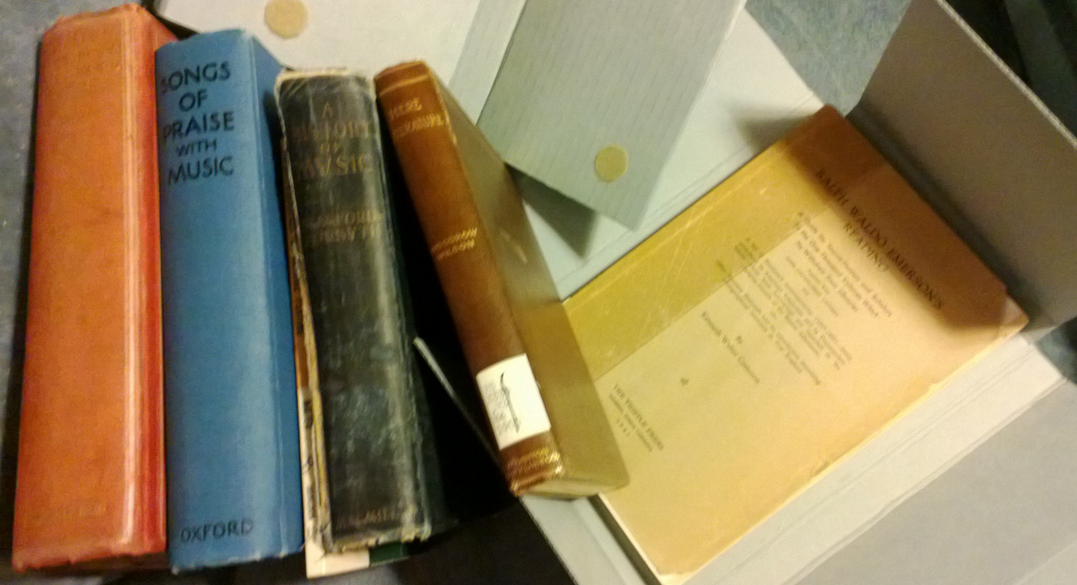
Earlier in the day I forced myself to go to the college library and look at the book sale. I bought several pieces of organ music all of which are now laying on the organ at work. I also bought books.

booksalebooks


Speaking of Emerson, the book on the right is Ralph Waldo Emerson’s Reading: A Guide for Source-Hunters and Scholars To the One Thousand volumes Which He Withdrew from Libraries by Kenneth Walter Cameron. How cool is that?

I’m running out of time again since I have an 8:30 class. But you can see that my life is good.

Eileen and I had a relaxing meal before last night’s concert. Note martini for Steve. I am spoiled.

this and that


Sitting and waiting for my friend Rhonda to arrive at her church last night I figured out at least one way I could read the New York Times on my phone. I successfully logged in on my phones internet browser app.

The NYT have phone apps. But I have only found Iphone apps so far. None for the operating system of my phone (Windows).

So now I can read the NYT on my phone. But I can’t keep it on during a flight nor usually have free wifi over which to read it, so I guess I will continue my practice of reading a hard copy on an airplane.

Eileen pointed out that I could do this also on my Kindle. But both require an active wifi connection.

It looks like Windows phone apps are gaining a bit of traction in the market. This is good since it means there will continue to be apps available for it which makes it more useful to users.

I am finding it useful.

After Rhonda arrived, we chatted and I listened to several pieces she is planning to play on an upcoming recital (at which Eileen will do some narration of pieces).

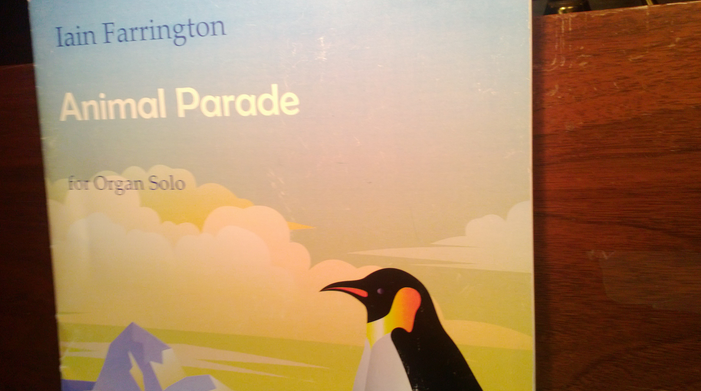
When I found myself interested in one of the composers she is performing of whom I had not heard, I used my phone to take a pic.

animalparade


There was some nice writing in this piece. And it showed off Rhonda’s considerable technique as well.

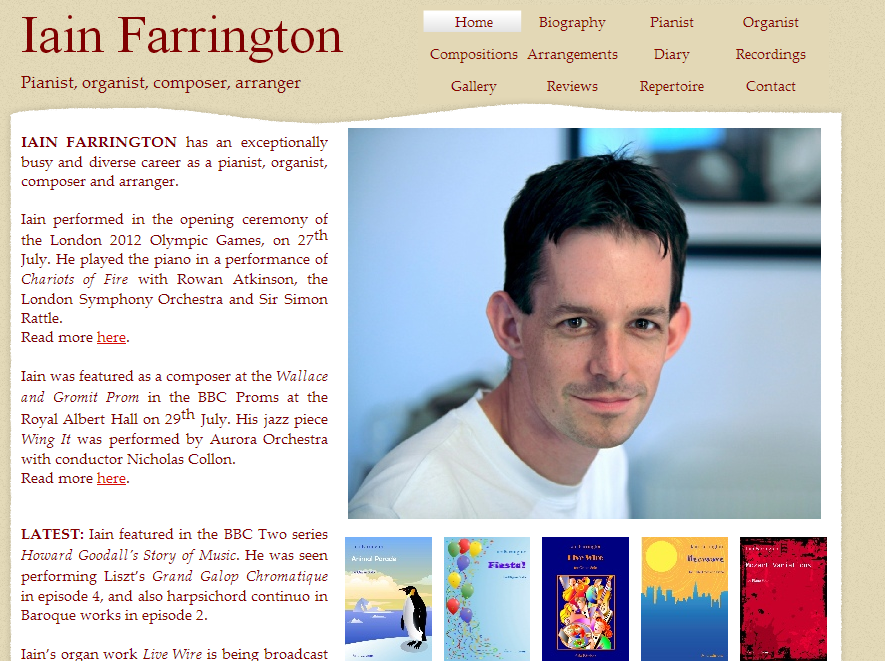
He has his own website of course. You can click on the pic below to go to it.

farringtonwebsite

I plan to check him out.

Earlier in the day, Jordan VanHemert, an old friend of mine stopped in to say hi. He is pursuing a masters in improvisation at U of M. His description of his experiences are very encouraging to me. If I understand correctly, he is being instructed in general improvisation not just jazz. This includes group improv not based on traditional harmonic jazz structures as well playing with ensembles that do more conventional stuff.

I like to see barriers of style fall away. Mostly because in my experience they are often artificial.

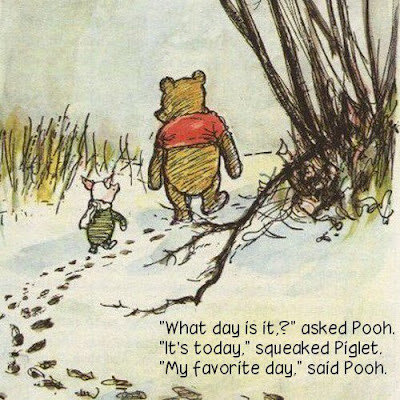
After chatting with Jordan I picked up my Mom and drove her to a doctor’s appointment. The doctor was her psychiatrist. She was anxious about the standard competency questions she knew he would ask and kept asking me the date so she could remember when he asked.

I happened to be in the room when he did this. She got most of the questions (what month is it? what floor of this building are you on? in what city are we currently located?) However she did miss “what day of the week is it?” and was surprised when I told her on the drive home it wasn’t 2012 but was actually 2013.

I assured that she had passed the test, but I’m not sure she believed me.

I am still fatigued today from my Easter marathon.

I have a full schedule today. But this evening Eileen and I have tickets to hear the Emerson String Quartet. That should be relaxing.

*****

Dangerous Minds | The Catherine Wheel: David Byrne’s criminally underrated funk opera masterpiece

I didn’t know Byrne had written a funk opera. It’s on Spotify.

*****

News for the Consumer Class | Working-Class Perspectives

This is a brief analysis and history of how newspapers stopped covering citizen and labor issues and started covering consumer news.

*****

Sundown in America – NYTimes.com

This very dire look at the USA by David Stockman (Reagan’s famous budget director) seems to be going viral. I have seen references to it in several places online. He makes sense but it’s frightening.

*****

Maple Syrup Takes Turn Toward Technology – NYTimes.com

Some surprising facts about Vermont Maple Syrup.

*****

Egypt Orders Arrest of Satirist for Skits on Islam and Morsi – NYTimes.com

Free speech for me but not for thee (the title of a Nat Hentoff tirade of a book).

*****

Easter music and egg hunt


When I mentioned to Eileen that my boss’s visiting Dad had commented that my Widor sounded very clean (He also said it was always good go hear “Charles”…. ???? Ooooo. Charles Marie Widor) Eileen said that it sounded cleaner on Sunday morning than it had on Saturday evening at the Vigil. Off hand remarks like this are often helpful as they usually are made with candor (this is true in Eileen’s case most if not all of the time). I admit to finding it satisfying to hear since I have spent the last week playing through this worn old warhorse very slowly on flutes. I came to realize that if played with the metronome marking in my part the staccatos would be lost in any sort of  acoustic with reverberation. I played it a tad under tempo and allowed my week of work to take care of the very quick staccatos. Apparently this worked.

I admit I didn’t do much research on the correct tempo for this piece. On Facebook, a fellow musician referred admiringly to his assitant’s performance of it as “not too fast.” I hope mine wasn’t as well. And I would love to have a hotshot assistant to pawn off my postlude on big feasts like Easter.

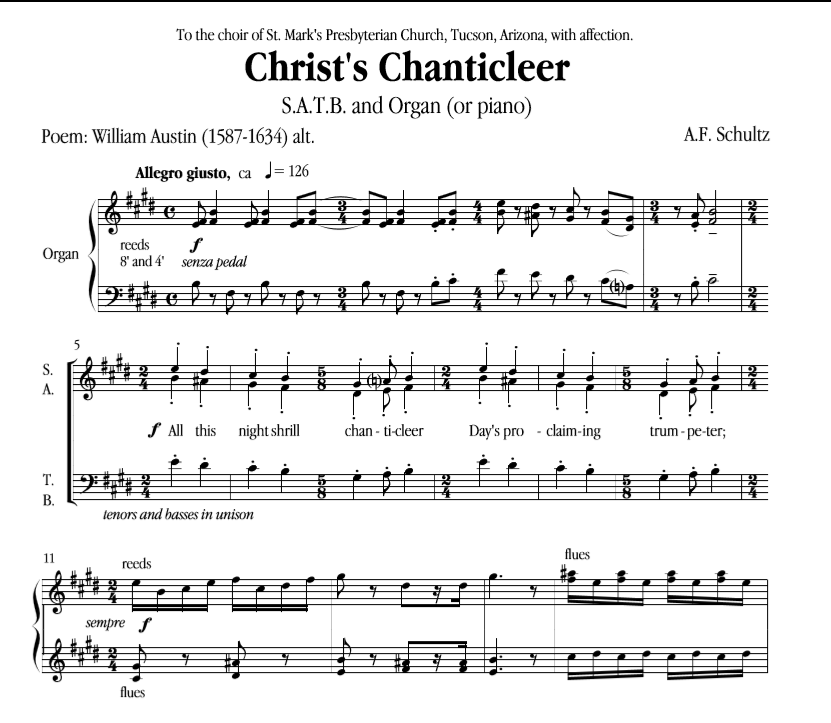
As it is the choral anthem for Easter Sunday morning looked very challenging to me to learn on the organ and play and conduct.

christschanticleer01

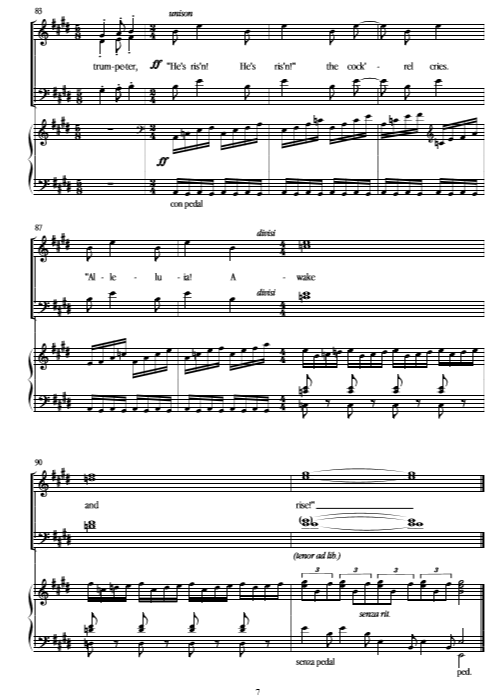
Especially the ending:

christschanticleer02

However, with a little practice it turned out not to be hard. Even that little pedal trill didn’t stop my conducting. I did have to put both hands on the manuals for most of the final measure, but still it came out fine.

After church, Eileen and I dashed off to her Mom’s house for the annual Hatch Easter egg hunt.


hatcheasteregghunt01

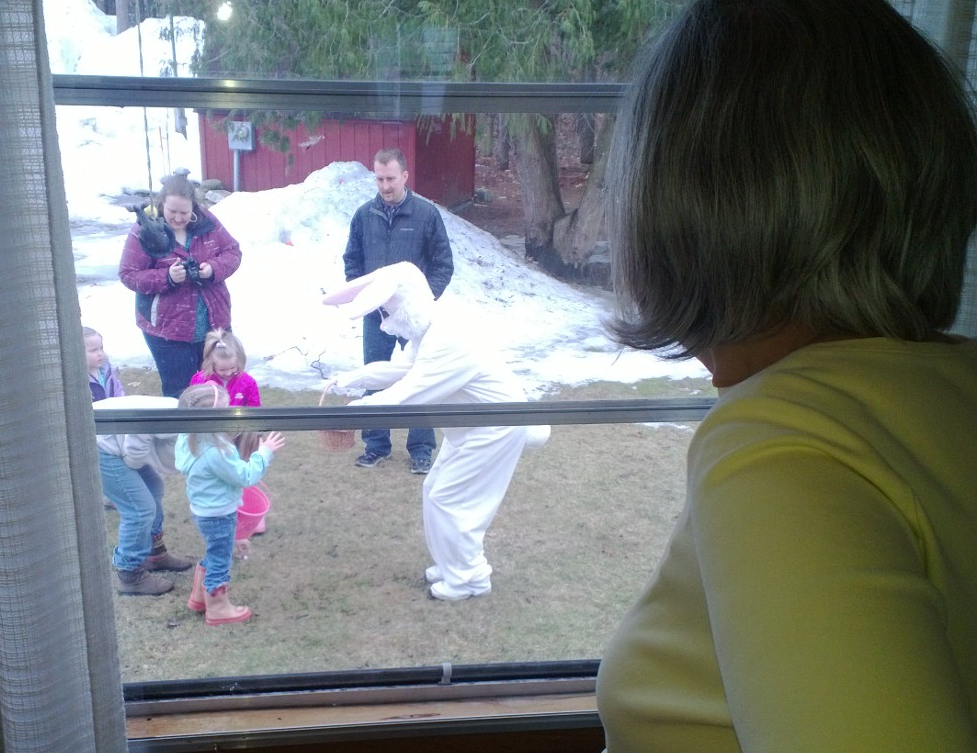
I love having a phone to take pictures with.

hatcheasteregghunt02

Well, I’m out of time and have to get ready to go play ballet class. Only three more weeks or so of this. Looking forward to a break from it. But I do like it.