Monthly Archives: March 2019

too many words about a couple of hymns


My Sunday New York Times arrived for the second week in a row yesterday. Maybe that will be the routine. I certainly hope so.

I’m baking bread right now. We have been living on homemade bread for a while. But we also have been using up some of our store bought bread by keeping it in the freezer and only pull out a couple slices at a time. Waste not, want not.

I was looking at the words to the hymn “Praise to the Lord” recently. The hymn tune paired with these words is called Lobe den Herren and that is the melody of the organ piece I am working on for the regional AGO USB of local composers.

I start with Watson’s Annotated Anthology of Hymns that I have been slowly working my way through.
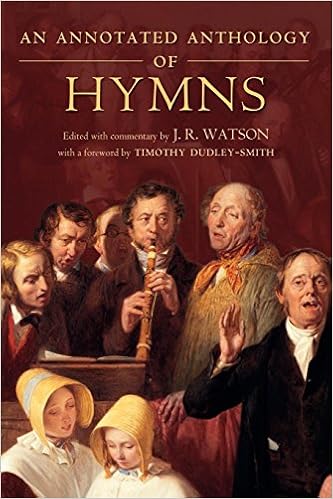
Image result for watson annotated anthology of hymns

Watson is pretty stuffy. His info is top notch but he doesn’t seem to ever mention the American Episcopalian Hymnal 1982 even though his book was published in 2002. His book is like a collection of hymn texts with a few paragraphs of commentary on each hymn.
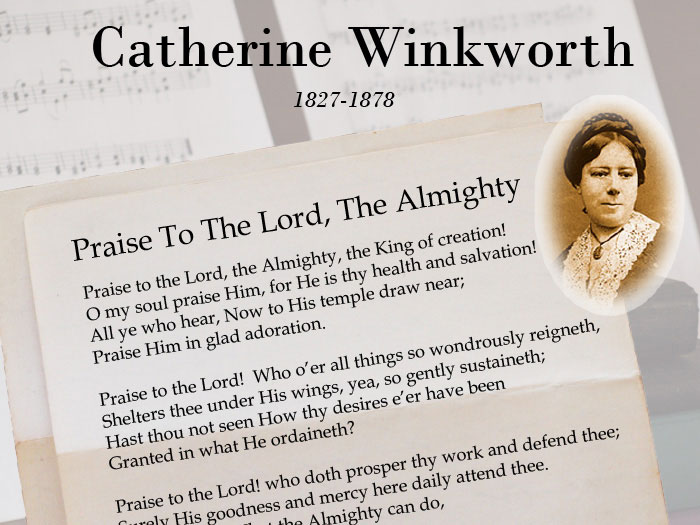
Image result for neander catherine winkworth

The translation he cites for “Praise to the Lord” is Catherine Winkworth’s classic translation of Neader’s 17th century German text.

Image result for neander joachim

Joachim Neander (1650-1680)

I think Watson has made a mistake not to use the translation from the Hymnal 1982 which alters Winkworth’s excellent translation just a bit to make it more like the original German. For example, in her first stanza she has “All ye who hear, Now to his temple draw near.” The Hymnal 1982 actually is much closer to the original German, “join the great throng, psaltery, organ, and song.” The original is “Kommet zuhauf, Psalter und Harfe, wacht auf.”

The German seems to mention the psaltery and harp but no organ or song.

But both Winkworth and the editors of the Hymnal 1982 seem to miss the German of the next line which is “lasset die Musicam  hören!”  I take this to mean something like “Let us hear the music.” Winkworth wrote: “Join me in glad adoration.” The Hymnal 1982: “sounding in glad adoration.”

Anyway, you get the idea.

Watson’s anthology is grouped by region and chronology. I was looking at this info yesterday morning before church and was just about to put the books back when I noticed that he follows “Praise to the Lord” with “All my hope on God is founded.” This was to be our opening hymn.

I was intrigued to discover that it too was written by Neander. The translator in this case was Robert Bridges.
Related image

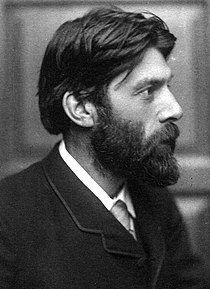
Robert Seymour Bridges (1844 – 1930)

Watson writes that Bridges was an “expert on prosody,” and uses “elaborate Miltonice syntax, with inversion and suspension everywhere.”

I had never though much about that but think it’s an excellent text. I was startled that the original was from the 17th century. But then I figured out that my impression of the hymn is highly colored by Herbert Howell’s wonderful 20th century tune named after a deceased child of his, MICHEAL.

Image result for Herbert Howells

Herbert Howells  (1892 – 1983)

In the Hymnal 1982 companion, Ray Glover’s commentary quotes Percy Dearmer who points out that Bridges often “does not really translate” the “German originals, but uses them merely for suggestions, not only paraphrasing freely, and omitting many verses, but also adding new verses of his own.”

Once again I found the editors of the 1982 Hymnal subtle and adroit in their changes to Bridges’ translation.

They cleverly keep some of the male language when it refers to God, but “Pride of man” (St. 2) is changed to “Mortal pride.” In the same stanza “Sword and crown betray his trust,” becomes “Sword and crown betray our trust.” I think this is clarifying because I might have missed that the “his” in the original doesn’t refer to God but to humans.

At least that’s how it seems to me. There’s more but I think that’s enough for here.

The fact that the tune is by a 20th century dude colored my prelude improv yesterday so that I used the musical language of the late 20th century in making it up.

I like this.

Opinion | Our Culture of Contempt – The New York Times

Finally, I am on the lookout for opinions I disagree with. Somehow I got on the mailing list of Hillsdale College’s “Imprimis.”
Image result for imprimis
I have been feeling a bit trapped in my own echo chamber lately so I picked it up recently to read, something I rarely do.  I share the Hillsdale’s orientation toward classical education. I admire that. I don’t read the classic philosophers the way they do, however, since they are a bit of far right group, though quite smart. I think they might fit the bill of being outside of my own confirmation bias.
Arthur C. Brooke serves on the American Enterprise Institute which is another right wing group. He wrote the forthcoming book about “Culture of Contempt” which is excerpted at the link above.
These thinkers (Brooke and Hillsdale lecturers excerpted in “Imprimis”) remind me of William Buckley who I admired when he is alive but have since decided was a bigot.

jupe dreams about upcoming recitals


Image result for dreaming painting music

I have been having fun thinking about the May recital. I would love to compose a piece for the five of us to play, but I think that I need to concentrate on the organ piece I am writing. But I’ve already a sense of what I would like this recital to be like.

Image result for dreaming painting music

First of all, I want it to be playful. I have been toying with a name for it. “Not Your Usual Recital?” Eileen suggested “Stone Soup.” She said I was the Stone. She said that in the story the stone brings everything together. I said that the stone doesn’t contribute anything of substance to the soup. Ahem.

Image result for stone soup  illustrations

Or maybe something with the word “play” in it. “Musicians at Play.”

I know I want my piano trio to perform Oblivion by Piazolla.

I have embedded this video before.

I also know I want to do some arrangements of my own stuff. If I do that I can include music that rarely gets heard without having to hunker down and write a completely new piece. The organ piece I am working on might adapt well to being done by some of the players who have agreed to play.

Also, I  am considering reviving some of my earlier coffee house compositions like Drek or instrumental versions of pieces like “Moneyland.” Some Zappa would be nice.

Peaches En Regalia is easier the more people you have to play with. Jordan has done it with me when I did it in the coffee shop. It’s definitely one of my favorites but I do like Mister Green Jeans.


I want Jordan to use both his classical sax sound and his jazz sound. I love them both. I also know I would like to play harpsichord, marimba, and banjo on this recital.

I plan to ask my cellist to learn an unaccompanied Bach cello suite. I am thinking of the first movement of the G major.

I’m hoping that she will not only agree to do so but that learning it won’t be a hardship for her. In the spirit of doing a playful recital I am thinking of coming up with stuff that wouldn’t be too hard for us to prepare but loads of fun to pull together.

I have a book of jigs and reels for violin and keyboard I plan to look at and maybe suggest to Amy.

I wrote a silly organ piece for Rhonda on the hymn tune CWM RHONDDA (Guide me O Thou Great Jehovah). I could ask her to play it or play it myself or arrange it.

Starting the recital with the Toccata and Fugue in D minor of Bach might be the ticket.

Image result for phantom of the opera gif organ

I sort of feel like I owe this to my parishioners, having had several people mention it to me. I have been  learning it and looking for a place to play it. It doesn’t seem to work as a prelude or postlude. Jen and I talked about inviting parishioners back after coffee hour some Sunday to listen to it.

Anyway, it’s fun to kick around different possibilities with such a talented crew.

These four people: Rhonda Edgington, Amy Hertel, Dawn Van Ark, and Jordan Van Hemert, represent the local musicians that I feel like I can connect with and appreciate.

It will be a gas to come up with something for us to do.

I’m also kicking around ideas for the final June recital with the choir. I definitely want us to learn “Come Sunday” by Ellington to use both  in a Eucharist setting and in the recital.

This not only means I will have scheduled Ellington for the first and last Grace Notes Recital, but I will have added a piece to the choral library. I purchased 25 copies of an arrangement sight unseen. It came in the mail yesterday and I was disappointed. I didn’t think it was as good as I wanted it to be.

Eileen reminded me that Our Lady of the Lake might still have copies of the version I did there. I couldn’t find my single copy of this version to order from. So I emailed the choir director at my old church and she instantly said we could have 18 copies and that she would mail them to me. How nice is that? I plan to have the choir sign a thank you card after we get it. I’m hoping that arrangement is as good as I remember it being.

In addition I have asked Laure Van Ark to learn a solo aria by Handel. On Wednesday night I was talking to Kris Pierce our new soprano. Kris has a good solo voice and misses cantoring the way she used to in the Roman Catholic church (she was actually in the choir at Our Lady of the Lake when I worked there if I remember correctly).

I told her I would try to come up with something for her for the June 9 recital. I also mentioned that I’m not really a voice teacher and would love it if she could get one to help her with anything I come up with. She has a teacher she likes so that looks like a possibility.

Then I got to thinking how much fun it would be to do a two soprano movement from a Bach cantata. So I’m thinking that I will have two solos and one duet at the June 9 recital in addition to “greatest hits” sung by the choir.

I am finding that staying away from church on days off helps me get my perspective back. I am planning on staying away from the building today. Tomorrow I will put in some prep for Sunday and pick upcoming organ preludes and postludes for Ash Wednesday and Lent I.